
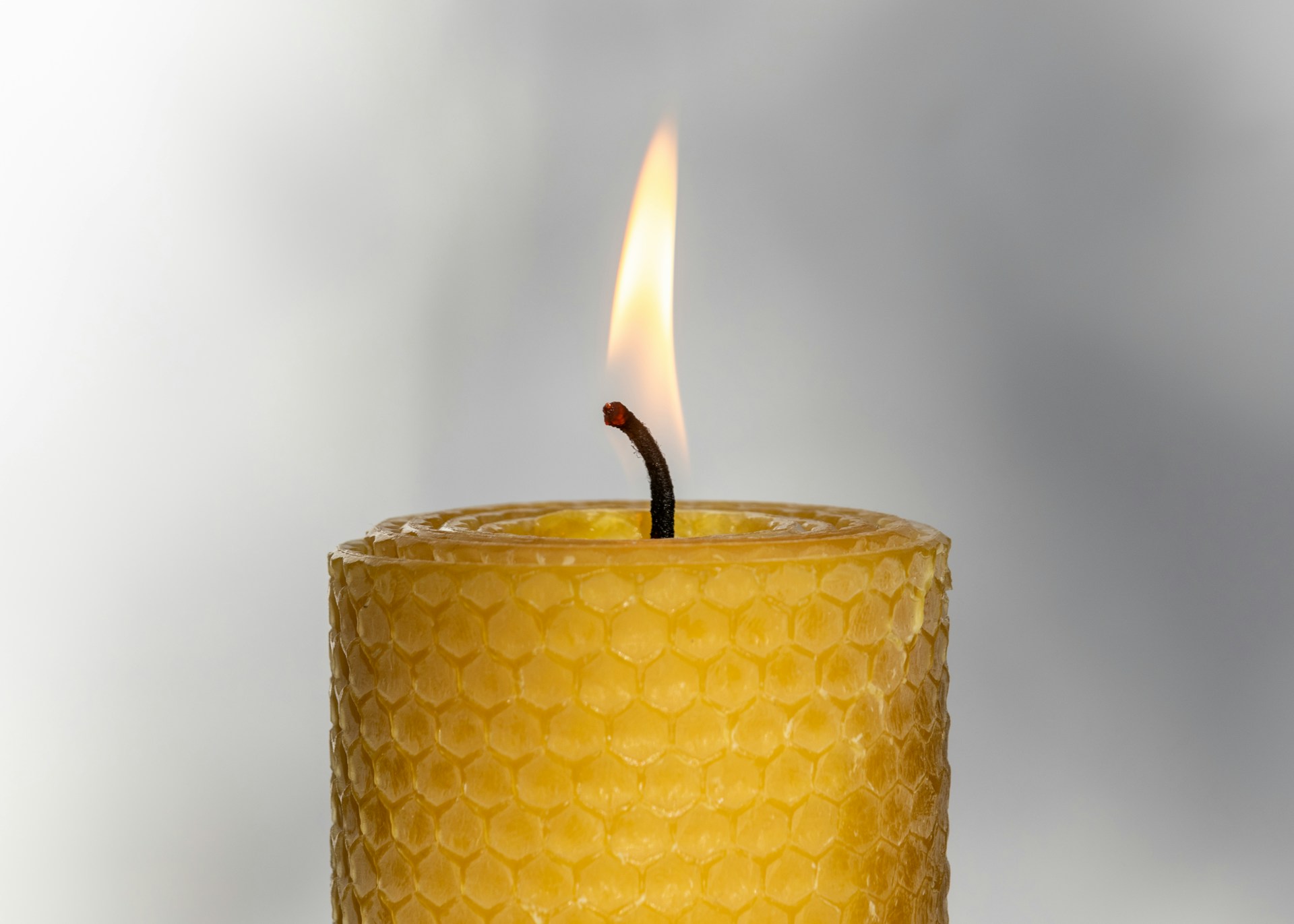
A candle is one of the simplest ways to change the feel of a room. The small flame, the slow pool of melted wax and a scent chosen with care turn an ordinary evening into something gentler. But candles vary a great deal in what they are made of and how they burn, and the labels can be confusing. Here is a plain guide to choosing a candle and enjoying it safely.
What Candles Are Made Of
Most candles use one of a few waxes, each with its own character:
- Paraffin is the most common and least expensive. It is a petroleum byproduct, holds fragrance well and burns with a bright flame.
- Soy wax is made from hydrogenated soybean oil. It burns cooler and slower than paraffin, which stretches a candle’s life, and it has a softer, more muted scent throw. Many soy candles are blends, so check the label if it matters to you.
- Beeswax is the oldest candle wax and the most expensive. It burns slowly and cleanly, with a faint natural honey scent and a warm glow. Pure beeswax candles are rarely heavily fragranced.
None of these is wrong. Soy and beeswax are often marketed as cleaner, and they do tend to produce less soot when burned properly, but a well-made candle of any wax, with a properly trimmed wick, burns reasonably cleanly.
Wicks
Most wicks today are braided cotton, sometimes with a paper or thin zinc core for stability. Lead-core wicks were banned in the United States in 2003, so this is no longer a concern for candles sold here. Whatever the material, the wick should be trimmed to about a quarter of an inch before each lighting. A long wick is the main cause of smoking, soot and a flame that flickers too high.
Scent
Candles are scented with fragrance oils, essential oils or a mix. Fragrance oils are blends created by perfumers and include synthetic and natural components; they offer the widest range of scents and the strongest throw. Essential oil candles smell more like the plant itself and tend to be subtler, since many essential oils do not survive heat well. A candle labeled natural is not necessarily made with essential oils, and one made with fragrance oil is not necessarily lower quality. Smell before you buy if you can, and remember that a scent that fills a shop may be too strong for a bedroom.
If you are sensitive to fragrance, have asthma or live with someone who does, unscented beeswax or a very lightly scented candle is the gentler choice. Talk with your doctor if burning candles seems to bother your breathing.
Burning Safely
Candles are open flames, and the basic rules bear repeating:
- Never leave a burning candle unattended or go to sleep with one lit.
- Keep candles well away from curtains, bedding, books and anything else that can catch.
- Burn on a stable, heat-resistant surface, out of reach of children and pets.
- Let a new candle burn long enough on the first lighting for the melted wax to reach the edges of the container, usually an hour or two. This prevents tunneling later.
- Do not burn for more than a few hours at a time, and stop when half an inch of wax remains.
- Keep a window cracked in small rooms.
Candles and Calm
Part of a candle’s appeal is the small ceremony of lighting it. Many people light the same candle each evening as a signal that the working day has ended, or save one scent for bath nights. Battery candles provide the glow without the flame for bedrooms and bathrooms, and they are the right choice around small children. However you use them, a candle asks you to pause, strike a match and watch a flame catch, and that moment is part of the pleasure.