
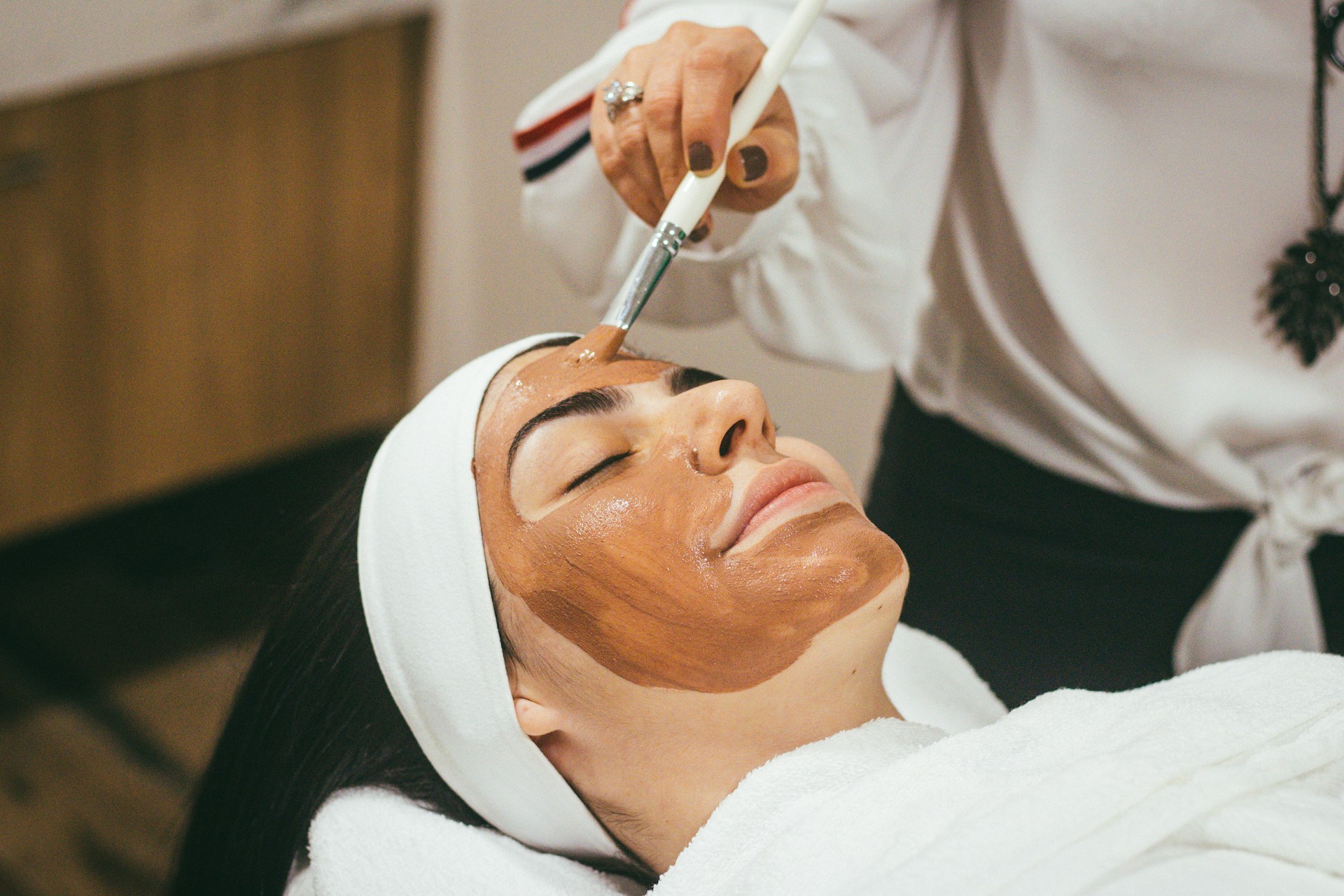
A facial today is a quiet hour on a comfortable table: cleansing, gentle steam, a mask, a little massage, moisturizer. It feels modern, but caring for the skin of the face is one of the oldest grooming practices there is. The story runs from clay and honey in ancient kitchens through royal courts and nineteenth-century beauty parlors to the licensed treatment rooms of today. This article is a history, not a guide to any particular service. For details about the facials we offer, please visit our services page or contact us.
Ancient Beginnings
Egyptians thousands of years ago used oils, honey, milk and clay on their skin, and their tomb paintings and cosmetic jars show how seriously they took it. Greek and Roman writers described face masks made from ingredients such as barley flour, eggs and honey, and the Roman bathhouse routine included oiling and scraping the skin clean. Galen, a Greek physician of the second century, is credited with an early recipe for cold cream, a blend of water, oil and beeswax that is the ancestor of nearly every moisturizer since.
In Asia, skincare traditions developed along their own lines. Chinese and Japanese texts describe rice water, herbal infusions and pearl powder used on the face, and some of those ingredients remain popular today.
Courts and Kitchens
Through the medieval and early modern periods, recipes for the face circulated in household books alongside remedies and cooking. Rose water, almond milk, cucumber and oatmeal were common. Wealthy women in European courts used elaborate preparations, some of them dangerous, including lead-based whiteners that caused real harm over time. For most people, though, skincare meant washing with water and perhaps a little homemade lotion.
The Birth of the Beauty Salon
The facial as a professional service took shape in the late nineteenth and early twentieth centuries. As cities grew and department stores appeared, salons opened offering face treatments, massage and manufactured creams. Entrepreneurs such as Helena Rubinstein and Elizabeth Arden built international businesses around the idea that skincare could be a ritual performed by a trained professional, with products to continue at home. Steam, massage and masks became standard elements of a salon facial during this period, and the basic sequence has changed less than you might expect.
The Modern Treatment Room
In the second half of the twentieth century, the facial became more widely available and more regulated. In the United States, estheticians, the professionals who perform facials, are licensed in most states after completing formal training and an exam. Licensing rules vary by state, so if you want to know what is required where you live, your state’s licensing board is the authority.
Today a typical facial includes cleansing, an assessment of the skin, exfoliation, steam or warm towels, a mask, massage of the face and often the neck and shoulders, and moisturizer and sunscreen. Variations are endless, and the experience ranges from clinical to deeply relaxing depending on the setting.
What Has Stayed the Same
Across all those centuries, a few things are constant. People have always wanted to feel cared for, and touch on the face is a particularly intimate kind of care. Ingredients from the kitchen and garden, honey, oats, rose, clay, have never gone out of fashion. And the most valuable part of a facial has always been the time itself: lying still, eyes closed, while someone attends to you. That has not changed since the first warm cloth was laid on a face a very long time ago.