Tag: history

  • From Slow Food to Slow Mornings: A Short History of the Slow Living Idea

    The phrase slow living can sound like a luxury, something for people with endless free time and a farmhouse kitchen. Its roots are more practical and more interesting than that. The idea began as a pushback against fast food and grew into a broader way of thinking about how we spend our hours. And one of the easiest places to try it is the first part of the day.

    It started with a meal

    The slow movement is usually traced to Italy in the 1980s. As the story is often told, protests over a fast-food restaurant opening near Rome’s famous Spanish Steps helped spark a new organization. Founded by a group led by the Italian writer and activist Carlo Petrini, it became known as Slow Food, and it grew into an international movement by the end of the decade.

    Slow Food was not simply against hamburgers. It championed local and traditional foods, the farmers and cooks who produce them and the pleasure of sharing a meal without hurry. Its symbol, fittingly, is a snail.

    From food to towns to everyday life

    The idea spread. In 1999, a group of Italian towns launched Cittaslow, the slow city movement, committing to protect local character, support local businesses and keep their communities livable at a human pace. Over the following years, writers and thinkers began describing a broader slow movement that touched work, parenting, travel, fashion and design.

    Across all its forms, the central idea stayed the same. Slowness is not about doing everything at a crawl. It is about matching the pace to the task, doing fewer things with more attention and making room for quality, connection and pleasure in ordinary life.

    Borrowing the idea for summer mornings

    Mornings are a natural place to practice slow living, because they set the tone for everything after. In July, they also hold the coolest, quietest hours of the day. A few ideas inspired by the movement’s spirit:

    • Make one thing by hand. Brew coffee in a pour-over cone or a stovetop pot, steep loose tea or squeeze fresh juice. Let the making be part of the pleasure.
    • Eat something in season. Georgia peaches, blueberries, tomatoes and melons are at their best in July. A simple plate of local fruit honors the Slow Food idea without any fuss.
    • Sit down for the first sip. Even five minutes at the table or on the porch, rather than drinking on the move, changes the feel of a morning.
    • Delay the phone. Let the news and messages wait until after breakfast.
    • Notice the place. The light through the trees, the sound of the neighborhood waking, the feel of the air before the heat arrives.

    Slow, not perfect

    Slow living can be turned into one more thing to get right, and that misses the point entirely. A slow morning does not need linen napkins or a two-hour window. It can be ten unhurried minutes before a busy day, a single cup made with care, or one meal a week eaten with full attention.

    The snail is a good mascot for more than one reason. It carries its home with it, moves at its own pace and still gets where it is going. On a hot summer morning, that seems like a good model to follow.
  • Cool as a Cucumber: The Long History and Simple Pleasures of a Summer Staple

    There is a reason we say someone is cool as a cucumber. Slice one open on a hot day and the crisp, pale flesh feels refreshing just to look at. Cucumbers are mostly water, mild in flavor and generous in a summer garden, and they have been part of human life for a very long time.

    From South Asia to the Roman table

    The cucumber is generally believed to have been first cultivated in South Asia, where people have grown it for thousands of years. From there it traveled west along trade routes to the Middle East and the Mediterranean. The ancient Greeks and Romans grew cucumbers, and the Roman writer Pliny the Elder recorded that the emperor Tiberius was so fond of them that his gardeners grew them in movable beds, wheeling them into the sun by day and sheltering them when the weather turned cold.

    Cucumbers spread across Europe through the Middle Ages, and European explorers and colonists carried them to the Americas. By the time of the early American republic, they were common in kitchen gardens, and pickling them was a practical way to enjoy the summer harvest through the rest of the year.

    A phrase for keeping calm

    The expression cool as a cucumber has been in English for centuries. It likely began simply because cucumbers feel cool to the touch and seem unbothered by the heat. Over time, it came to describe a person who stays calm and composed under pressure, which is not a bad goal for a July afternoon.

    Cucumbers in the kitchen

    Nearly every warm-weather cuisine has a cooling cucumber dish:

    • Greek tzatziki, with yogurt, garlic and dill
    • Indian raita, often seasoned with cumin and fresh herbs
    • Delicate tea sandwiches, a fixture of the English afternoon tea
    • The Southern summer standby of sliced cucumbers and onions in a splash of vinegar, sugar and black pepper

    Each one pairs the cucumber’s crunch with something tangy or creamy, and each is best eaten cold on a day too hot to cook.

    The cucumber as a spa ritual

    Cucumber slices resting over closed eyes have become a familiar image of relaxation, and the ritual is easy to recreate at home. Chill a cucumber, wash it well, slice two thin rounds and lie back somewhere quiet for ten minutes with the slices over your closed eyelids. The pleasure is mostly in the coolness and the excuse to be still. You can also add a few slices to a pitcher of cold water for a subtle, fresh flavor.

    If your skin is sensitive, test a slice on a small area first, and skip the ritual if you notice any irritation. Anyone with ongoing eye or skin concerns should talk to a doctor.

    Growing your own

    Cucumbers love warm weather and steady water, which makes them a natural fit for a Georgia summer garden. Pick them young and often, ideally in the cool of the morning, because a vine left with overgrown fruit tends to slow down. Heat and dry spells can make cucumbers taste bitter, so a deep drink of water during a hot stretch helps keep them crisp and mild. A few vines on a trellis can supply a household with salads, sandwiches and cool slices all summer long.

  • Uchimizu, Wind Chimes and Windcatchers: Cooling Traditions From Around the World

    Every hot climate has its own wisdom about staying comfortable. In the American South, it was the shaded porch and the slow afternoon. Elsewhere in the world, people developed rituals, sounds and buildings that made summer easier to live with. Some of these traditions are centuries old, and a few translate surprisingly well to a Georgia backyard.

    Uchimizu: sprinkling water in Japan

    In Japan, uchimizu is the custom of sprinkling water on streets, garden paths and the ground in front of homes and shops, usually in the morning or evening. As the water evaporates, it takes a little heat with it and settles the dust. Just as important, it signals care: a freshly sprinkled entryway tells visitors they are welcome. Traditionally, people often used leftover water, such as water saved from washing, rather than fresh water from the tap.

    Furin: the sound of a breeze

    Hang a small glass or metal wind chime by a window in a Japanese home in summer and you have a furin. Its job is not to change the temperature but to make the breeze audible. Each gentle chime is a reminder that the air is moving, and many people find that the sound alone makes a hot room feel a little fresher. It is a lovely example of cooling through the senses rather than through machinery.

    Windcatchers, ice houses and clay pots

    In Iran and around the Persian Gulf, builders raised tall towers called windcatchers on top of houses. Openings near the top caught passing breezes and channeled them down into the rooms below, while warm air escaped upward. The desert city of Yazd is famous for its skyline of these towers. Persian builders also created yakhchals, large domed structures where ice gathered in winter could be stored deep into the warm months.

    A humbler invention is still in use in many homes: the unglazed clay water jar. In India it is often called a matka, and in Spain a similar jug is known as a botijo. Water slowly seeps through the porous clay and evaporates from the outside, which keeps the water inside noticeably cooler than the air around it.

    Courtyards and fountains

    In southern Spain, the palaces of the Alhambra in Granada are known for courtyards built around pools, channels and fountains. Shade, greenery and the sound of moving water combine to create spaces that feel calm even on hot days. The same idea shaped courtyard homes across the Mediterranean and the Middle East: turn inward, plant something green and let water be part of the room.

    Borrowing the ideas at home

    Not every tradition works the same way in a humid climate. Evaporation is slower when the air is already full of moisture, so a Georgia patio will not cool as dramatically as a desert courtyard. Still, the spirit of these customs travels well:

    • Sprinkle a shaded patio or walkway in the evening with water saved in a rain barrel or left in the watering can.
    • Hang a wind chime where the breeze passes, and notice how its sound changes the feel of the porch.
    • Add a small tabletop fountain, or a wide bowl of water with a few floating blossoms, to a sitting area. Change standing water every few days so mosquitoes cannot breed in it.
    • Plant for shade and greenery near the places you rest.

    The common thread in all of these traditions is attention. People who lived with heat learned to notice small breezes, small sounds and small patches of shade, and to arrange their lives around them. That kind of noticing is a gentle practice in any season.

  • The Dog Days of Summer: Where the Phrase Comes From and How to Rest Through Them

    Sometime in July, the heat in Middle Georgia stops feeling like weather and starts feeling like a place you live. The air is thick by breakfast, the afternoons shimmer, and even the dogs stretch out flat in the shade. Many of us call this stretch the dog days of summer without thinking much about why. The answer goes back thousands of years, and it has nothing to do with drowsy dogs.

    A star called the Dog

    The phrase comes from Sirius, the brightest star in the night sky. Sirius sits in the constellation Canis Major, the Greater Dog, and it has long been known as the Dog Star. In the ancient Mediterranean world, there was a period each summer when Sirius rose in the east just before the sun, a moment astronomers call its heliacal rising. That event lined up with the hottest, driest weeks of the year.

    The Romans called this season the dies caniculares, the days of the little dog, after Canicula, one of their names for the star. Greek and Roman writers often linked the Dog Star with scorching heat, drought and a general sense that things were going wrong. Some believed the star’s light actually added to the sun’s warmth. We know now that it does not, but the association stuck.

    In ancient Egypt, the same star carried a happier meaning. Its return to the dawn sky was watched closely because it came around the time of the Nile’s yearly flood, which renewed the farmland along the river.

    Why the dates drift

    Ask three sources when the dog days fall and you may get three answers. Many almanacs place them from early July to mid-August. Others tie them to the star itself, whose dawn rising has slowly shifted later over the centuries because of a gradual wobble in Earth’s axis. In practice, most of us simply use the phrase for the deep middle of summer, when the heat feels settled in and the breaks are few.

    A scattering of folk sayings has gathered around the season in the South, too. One old belief held that snakes went blind during the dog days, perhaps because a snake’s eyes turn cloudy for a time before it sheds its skin. Lore like this says more about how hard people found these weeks than about snakes.

    Resting through the dog days

    Whatever the dates, the old idea holds a useful truth: this part of summer asks something of us. Instead of fighting it, think of the dog days as a season with its own pace.

    • Shrink the list. Choose one or two things that truly need doing each day and let the rest wait for September.
    • Do your moving early. Walks, errands and yard work feel kinder before the heat builds.
    • Claim a cool corner. A shaded chair, a fan and a glass of water can become your afternoon retreat.
    • Plan small pleasures. A cold supper on the porch, a swim, a summer novel or a slow evening walk gives the week something to look forward to.

    A season to wait out gently

    There is something comforting in knowing that people have grumbled about these same weeks for more than two thousand years. The dog days have always ended. The star moves on, the evenings begin to soften, and eventually a morning arrives that carries the first faint hint of fall.

    Until then, give yourself permission to slow down. Heat can be serious, so if you or someone with you feels faint, confused or unwell, get to a cool place and seek medical help right away. For everything else, a little patience, a lot of shade and a willingness to do less may be the oldest summer wisdom there is.

  • The Hand Fan: A Short History of Keeping Cool in Style

    The Hand Fan: A Short History of Keeping Cool in Style

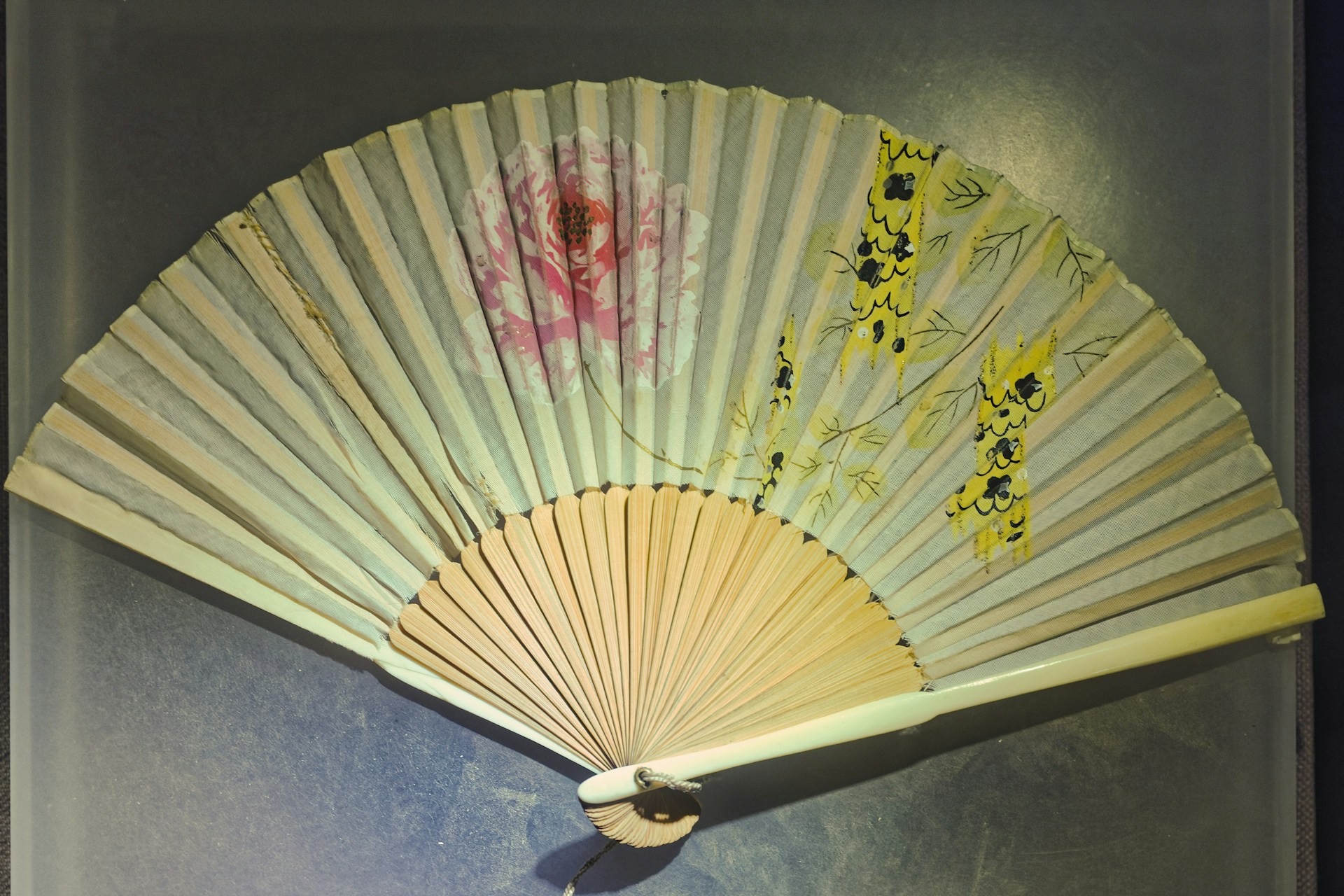
    Long before ceiling fans and central air, people kept cool with a flick of the wrist. The hand fan is one of humanity’s oldest comforts, and its history stretches from royal courts to small-town church pews. Even today, on a hot afternoon at an outdoor wedding or a ballgame in July, there is something pleasing about the slow, rhythmic sweep of a fan.

    Fans of the ancient world

    In ancient Egypt, large fans made of feathers on long handles were held by attendants to cool royalty and to mark their status. Fans were found among the treasures in the tomb of Tutankhamun, including one with a gold handle that once held ostrich feathers. Ancient China had rigid fans of silk, bamboo and feathers, and the round silk fan became a classic object of art, often painted with landscapes, flowers or poetry.

    The folding fan and its travels

    The folding fan, which opens like a wing and closes into a slim baton, is generally thought to have developed in Japan, where early versions were made of thin strips of wood. It spread to China and later, through trade, to Europe. By the seventeenth and eighteenth centuries, fans had become essential fashion accessories in European society, made from painted paper, silk, lace, ivory and mother-of-pearl.

    Victorian booklets claimed to decode a secret language of the fan, in which the way a fan was held or moved sent messages across a crowded room. How often anyone actually used such signals is doubtful, but the idea captures the fan’s place in social life as much more than a cooling device.

    The church fan of the South

    In the American South, the most familiar fan is far humbler: a piece of printed cardboard stapled to a flat wooden stick. Before air conditioning, these fans were a fixture in church pews, often printed with a religious image on one side and an advertisement for a local funeral home or business on the other. On a Sunday morning in August, a whole congregation might be fanning in slow waves during the sermon. Many people still keep one tucked in a drawer, as much for memory as for cooling.

    Scented fans have their own tradition. Fans made from thin slats of sandalwood, common in parts of Asia, release a soft, woody fragrance with every stroke, combining cool air and scent in a single gesture.

    The quiet pleasure of fanning

    A hand fan does not lower the air temperature, but the breeze it creates helps sweat evaporate from your skin, which is why it feels cooler. There is more to it than physics, though. The steady back-and-forth has a calming rhythm, a little like rocking in a porch chair. It slows you down.

    • Keep a folding fan in your bag for outdoor events, hot waiting rooms and summer services.
    • Try fanning slowly in time with your breath: one sweep as you breathe in, another as you breathe out.
    • With children, fold a sheet of paper back and forth into an accordion, pinch one end and decorate it together.
    • Look for fans made from natural materials, such as paper, bamboo or wood, that will last for years.

    In an age of thermostats, the hand fan may seem old-fashioned. But on a sticky Georgia afternoon, it remains one of the most graceful ways to make the heat a little more bearable, one gentle stroke at a time.

  • Keeping Cool Naturally: Shade, Airflow and Lessons From the Old Southern Porch

    Keeping Cool Naturally: Shade, Airflow and Lessons From the Old Southern Porch

    Walk through an older neighborhood in Macon and you can read the history of staying cool in the houses themselves. Deep porches, tall windows, high ceilings, shade trees planted decades ago. None of it was decoration. These were the tools that made a Georgia summer livable before air conditioning, and they still work. Even with a thermostat on the wall, borrowing a few of those habits can make a home feel calmer and more comfortable.

    Shade is the first defense

    Sunlight that never reaches a wall or window never has to be cooled. Old Southern houses used wide roof overhangs, porches on the sunny sides, shutters and awnings to keep direct sun off the building. Trees did the rest, especially deciduous ones that shade in summer and let light through in winter.

    Today that translates to closing blinds or curtains on the east side in the morning and the west side in the afternoon, using exterior shades or awnings where you can and valuing the trees you have. A sunny window with the blinds open can heat a room faster than any appliance.

    Moving air is cool air

    A breeze across the skin feels several degrees cooler than still air at the same temperature, because it helps sweat evaporate. Old houses were built for cross-ventilation: windows on opposite walls, transoms above doors and central hallways that let air pass straight through. Early mornings and evenings were for opening everything up; the hot afternoon was for closing it down.

    A ceiling fan does the same job quietly. Set to turn counterclockwise in summer, it pushes air down onto the people in the room. Fans cool people rather than rooms, so turn them off when you leave. On mild nights in May, a box fan in a window pulling in cool air can make the whole house pleasant by morning.

    The porch as a room

    The porch was the original summer living room: shaded, open to any breeze, a few steps from the kitchen and far from the heat that cooking put into the house. People ate there, shelled peas there, visited there and slept there on the hottest nights.

    If you have a porch, use it as a room. A couple of comfortable chairs, a small table, a fan and a lamp turn it into the best seat in the house from May through early fall, at least in the morning and evening hours.

    Work with the day

    The older rhythm of Southern life followed the heat. Hard work happened early. The middle of the day was for slower tasks, shade and rest. Evenings were for cooking lightly, sitting outside and letting the house cool.

    • Cook early or late, and use the grill or a cold supper on the hottest days
    • Run the dryer and dishwasher in the evening rather than at noon
    • Save errands and yard work for morning
    • Give the afternoon permission to be slow

    Air conditioning changed the South profoundly, and few of us would give it up. But the porch, the breeze, the shade tree and the slow afternoon were never only about temperature. They were about living in a rhythm that matched the place, and that is a kind of rest worth keeping.

  • A Mindful Walk at Ocmulgee Mounds: Slowing Down in an Ancient Landscape

    A Mindful Walk at Ocmulgee Mounds: Slowing Down in an Ancient Landscape

    On the east side of Macon, across the river from downtown, a series of great earthen mounds rises above the floodplain. Ocmulgee Mounds National Historical Park preserves one of the most significant archaeological landscapes in the Southeast, a place where people have lived for many thousands of years. It is also one of the quietest places in the city to walk slowly and think. A visit in April, when the fields are green and the trees have leafed out, is a gift.

    A Very Old Place

    Archaeologists have found evidence of human presence at Ocmulgee stretching back to the end of the last ice age. The large mounds that define the park were built roughly a thousand years ago by people of the Mississippian culture, who constructed a town here with earthen platforms for ceremonial buildings and the homes of leaders. The Great Temple Mound is the tallest, rising from the edge of the plateau with a view across the river bottom.

    One of the park’s most remarkable features is the Earth Lodge, a reconstructed ceremonial building whose clay floor is original and roughly a thousand years old. Visitors can step inside and see the raised seats and the central fire pit arranged as they were when the town was alive.

    The land is part of the ancestral homeland of the Muscogee (Creek) people, who were removed from Georgia in the 1800s. Their descendants in Oklahoma maintain a deep connection to the site today. Visiting with that history in mind is part of what makes the place feel weighty.

    Planning a Visit

    The park has a visitor center with exhibits and a short film, and several miles of trails connect the mounds, the Earth Lodge, wetland boardwalks and river views. Hours, trail conditions, fees and programs can change, so check the park’s official website at nps.gov/ocmu before you go. Wear sturdy shoes, bring water and plan for at least an hour and a half if you want to walk the full loop.

    A Slow Way to Walk It

    Many visitors climb the Great Temple Mound, take a photograph and leave within half an hour. Try a different approach:

    • Begin at the Earth Lodge. Sit inside for several minutes in the dim light. Notice the temperature, the smell of earth and the quiet.
    • Walk the trail toward the mounds at half your usual pace. Stop whenever something catches your eye.
    • At the top of the Great Temple Mound, sit rather than stand. Watch the river, the trains and the sky for ten minutes. Think about the people who looked at this same view a thousand years ago.
    • On the way back, take the wetland boardwalk if it is open. Spring is full of frogs, turtles and birds.
    • Before you leave, pause at the edge of the parking lot and notice how you feel compared with when you arrived.

    Why Old Places Feel Steadying

    We make no health claims about walking among mounds. But there is a quiet effect that many people notice at ancient sites: the sense of one’s own worries shrinking to scale. A deadline, a difficult week, a crowded calendar all look different from the top of a structure that has stood through a thousand springs. The mounds are not a wellness destination. They are something older and plainer, and that is exactly their gift.

    If you live in Macon, you have one of the great contemplative landscapes of the South a few minutes from home. Go on a weekday morning in April, before the heat, and let it be slow.

  • A Short History of the Facial: From Ancient Cosmetics to the Treatment Room

    A Short History of the Facial: From Ancient Cosmetics to the Treatment Room

    A facial today is a quiet hour on a comfortable table: cleansing, gentle steam, a mask, a little massage, moisturizer. It feels modern, but caring for the skin of the face is one of the oldest grooming practices there is. The story runs from clay and honey in ancient kitchens through royal courts and nineteenth-century beauty parlors to the licensed treatment rooms of today. This article is a history, not a guide to any particular service. For details about the facials we offer, please visit our services page or contact us.

    Ancient Beginnings

    Egyptians thousands of years ago used oils, honey, milk and clay on their skin, and their tomb paintings and cosmetic jars show how seriously they took it. Greek and Roman writers described face masks made from ingredients such as barley flour, eggs and honey, and the Roman bathhouse routine included oiling and scraping the skin clean. Galen, a Greek physician of the second century, is credited with an early recipe for cold cream, a blend of water, oil and beeswax that is the ancestor of nearly every moisturizer since.

    In Asia, skincare traditions developed along their own lines. Chinese and Japanese texts describe rice water, herbal infusions and pearl powder used on the face, and some of those ingredients remain popular today.

    Courts and Kitchens

    Through the medieval and early modern periods, recipes for the face circulated in household books alongside remedies and cooking. Rose water, almond milk, cucumber and oatmeal were common. Wealthy women in European courts used elaborate preparations, some of them dangerous, including lead-based whiteners that caused real harm over time. For most people, though, skincare meant washing with water and perhaps a little homemade lotion.

    The Birth of the Beauty Salon

    The facial as a professional service took shape in the late nineteenth and early twentieth centuries. As cities grew and department stores appeared, salons opened offering face treatments, massage and manufactured creams. Entrepreneurs such as Helena Rubinstein and Elizabeth Arden built international businesses around the idea that skincare could be a ritual performed by a trained professional, with products to continue at home. Steam, massage and masks became standard elements of a salon facial during this period, and the basic sequence has changed less than you might expect.

    The Modern Treatment Room

    In the second half of the twentieth century, the facial became more widely available and more regulated. In the United States, estheticians, the professionals who perform facials, are licensed in most states after completing formal training and an exam. Licensing rules vary by state, so if you want to know what is required where you live, your state’s licensing board is the authority.

    Today a typical facial includes cleansing, an assessment of the skin, exfoliation, steam or warm towels, a mask, massage of the face and often the neck and shoulders, and moisturizer and sunscreen. Variations are endless, and the experience ranges from clinical to deeply relaxing depending on the setting.

    What Has Stayed the Same

    Across all those centuries, a few things are constant. People have always wanted to feel cared for, and touch on the face is a particularly intimate kind of care. Ingredients from the kitchen and garden, honey, oats, rose, clay, have never gone out of fashion. And the most valuable part of a facial has always been the time itself: lying still, eyes closed, while someone attends to you. That has not changed since the first warm cloth was laid on a face a very long time ago.

  • A Brief History of Massage Around the World

    A Brief History of Massage Around the World

    Massage is one of the oldest forms of human care. Long before spas and massage tables, people around the world used touch to comfort, relax and connect. Learning about this history adds depth to something many of us enjoy simply as a pleasant way to unwind.

    Ancient Roots

    Many ancient cultures developed traditions of touch and massage.

    • In China, massage practices have a long history and are described in early texts. A tradition known as tui na is still practiced today.
    • In India, massage with oils is part of the traditional practices associated with Ayurveda, which has been followed for many centuries.
    • In ancient Egypt, tomb paintings have been interpreted by some historians as showing people receiving foot or hand massage.

    These traditions developed independently, which suggests just how natural touch is as a form of care.

    Greece and Rome

    The ancient Greeks valued bodily care as part of daily life. Athletes were massaged with oils, and the physician Hippocrates wrote about the practice of rubbing. In Rome, massage was a regular part of visits to the public baths, where people bathed, socialized and relaxed.

    Japan and Thailand

    In Japan, a massage tradition called anma developed over centuries, and shiatsu, which uses finger pressure, emerged in the twentieth century. In Thailand, traditional Thai massage combines pressure with assisted stretching. It is often performed on a mat with the receiver fully clothed. In 2019, Thai massage was added to the UNESCO list of the Intangible Cultural Heritage of Humanity.

    The Birth of Swedish Massage

    Much of the massage commonly offered in Western spas today is called Swedish massage. Its history is often linked to Per Henrik Ling, a Swedish gymnastics instructor of the nineteenth century who developed a system of movements. Later, the Dutch practitioner Johann Georg Mezger is credited with organizing and naming many of the strokes still used today, such as effleurage, the long gliding stroke, and petrissage, the kneading stroke.

    Massage in the United States

    In the twentieth century, massage became more widely available in the United States, first in health clubs and later in spas and wellness studios. Today, massage therapy is a licensed profession in many states, including Georgia. Licensing requirements vary by state, so it is wise to check that a massage therapist is properly licensed.

    Massage and Aromatherapy

    In the mid-twentieth century, practitioners such as Marguerite Maury helped popularize combining essential oils with massage. Aromatherapy massage, in which diluted essential oils are applied during a session, remains popular today. Many people enjoy how the scent adds to the relaxing atmosphere.

    Massage is a relaxing experience many people value, but it is not a substitute for medical care. If you have a health condition, an injury or are pregnant, talk with your doctor before booking a massage, and share any health information your therapist requests. Whether you enjoy a professional session or a simple hand massage at home, you are taking part in one of humanity’s oldest ways of caring for one another.

  • The Rose in History: From Ancient Gardens to Modern Perfume

    In February, roses are everywhere. They fill flower shops, grocery store buckets and countless Valentine’s Day bouquets. But the rose’s role as a symbol of love and beauty is far older than any modern holiday, and its fragrance has been treasured for thousands of years.

    Ancient Roses

    Wild roses grow naturally across much of the Northern Hemisphere, and people have cultivated roses for a very long time. Roses appear in the art and poetry of many ancient cultures. In Greek and Roman mythology, the rose was associated with the goddesses of love, Aphrodite and Venus.

    The Romans were famously fond of roses. Rose petals were used in celebrations and banquets, and rose garlands were popular decorations.

    Rose Water and Distillation

    Rose water has a long and important history in Persia and the wider Middle East. The Persian scholar Ibn Sina, known as Avicenna, is often credited with refining distillation methods to produce rose water around the eleventh century. Rose water became a prized ingredient in perfumes, cooking and hospitality, a tradition that continues in many cuisines today.

    Rose oil, sometimes called rose otto when it is steam distilled, is one of the most precious materials in perfumery. It takes a very large quantity of petals to produce a small amount of oil, which is one reason it is so costly.

    The Rose Valleys

    Two rose varieties are especially famous for their fragrance:

    • Rosa damascena, the Damask rose, grown widely in Bulgaria’s Rose Valley, as well as in Turkey and Iran
    • Rosa centifolia, sometimes called the cabbage rose, long associated with perfumery in Grasse, France

    Bulgaria’s Rose Valley, near the town of Kazanlak, has been known for rose oil production for generations. The harvest happens early in the morning when the petals are said to be most fragrant.

    Roses in Modern Self-Care

    Today, rose scent appears in perfumes, soaps, lotions, candles and essential oils. Many people find it romantic, soft and comforting. Because pure rose oil is expensive, you will also find rose absolute, which is produced by a different extraction method, and rose blends diluted in a carrier oil.

    A few simple ways to enjoy rose:

    • A rose-scented lotion as part of a hand-care ritual
    • A small amount of rose water as a refreshing facial mist, after a patch test
    • Dried rose petals in a sachet or a bowl
    • A single fresh rose on your nightstand

    A Note on Use

    As with any fragrance, rose products can irritate sensitive skin. Patch test new products and dilute essential oils before applying them. If you are pregnant, nursing or have health concerns, talk with your doctor before using essential oils.

    A Lasting Symbol

    From mythology to medieval gardens to modern bouquets, the rose has carried meanings of love, beauty and remembrance for thousands of years. This February, when you breathe in the scent of a rose, you are sharing in one of humanity’s oldest and loveliest traditions.