
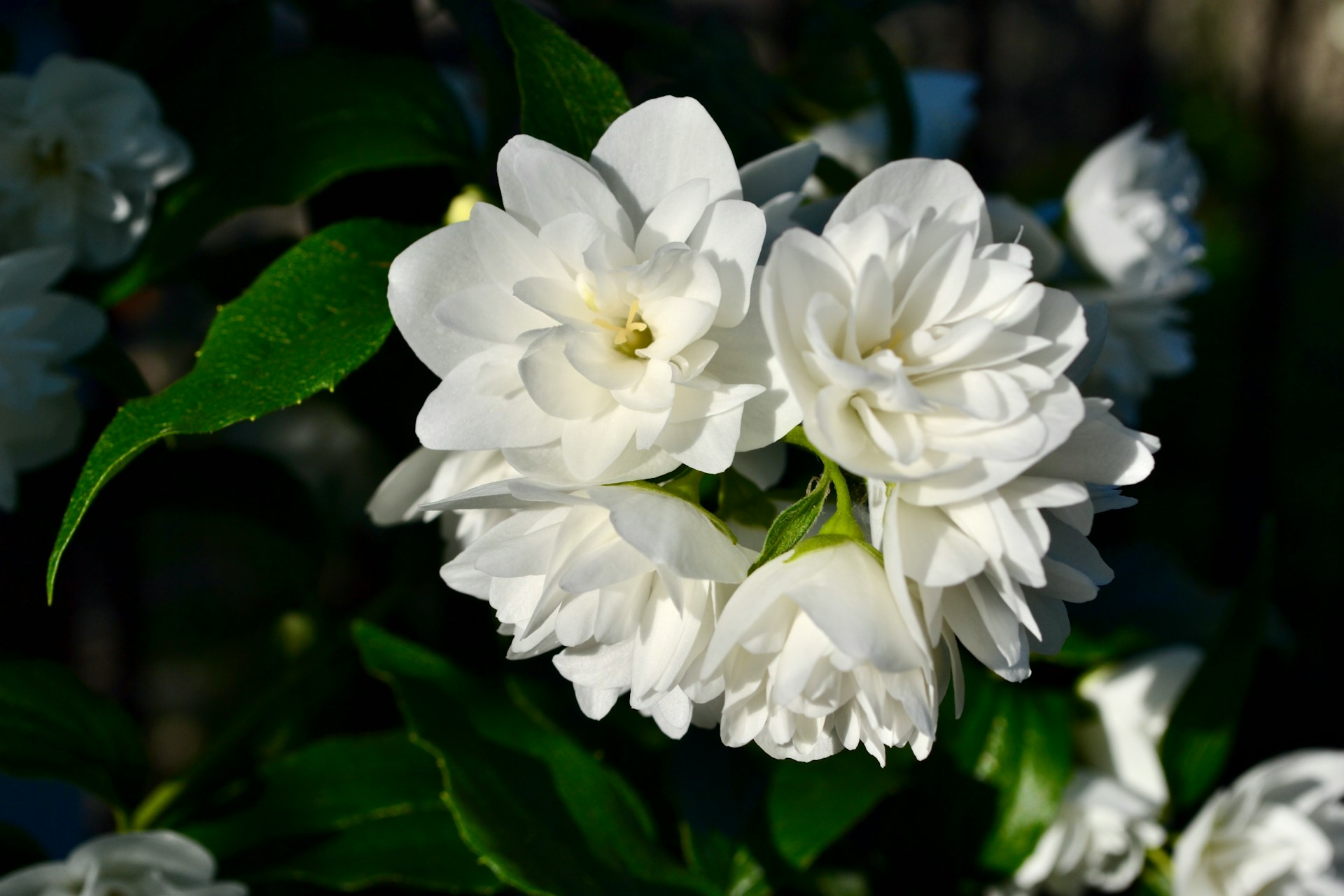
Jasmine is one of the most prized fragrances in the world, and one of the most expensive. Its small white flowers release a heady, sweet, slightly musky scent that intensifies after dark, which is why jasmine has been planted beside doorways and windows for thousands of years. The name itself comes from the Persian yasmin, and the flower has been treated as a gift across many cultures.
A Flower That Traveled
Jasmine belongs to the olive family and is native to warm regions of Asia and beyond. It spread along trade routes to Persia, the Arab world and eventually Europe, where it was a favorite of Renaissance gardens. Today, the varieties most used in perfumery are grown in India, Egypt, Morocco and the south of France, where the town of Grasse built much of its reputation as a perfume capital on fields of jasmine and roses.
In the Philippines, a jasmine species known as sampaguita is the national flower, strung into garlands offered at churches and given to guests. In India, jasmine garlands are woven into hair, hung at weddings and sold in fragrant heaps at every market. In China, jasmine flowers are layered with green tea leaves to make jasmine tea, one of the most popular scented teas in the world.
Picked by Night
Jasmine flowers are harvested by hand, often before dawn, because the scent is at its strongest in the early morning hours. Picking is slow and labor-intensive. It takes an enormous number of blossoms to produce a small amount of fragrance material, which is why pure jasmine is among the costliest ingredients in perfumery.
Unlike lavender or rosemary, jasmine is not steam distilled. The delicate blossoms do not survive heat well, so the fragrance is drawn out with solvents to produce a thick, dark liquid called an absolute. Historically, jasmine was also captured through enfleurage, a painstaking method of pressing flowers into layers of fat until the fat absorbed their scent.
Jasmine in Aromatherapy
Jasmine absolute has a rich, warm, floral scent that many people find comforting and a little luxurious. It appears in evening blends, often paired with sandalwood, bergamot or rose, and in body oils and perfumes. Because true jasmine is expensive, much of what is sold as jasmine oil is either diluted in a carrier oil or a synthetic fragrance. Read labels carefully: a very low price almost always means a fragrance oil rather than an absolute.
A few sensible habits:
- A tiny amount goes a long way. One drop in a diffuser blend is often plenty.
- Dilute well before any skin contact and patch test first.
- Many aromatherapy references suggest avoiding jasmine during pregnancy; talk with your doctor if that applies to you.
- Jasmine is enjoyed for its scent. We make no claims about it beyond that.
Growing Jasmine in Georgia
Several jasmines grow happily in Middle Georgia. Common jasmine climbs fences and arbors and blooms in late spring and early summer. Star jasmine, known locally as Confederate jasmine, is technically a different plant with a similar scent, and by May you will find it covering mailboxes and porch railings all over town. Plant one near a porch or bedroom window, and warm evenings will carry the fragrance inside.
Few experiences are simpler or more pleasurable than sitting outside on a spring night as the jasmine opens. It costs nothing, needs no equipment and reminds you why this flower has been treasured for so long.