
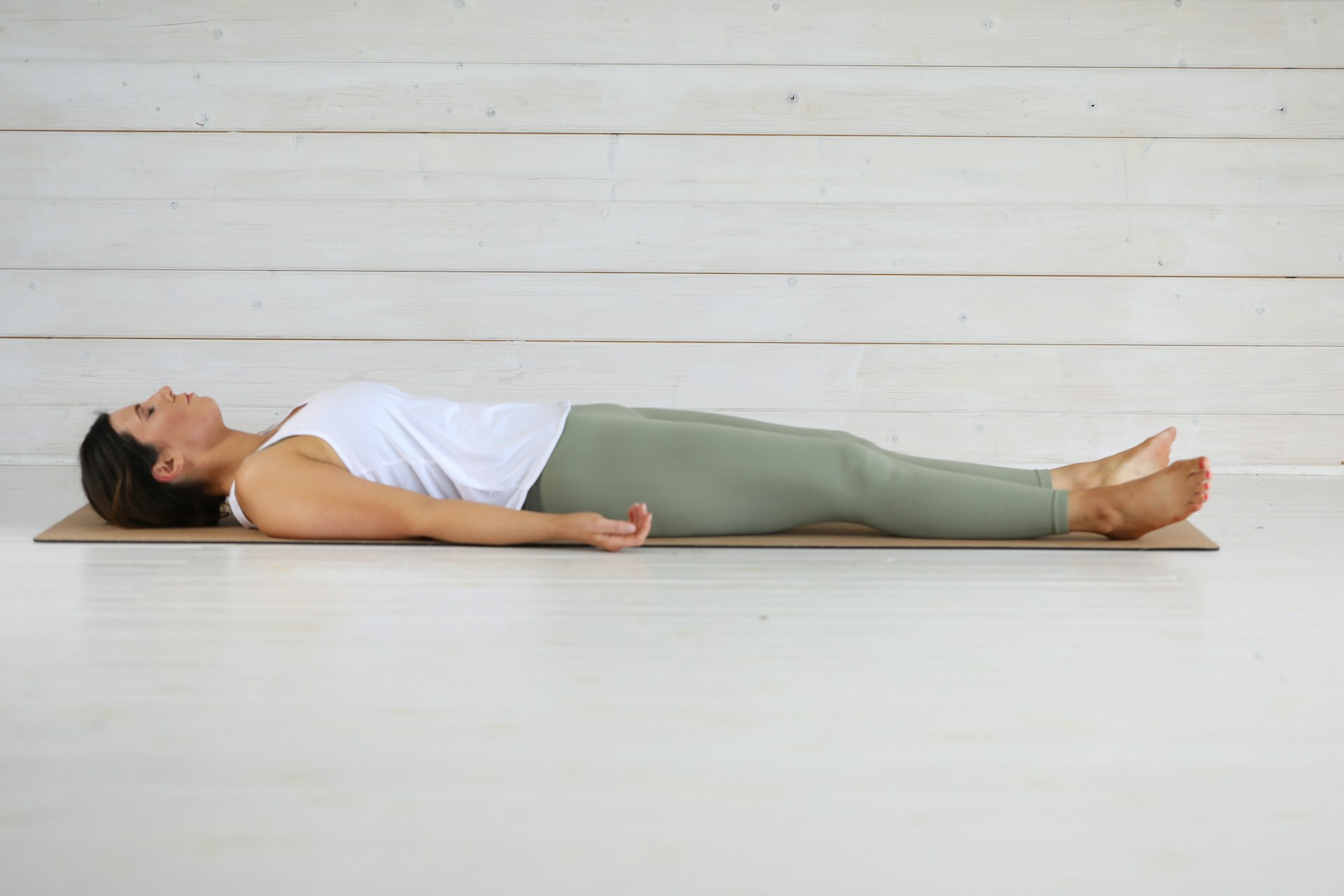
Yoga nidra is sometimes translated as yogic sleep, which is both accurate and slightly misleading. The practice is done lying down, usually with a blanket and an eye pillow, and many people drift close to sleep during it. But the intention is not to fall asleep. It is to rest deeply while remaining faintly aware, following a guide’s voice through a structured journey of attention. For people who find seated meditation difficult, yoga nidra is often a welcome alternative. It is a relaxation practice, not a treatment; if you have a health concern, talk with your doctor.
Where It Comes From
The term appears in old Indian texts, where it refers to a state of conscious rest. The modern, structured practice most studios teach today was developed in the mid-twentieth century by Swami Satyananda Saraswati, a teacher who drew on traditional tantric practices and arranged them into a guided sequence that could be taught to ordinary people. Other teachers have since created their own variations, and recordings are widely available, but most follow a similar shape.
What a Session Looks Like
A session usually lasts twenty to forty-five minutes and is entirely guided. You do nothing but lie still and listen. A typical sequence:
- Settling. You lie on your back, get comfortable with props and are invited to let the body grow heavy.
- Intention. The guide asks you to bring to mind a short, positive statement about how you want to live, sometimes called a sankalpa, and to repeat it silently.
- Rotation of awareness. The guide names parts of the body in a set order, often quite quickly, and you move your attention to each one without moving the body itself.
- Breath awareness. You notice the breath moving in and out, sometimes counting backward.
- Sensations and images. The guide may invite you to notice opposites, such as heaviness and lightness or warmth and coolness, or to picture a series of simple images.
- Return. You revisit your intention, then slowly bring awareness back to the room before moving.
If you fall asleep partway through, that is fine. Many people do. The practice still counts.
Setting Up at Home
You need very little:
- A quiet room and a yoga mat, carpet or bed.
- A blanket, since body temperature drops during deep rest.
- A pillow under the head and perhaps a rolled towel under the knees.
- An eye pillow or a folded cloth over the eyes.
- A recording. Many free ones exist; choose a voice you find pleasant and a length that fits your schedule.
Late afternoon or early evening is a popular time, but any hour works. Some people use a short session as a reset between the workday and the evening.
How It Differs From a Nap
A nap is unstructured sleep. Yoga nidra is a guided practice in which you aim to stay on the edge of awareness. Many people describe the state as being awake and asleep at the same time, hearing the voice but feeling very far away. That borderline is where the practice lives, and it tends to get easier to find with repetition.
A Gentle Beginning
Start with a short recording of fifteen or twenty minutes, two or three times a week. Lie down, cover up and let the voice do the work. Do not try to do it well. There is no wrong way to lie still. On a warm April afternoon with the windows open and the birds outside, yoga nidra is one of the most restful half hours you can give yourself, and it costs nothing but the time.

