
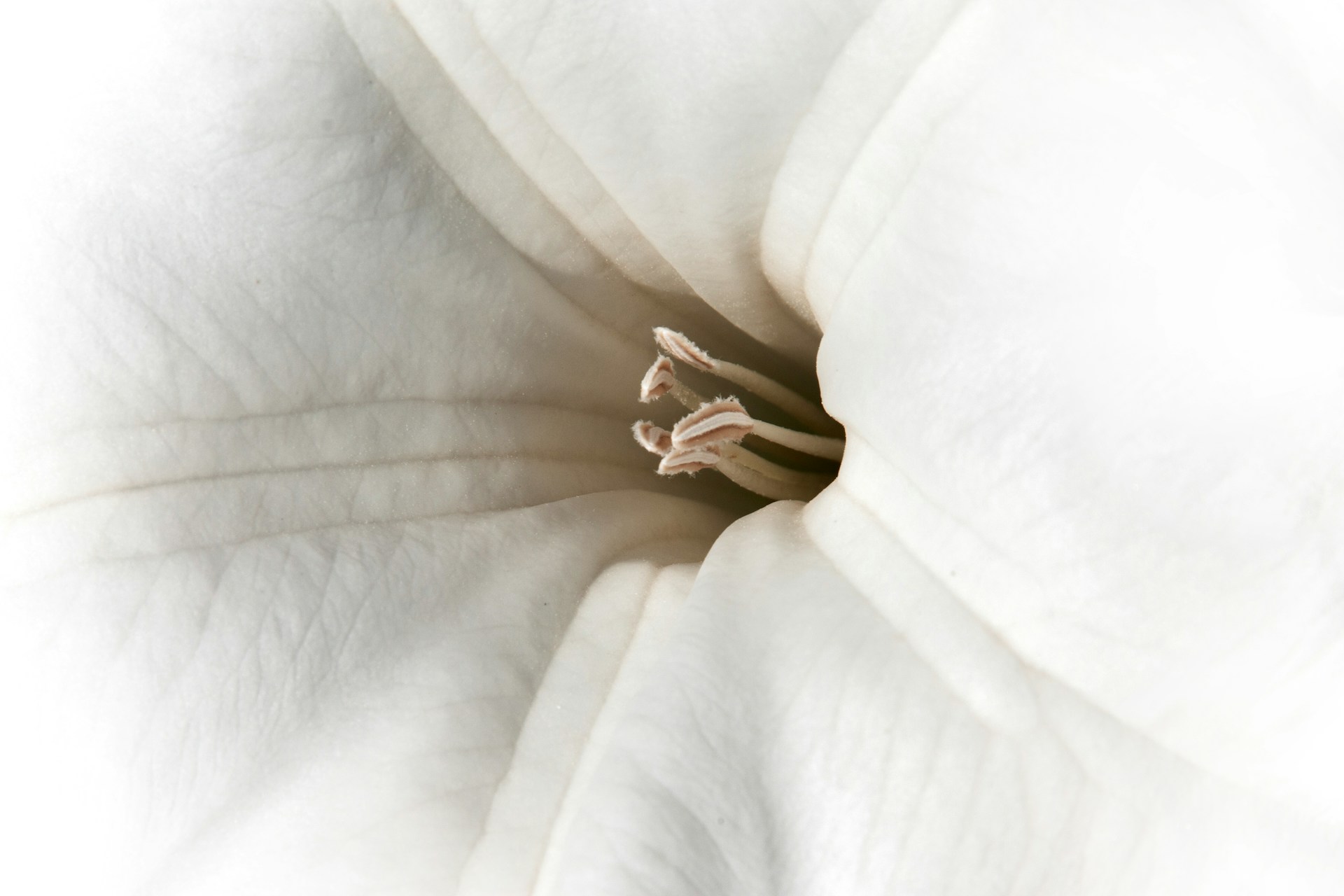
In the heat of a Georgia summer, many of us see our gardens best after dark. The day’s work is done, the air has softened and the porch is finally pleasant. A moon garden is designed for exactly those hours: a planting of white and pale flowers, silvery leaves and blooms that release their fragrance in the evening, so the garden seems to glow and perfume the air just when you are ready to enjoy it.
Why white flowers glow at dusk
As light fades, our eyes change how they see. In bright light, color vision dominates. In dim light, the eye relies more on cells that are most sensitive to blue-green light and do not distinguish color well. Reds and deep purples are among the first colors to turn gray at dusk, while whites, pale yellows and silvers stay visible much longer. This shift is called the Purkinje effect, after the nineteenth-century Czech scientist who described it. It is why a white blossom can seem to float in the twilight.
One of the most famous examples of the idea is the White Garden at Sissinghurst Castle in England, planted in the mid-twentieth century by the writer Vita Sackville-West. You need only a few pots or a border by the porch to borrow its magic.
Plants that suit a Southern summer night
- Moonflower: a fast-growing vine whose large white flowers unfurl at dusk, often quickly enough to watch, and give off a sweet scent.
- Four o’clocks: old-fashioned, heat-tolerant plants that open in late afternoon. White and pale varieties are lovely, and many are fragrant.
- Flowering tobacco: tall, tubular blooms that are especially fragrant in the evening.
- Gardenia: a Southern classic with creamy white flowers and a heavy evening scent in late spring and early summer.
- White vinca, white zinnias and white salvias: heat lovers that bloom all summer and catch the last light.
- Silver foliage: dusty miller and other silvery plants reflect light and frame the flowers.
Many night-scented flowers are pollinated by moths, including large hawk moths that hover like hummingbirds. If you sit quietly at dusk, you may see one at work.
A note of caution: some popular night bloomers, including datura and angel’s trumpet, are toxic, and many garden plants should never be eaten. If you have children or pets, check each plant before you buy it. The ASPCA keeps a list of plants that are toxic to animals, and your county extension office can help with local questions.
Placing it where you will use it
Put your moon garden where you actually spend evenings: beside the porch steps, around the patio or under a bedroom window that is open on cooler nights. A pale gravel path or light-colored pots add to the glow. Go easy on bright outdoor lights. A few low, warm lights, or none at all, will let the flowers, the moon and any fireflies do the work.
Enjoying it slowly
Once it is planted, the moon garden asks only that you visit. Step outside after supper with a glass of something cold. Watch the colors drain from the yard until only the white remains. Notice which scent arrives first. It is a gentle way to end a hot day, and a reminder that some of summer’s best moments only begin when the sun goes down.