
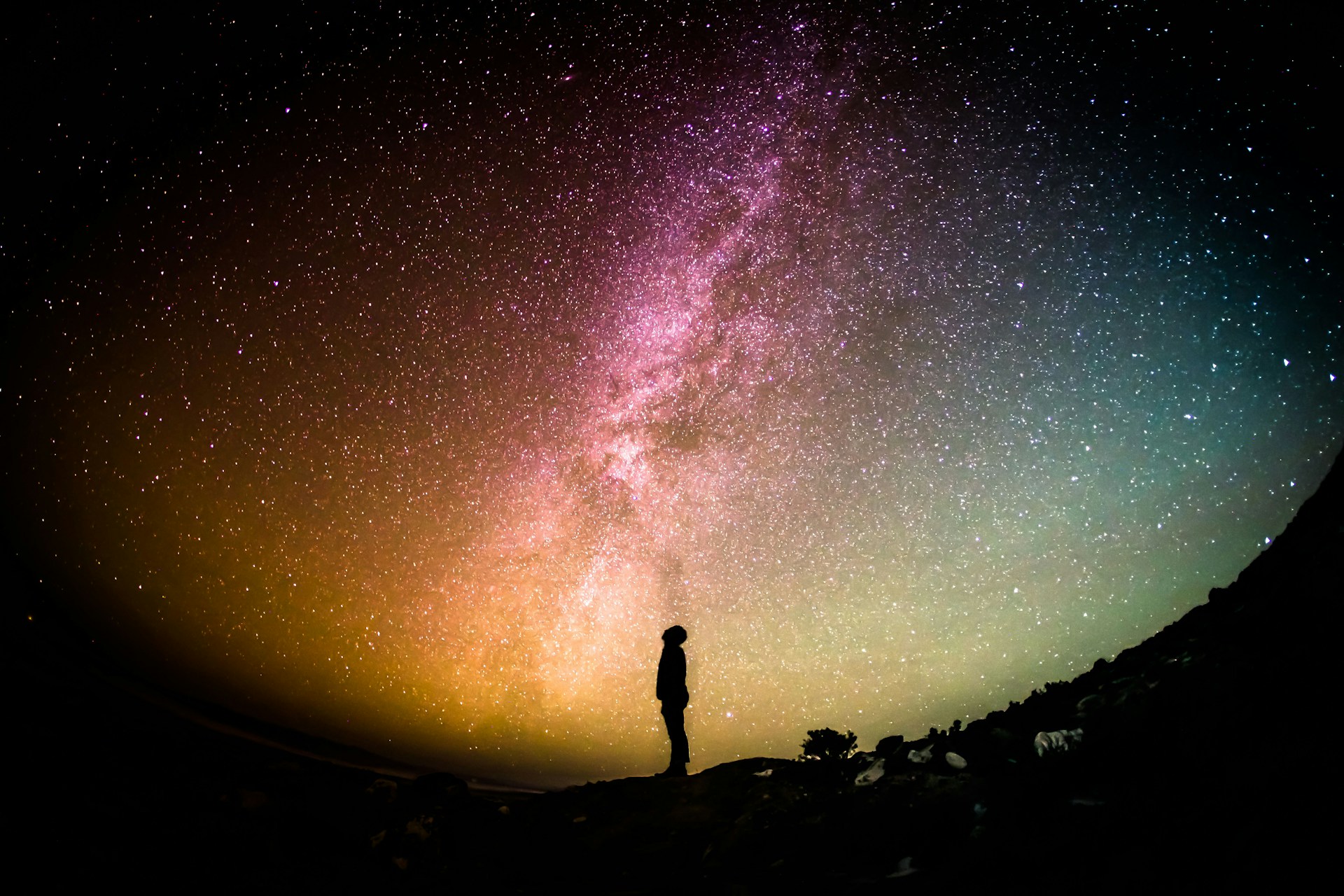
There is something about lying on your back under a summer sky that puts the rest of life in perspective. The stars do not hurry. They ask nothing. And you do not need a telescope, an app or any special knowledge to enjoy them, only a dark spot, a little patience and a willingness to stay up a bit late.
When and where to look
Around the solstice, the sky in Middle Georgia does not get fully dark until after ten o’clock, so summer stargazing is a late-evening affair. Moonless nights are best, since a bright moon washes out fainter stars. Summer humidity and haze can also soften the view, so the clearer, drier nights after a front passes through are especially good.
Light pollution matters most of all. In town, you will see the brightest stars. Away from city lights, the sky fills in dramatically. Georgia has some genuinely dark places, including Stephen C. Foster State Park near the Okefenokee Swamp, which has been recognized as an International Dark Sky Park. If you plan a trip, check the park’s official website for hours and rules about night visits.
Finding the Summer Triangle
The easiest summer pattern for beginners is not a constellation but an asterism, a shape made from bright stars in different constellations. The Summer Triangle is formed by three of them:
- Vega, a brilliant blue-white star in the small constellation Lyra. On June evenings it climbs in the east and is often the first bright star you notice there.
- Deneb, the tail of Cygnus, the Swan, lower and to the left of Vega.
- Altair, in Aquila, the Eagle, lower down and to the right, completing a large, lopsided triangle.
Once you find it, the triangle becomes a familiar friend that rides higher each week as summer goes on.
The Milky Way and other sights
On a truly dark night, a soft, cloudy band stretches across the sky, running right through the Summer Triangle. That is the Milky Way, our own galaxy seen edge-on from within. Its brightest, densest region lies low in the south in summer, toward the constellations Sagittarius and Scorpius. Look for Antares, a reddish star in Scorpius, low over the southern horizon.
While you watch, you may see satellites gliding steadily across the sky and the occasional meteor streaking past. If you enjoy those, the Perseid meteor shower peaks each August and is worth marking on the calendar.
Making it a restful ritual
Bring a blanket or a reclining chair, insect repellent and a light layer, since even summer nights can feel damp after a while. Give your eyes at least twenty minutes to adjust to the dark, and avoid looking at your phone, which resets that adjustment. If you need light, a flashlight covered with red cellophane is gentler on night vision.
Then simply lie back and look. Let your breathing slow. Notice how more stars appear the longer you wait, as if the sky were slowly opening. You do not need to name a single one. Being still beneath them is the whole point, and on a warm June night it is one of the most peaceful things you can do.