
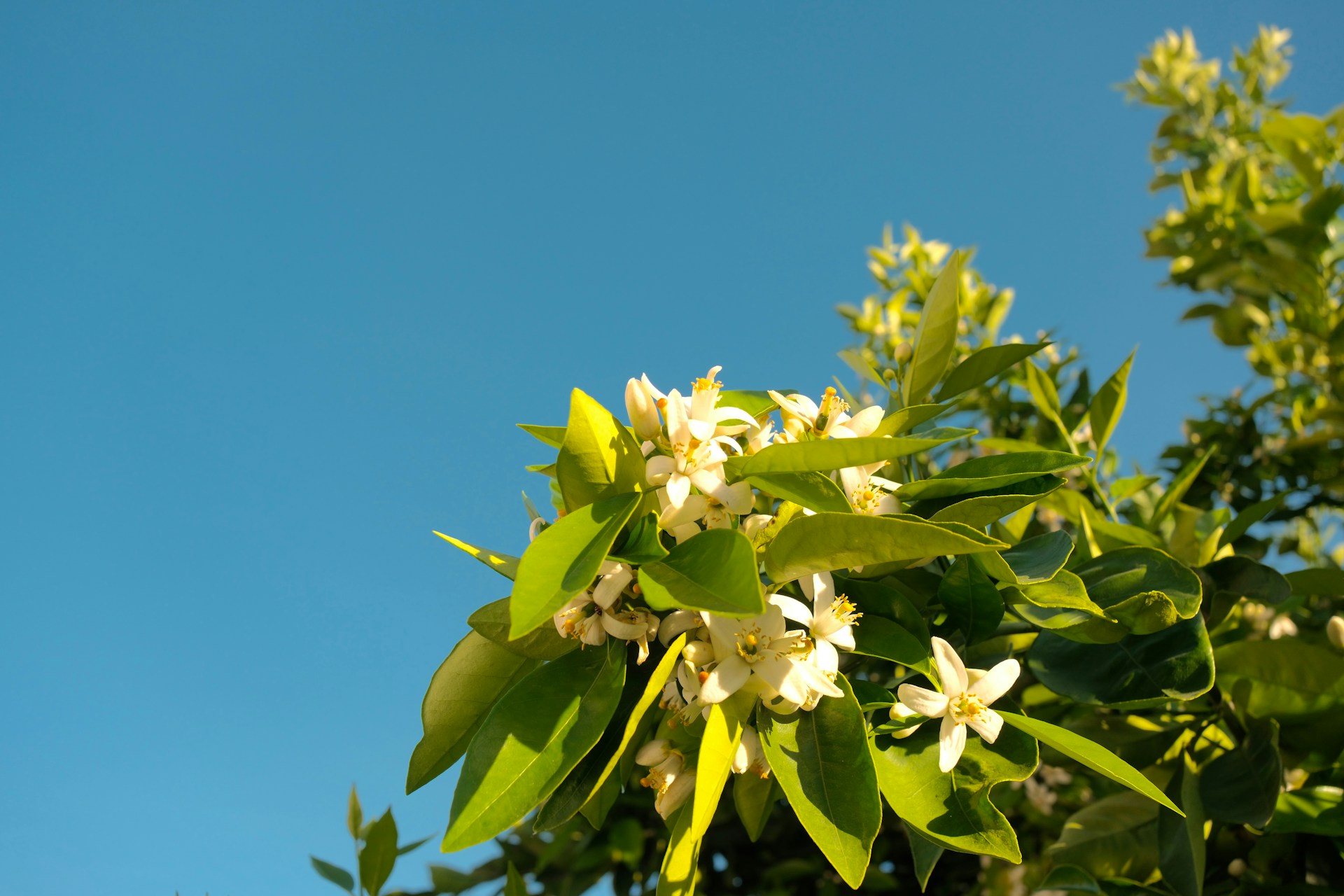
Neroli is the essential oil distilled from the blossoms of the bitter orange tree, and it carries one of the most elegant stories in the history of fragrance. The scent is fresh, floral and slightly green, with a honeyed sweetness underneath that is nothing like the fruit. For centuries it has been associated with weddings, with princesses and with the sunlit groves of the Mediterranean, and it remains one of the most prized ingredients in perfumery.
The Princess of Nerola
The name is usually traced to Anne Marie Orsini, a French-born noblewoman who became Princess of Nerola, a small town near Rome, in the late seventeenth century. She is said to have loved the scent of bitter orange blossoms so much that she used it to perfume her gloves, her bathwater and her stationery, setting a fashion that spread through the courts of Europe. Whether or not every detail of the story is true, the name stuck, and the oil has been called neroli ever since.
One Tree, Several Scents
The bitter orange tree, Citrus aurantium, is unusually generous. It gives perfumers three distinct materials:
- Neroli, steam distilled from the fresh blossoms. Light, floral, slightly bitter.
- Orange blossom absolute, extracted from the same flowers with solvents rather than steam. Richer, sweeter and more intensely floral.
- Petitgrain, distilled from the leaves and twigs. Green, woody and fresh, like the orchard itself.
The peel of the fruit yields bitter orange oil as well. Few plants offer so many different scents from a single source.
Neroli is costly because the blossoms are picked by hand over a short season, usually in spring, and a great many flowers are needed to produce a small amount of oil. Much of the world’s supply comes from Tunisia, Morocco and southern Europe.
Orange Blossoms and Weddings
Orange blossoms have symbolized marriage and good fortune for a very long time, partly because the tree bears flowers and fruit at the same time. Brides in the Mediterranean carried them for centuries. The custom reached its peak in the nineteenth century, when Queen Victoria wore orange blossoms at her wedding, and the fashion spread across Britain and America. Wax orange blossoms became a standard bridal ornament for decades afterward.
The flowers also have a culinary life. Orange blossom water, the hydrosol left over from distillation, flavors pastries, syrups and coffee across the Middle East and North Africa and is a traditional ingredient in some Mediterranean sweets.
Neroli in Aromatherapy
Neroli is a favorite in blends meant for evening and for rest, where its soft floral scent pairs beautifully with lavender, sandalwood, bergamot and rose. It is also popular in facial oils and skincare, more for its lovely fragrance than for anything else. We make no claims about what it does. A few practical notes:
- True neroli is expensive. Very cheap bottles are almost certainly diluted or synthetic.
- A single drop is often enough in a diffuser blend.
- Dilute well before any skin contact and patch test first.
- Unlike cold-pressed citrus peel oils, neroli is not generally considered photosensitizing, but check your source and when in doubt, ask.
- Keep it away from children and pets, and talk with your doctor before using any essential oil during pregnancy.
Bringing the Scent Home
Bitter orange trees are not common in Georgia yards, but a small potted citrus on a sunny porch will bloom in spring and fill the evening air with a hint of the same fragrance. Orange blossom water in a glass of lemonade, a drop of neroli in an evening diffuser or a hydrosol mist on a warm afternoon brings a little of that Mediterranean grove into a Middle Georgia spring. It is a scent of beginnings, which suits the season perfectly.