

Tag: outdoors

  • A Morning at the U-Pick Farm: Blueberry Picking as a Slow Summer Ritual

    A Morning at the U-Pick Farm: Blueberry Picking as a Slow Summer Ritual

    There is a particular kind of quiet in a blueberry field early on a summer morning. The dew is still on the leaves, the air has not yet turned heavy and the only sounds are birds, distant voices and the soft drum of berries dropping into a bucket. Picking blueberries is repetitive, unhurried work, and that is exactly what makes it so restful.

    Georgia’s blueberry season

    Blueberries are one of the few fruits native to North America that are grown on a large scale, and Georgia has become one of the country’s major blueberry-producing states. Two main types thrive here: rabbiteye blueberries, which are native to the Southeast, and southern highbush varieties, which tend to ripen earlier. Depending on the variety and the weather, picking season in Georgia generally runs from late spring through midsummer.

    Many farms around the state open their rows to the public for pick-your-own. Hours, prices and picking conditions change from week to week, so check the farm’s website or call before you go. Some farms close for the day once the ripe berries are picked over.

    Planning your morning

    • Go early. The first hours after opening are the coolest and often the best for picking.
    • Dress for the field. A wide-brimmed hat, sunscreen, light long sleeves and closed shoes for uneven ground.
    • Bring water and a snack, plus a damp cloth in a bag for sticky fingers.
    • Ask about containers. Some farms provide buckets; others welcome your own.
    • Follow the farm’s rules about where to pick and whether tasting in the rows is welcome.

    How to pick like a regular

    Ripe blueberries are fully blue all over, with no red or green near the stem. The best way to pick is gentle: cup your hand under a cluster and roll the berries lightly with your thumb. Ripe ones drop into your palm, and unripe ones stay on the bush for another day. Look under the leaves and toward the inside of the bush, where shaded berries are often plump and missed by others.

    Bringing the harvest home

    Keep your berries out of the sun on the way home, and refrigerate them as soon as you can. Do not wash them until just before eating, since moisture makes them spoil faster. To freeze, spread unwashed berries on a tray in a single layer, freeze until firm and then pour them into a bag. They will stay separate and ready for pancakes, smoothies or a handful straight from the freezer on a hot afternoon.

    Letting it be slow

    The real pleasure of a U-pick morning is not the full bucket at the end. It is the rhythm of the work: reach, cup, roll, drop. Let your attention settle on the feel of the berries and the sound they make. Notice the sweetness of a sun-warmed berry compared with one from the shade. Talk with whoever came with you, or do not talk at all.

    Children often love it, too, once they discover that the best berries hide low on the bush, right at their eye level. An hour in the rows, a cold drink in the car and a bowl of berries on the kitchen table: it is a small, complete summer day, finished before the heat has even arrived.

  • Blue Space: Why Time Near Water Feels So Restful

    Blue Space: Why Time Near Water Feels So Restful

    Think about where you go when you need to clear your head. For a surprising number of people, the answer involves water: a riverbank, a lake dock, the beach, even a fountain in a city square. Researchers who study how our surroundings affect wellbeing have a name for these places. They call them blue spaces, a watery counterpart to the more familiar idea of green space.

    What people notice near water

    Ask people to describe how they feel beside water and the same things come up. The sound of moving water is steady and unhurried, and it covers other noise. Light shifts constantly on the surface, giving the eyes something soft to rest on. The horizon opens up. On a hot day, the air near a lake or river can feel a little fresher. None of this requires a plan or an activity. Many people find that simply sitting and watching is enough.

    The waters of Middle Georgia

    Macon grew up beside the Ocmulgee River, which flows southeast through the city and later joins the Oconee River to form the Altamaha, one of the great rivers of the Southeast, on its way to the Atlantic. Riverside parks and trails in and around Macon give people a chance to walk, sit or paddle near the water, and there are lakes and reservoirs within an easy drive in several directions.

    Before you go, check the official website of the park or the county for hours, access points and rules. Rivers deserve respect. Currents can be stronger than they look, water levels change after heavy rain and posted warnings are there for good reason. Wear a life jacket when paddling or boating, never swim alone and keep children within arm’s reach near any water.

    Small water, close to home

    You do not need a lake view to bring water into an ordinary week. A few ideas:

    • A birdbath in the yard, where you can watch visitors splash. Change the water every few days so mosquitoes cannot breed in it.
    • A small tabletop fountain on a desk or porch, for the sound alone.
    • A wide bowl of water on the table with a single floating flower.
    • Sitting on the porch during a summer rain, simply listening.
    • A lunch break beside a public fountain or a pond in a park.

    A five-minute water practice

    Next time you are near water of any size, try this. Sit comfortably and let your gaze rest on the surface. Notice the light first: where it glints, where it darkens, how it moves. Then close your eyes and listen. Is the sound steady or broken, loud or barely there? Let your breath slow to match whatever rhythm you hear. When your mind drifts, as it will, return to the sound.

    Five minutes is plenty. You may find, as many people do, that the water has a way of putting the rest of the day into proportion. That is not a promise, only an invitation to sit beside it and see.

  • Cloud Watching as Mindfulness: Lying Back on a Late-Spring Afternoon

    Cloud Watching as Mindfulness: Lying Back on a Late-Spring Afternoon

    When did you last lie on your back in the grass and watch the clouds? For most of us the answer is somewhere in childhood. Yet cloud watching is one of the easiest mindfulness practices there is. It costs nothing, needs no instructions and works anywhere with a patch of sky. Late spring in Middle Georgia, with its tall white afternoon clouds, is an ideal time to start again.

    The man who named the clouds

    For most of history, clouds had no agreed names. That changed in 1802, when Luke Howard, a London pharmacist and devoted amateur weather watcher, gave a lecture proposing a simple system based on Latin words. Cumulus meant heap. Stratus meant layer. Cirrus meant a curl or wisp of hair. Nimbus referred to rain clouds. Howard’s essay was published the following year and caught on quickly. The German writer Goethe admired it enough to write poems in his honor, and the names meteorologists use around the world today still build on Howard’s original idea.

    It is a pleasing thought while you lie in the grass: the vocabulary of the sky was invented by someone who simply loved looking up.

    A few clouds to look for

    • Cumulus: the classic puffy, flat-bottomed fair-weather clouds that drift across warm afternoons. These are the best for finding shapes.
    • Cirrus: thin, feathery streaks very high in the sky, made of ice crystals.
    • Stratus: a gray, featureless sheet that can make a whole day feel hushed.
    • Cumulonimbus: the towering thunderheads that build on hot Georgia afternoons, sometimes flattening into an anvil shape at the top.

    That last one is your signal to fold up the blanket. The National Weather Service puts it simply: when thunder roars, go indoors. If you can hear thunder, lightning is close enough to be a danger.

    Turning it into a practice

    Find a shady spot with a view of open sky, such as the edge of a tree’s shadow, and spread a blanket. Wear sunglasses, and never look toward the sun itself. Lie back and let your eyes settle on one cloud. Watch its edges change. Notice how slowly or quickly it moves and how it thins or grows.

    When your mind wanders to the grocery list or tomorrow’s meeting, notice that, too, and bring your attention back to the sky. Many meditation teachers use clouds as a picture of thoughts themselves: they drift into view, change shape and pass on without needing to be chased or held. Ten or fifteen minutes is plenty.

    Seeing shapes

    The habit of seeing a dragon, a face or a rabbit in a cloud has a name: pareidolia, the mind’s tendency to find familiar patterns in random shapes. It is the same instinct that sees a face in the front of a car. With children, it turns cloud watching into a gentle game. Take turns pointing out shapes, then watch together as each one slowly melts into something else.

    Bring water, take breaks in the shade and head inside if the heat builds. Then let the sky do what it has always done, moving slowly overhead whether or not anyone is watching. It is a fine thing to be the one who is.

  • The Unhurried Picnic: How to Plan a Simple, Restful Meal Outdoors

    The Unhurried Picnic: How to Plan a Simple, Restful Meal Outdoors

    A picnic is one of the oldest ways of slowing down. You take a meal you could eat at the kitchen table, carry it somewhere with a view and a breeze, and suddenly the same sandwich feels like an occasion. Late May, before the full weight of a Georgia summer arrives, is one of the best times of the year to try it.

    The word comes from the French pique-nique, recorded in the late 1600s, and early picnics were often meals to which every guest contributed a share. That spirit still works. A picnic does not need to be elaborate. It needs to be easy enough that you actually go.

    Choose the spot and the hour

    Shade comes first. A big oak, a pavilion or the shadow of a building makes the difference between lingering and packing up after twenty minutes. Morning picnics and early-evening suppers are more comfortable than midday ones once the heat builds, and the light is lovelier at both ends of the day.

    If you are heading to a public park or garden, check its official website for hours and any rules about food, grills or glass containers before you go. A backyard picnic counts, too. Spreading a blanket under your own tree can feel like a small trip.

    Food that travels well

    • Sandwiches or wraps that hold together without getting soggy
    • Grain or pasta salads dressed with oil and vinegar rather than mayonnaise
    • Whole fruit and sturdy vegetables: grapes, peaches, cherry tomatoes, cucumber spears
    • Cheese, crackers and nuts for easy nibbling
    • Plenty of water, plus a jar of iced tea or lemonade

    Pack food in the order you will eat it, bring a damp cloth in a bag for sticky hands and include a bag for trash so you can leave the spot as you found it.

    Keeping food safe in warm weather

    Warm weather and food safety deserve a moment of attention. Federal food safety guidance recommends keeping cold foods at 40 degrees Fahrenheit or below and not leaving perishable food out for more than two hours, or more than one hour when the temperature is above 90 degrees. On a hot Georgia afternoon, that hour passes quickly.

    A cooler with ice packs is your friend. Many people use one cooler for drinks, which gets opened constantly, and another for perishable food, which stays closed and colder. Put leftovers back on ice promptly, and when in doubt, throw it out. You can find more guidance at foodsafety.gov.

    Making it restful

    The point of a picnic is not really the food. It is the permission to sit still somewhere pleasant. Leave the schedule at home. Put your phone in the bottom of the basket. Bring a book, a deck of cards or nothing at all. Lie back on the blanket after eating and watch the leaves move overhead. Let the conversation wander.

    Some of the best picnics are the simplest: two people, a loaf of bread, a few peaches and an hour with nowhere else to be. That is the whole recipe, and it is enough.

  • Beyond Sunscreen: Hats, Shade and Timing for Spring Days Outdoors

    Beyond Sunscreen: Hats, Shade and Timing for Spring Days Outdoors

    Sunscreen gets most of the attention in conversations about sun, and it deserves it. But sun care is more than a bottle. Shade, clothing, timing and a good hat have protected people for far longer than any lotion, and they work alongside sunscreen rather than instead of it. As spring pulls everyone outdoors in Georgia, here is a look at the habits beyond the bottle. This is general information; for personal guidance, especially if you have a history of skin concerns or take medications that affect sun sensitivity, talk with your doctor or dermatologist.

    Spring Sun Is Stronger Than It Feels

    Because the air is still mild in April, it is easy to underestimate the sun. The strength of ultraviolet light depends on the sun’s angle, not the temperature, and by late spring the angle is high. A cool, breezy afternoon in the garden can leave the back of your neck pink. Cloud cover reduces UV but does not block it, and light bounces off water, sand and pale pavement.

    Timing

    UV exposure is generally strongest in the middle of the day, roughly from late morning through midafternoon. If you have a choice about when to garden, walk or run, early morning and evening are gentler on skin and more pleasant in the Georgia heat anyway. A simple rule of thumb that many sun safety organizations share: when your shadow is shorter than you are, the sun is strong enough to warrant care.

    Shade

    Shade is the oldest sun protection there is. Trees, porches, umbrellas and awnings all reduce exposure, though none of them block it entirely because light scatters from the surroundings. A few habits:

    • Plan the shadiest route for a walk, which in Macon’s older neighborhoods usually means the streets with big oaks.
    • Set up outdoor seating under a tree or umbrella rather than in open sun.
    • Take breaks in the shade during long stretches of yard work.
    • Carry a compact umbrella on bright days. It is a common sight in many parts of the world and a sensible one.

    Hats and Clothing

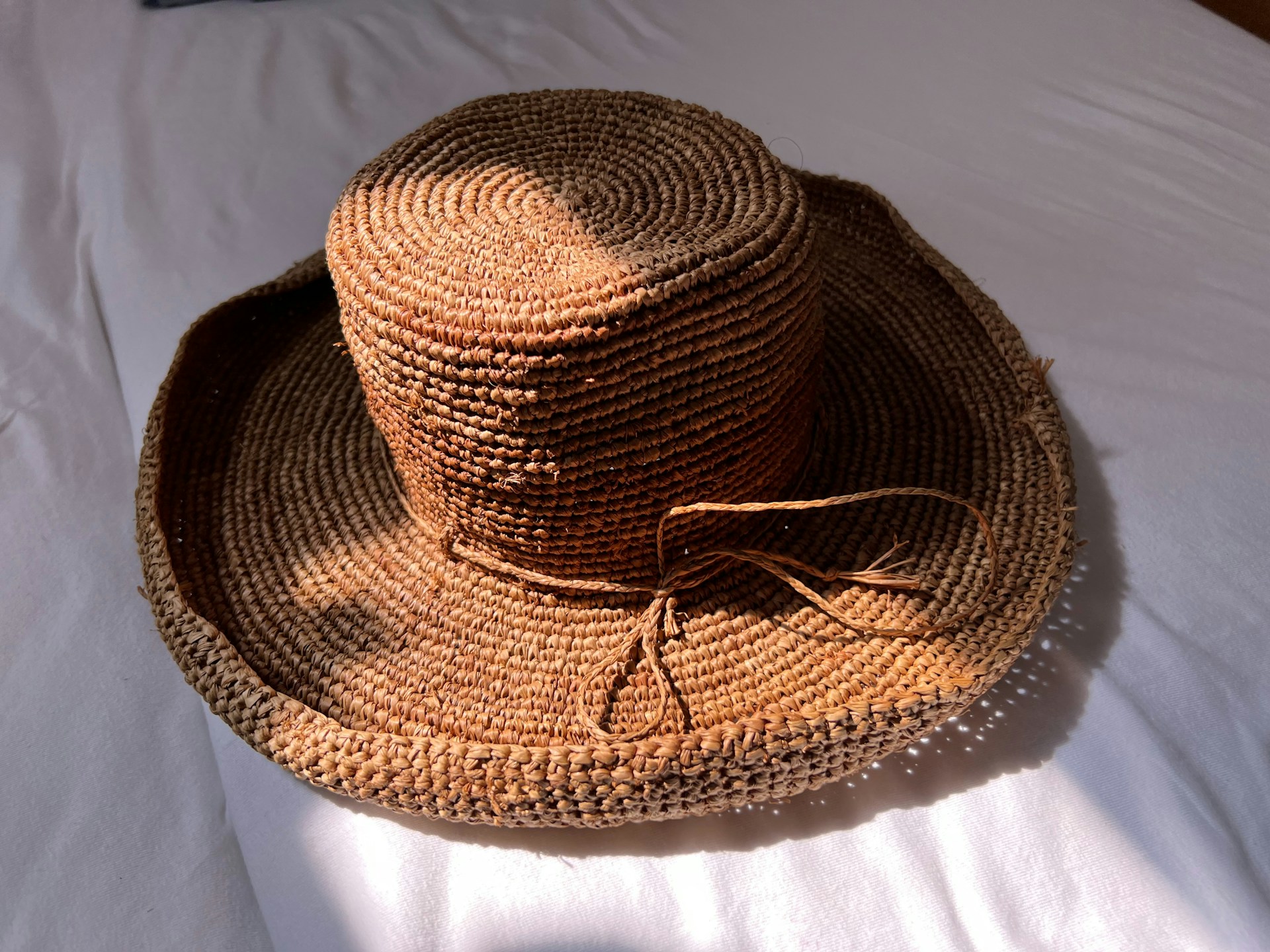
    A wide-brimmed hat protects the face, ears and neck better than a baseball cap, which leaves the ears and the back of the neck exposed. Look for a brim of three inches or more and a tightly woven fabric. For clothing, long sleeves and long pants in lightweight, breathable fabrics are surprisingly comfortable in spring heat and spare you a layer of sunscreen. Darker colors and denser weaves block more light than thin, pale fabrics. Some clothing is labeled with an ultraviolet protection factor, or UPF, which works like SPF for fabric. Sunglasses that block UV protect the eyes and the delicate skin around them.

    None of these replaces sunscreen on exposed skin. The point is that layering habits makes each one easier. A morning walk under oaks in a hat and long sleeves asks very little of your sunscreen. An afternoon in open sun at the lake asks a great deal of it, and that is when generous application and reapplication matter most. Many dermatology organizations suggest combining shade, protective clothing and broad-spectrum sunscreen as the standard approach, and that combination is also simply more comfortable.

    A Few Spring Reminders

    • Check that last year’s sunscreen is not expired.
    • Keep a hat by the door and a spare in the car.
    • Apply sunscreen to the easily forgotten spots: ears, the back of the neck, the tops of feet in sandals, the part in your hair.
    • Drink water. Sun care and hydration go together.

    Spring in Georgia is made for being outside. A hat, a shady route and a little attention to the hour let you enjoy all of it without paying for it later.

  • Winter Walks in Macon: Enjoying the Outdoors in the Quiet Season

    One of the gifts of living in Middle Georgia is that winter rarely keeps us indoors for long. Many January days are crisp and bright, perfect for a walk. The trees are bare, the trails are quieter and the low winter sun brings out colors you might miss in summer.

    Walking is a gentle form of movement that many people enjoy. If you have a health condition or have not been active in a while, check with your doctor before starting a new walking routine.

    Why Winter Walks Feel Different

    Walking in winter has its own character. Without leaves on the trees, you can see farther into the woods and spot birds more easily. Paths are often less crowded. The cool air can feel refreshing, and there is a special pleasure in coming home to a warm drink afterward.

    Places to Explore Around Macon

    Macon has several lovely spots for walking. A few to consider:

    • Ocmulgee Mounds National Historical Park, which preserves a landscape tied to more than ten thousand years of human history, including large earthen mounds built by Native American peoples. It has walking trails through fields and woods. Check nps.gov/ocmu for current hours, trail information and any closures before you go.
    • Amerson River Park, along the Ocmulgee River, with paths near the water and open green spaces.
    • The Ocmulgee Heritage Trail, which follows the river and connects several parks and areas in the city.
    • Your own neighborhood, which can feel new when you walk it slowly and pay attention.

    Trail conditions, hours and access can change, so check official sources for the latest information.

    Dressing for Comfort

    Middle Georgia winter weather can swing from frosty mornings to warm afternoons. Layers make it easy to adjust:

    • A light base layer that does not hold sweat
    • A sweater or fleece for warmth
    • A wind-resistant jacket on blustery days
    • A hat and gloves for early mornings
    • Comfortable, supportive shoes with good grip, since trails can be muddy after rain

    Carry water even in cool weather, and consider a small bag with a phone, a snack and a tissue or two.

    Walking Safely

    A few general safety habits help any walk go well:

    • Let someone know where you are going if you walk alone on trails.
    • Stick to marked paths and respect posted signs.
    • Wear something bright if you walk near roads, especially since it gets dark early in winter.
    • Plan to finish before sunset.
    • Watch for slick spots on boardwalks and leaves after rain or frost.

    Making the Walk a Mindful Practice

    A walk can be exercise, but it can also be a moment of calm. Try leaving your headphones at home for part of the way. Notice the sound of your footsteps, the smell of the air after rain, the feel of the wind on your face. Pick one thing to look for, such as a certain bird or the shapes of bare branches against the sky.

    When you return home, take a moment to notice how you feel. Maybe warmer, maybe more awake, maybe simply glad you went. A winter walk is a small, simple gift you can give yourself on almost any day.