
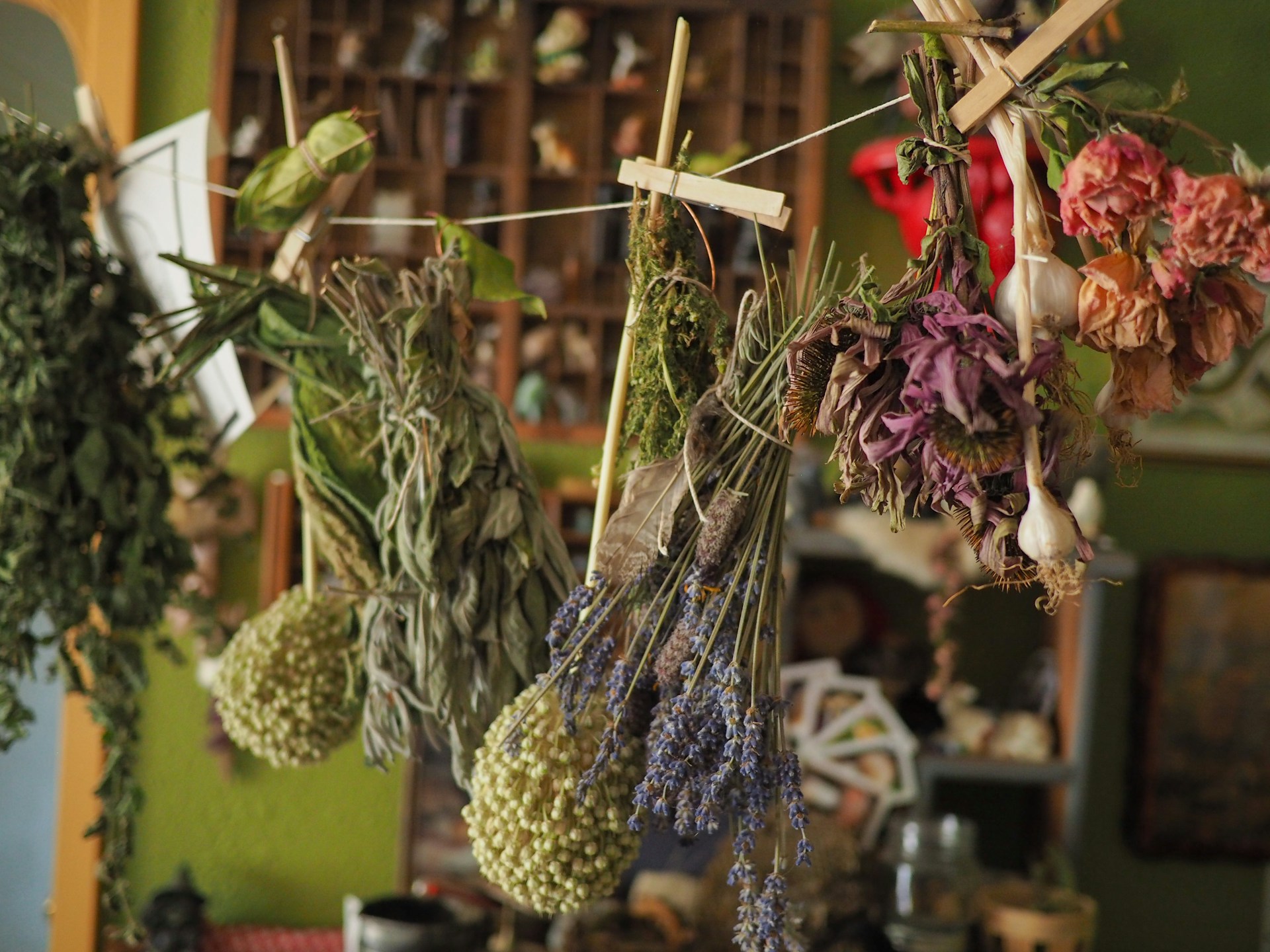
By late June, a Georgia herb garden is often producing faster than anyone can keep up with. The mint has climbed out of its pot, the rosemary is bushy and the basil needs cutting every few days. Drying some of that abundance is an old and satisfying way to keep summer’s scents for the months ahead, in sachets, bowls and jars of tea.
Why potpourri means rotten pot
The word potpourri comes from French and means, quite literally, rotten pot. It was borrowed from the Spanish olla podrida, a slow-cooked stew of many ingredients. The earliest scented potpourris were made by a moist method: layers of partly dried petals and salt were packed into a crock and left to ferment for weeks, producing a damp, unattractive but intensely fragrant mixture kept in lidded jars and opened to scent a room. The pretty bowls of dried petals we know today come from the later dry method, which favors color and appearance as well as scent.
Air-drying in humid weather
Georgia humidity makes drying slower than it is in drier climates, and mold is the main risk. A few habits help:
- Harvest on a dry morning, after the dew has evaporated but before the heat of the day.
- Gather small bundles of five to ten stems and secure them with a rubber band, which tightens as the stems shrink.
- Hang bundles upside down indoors, in an air-conditioned room out of direct sunlight. Garages, porches and attics are usually too humid in summer.
- Check after a week or two. Herbs are ready when the leaves crumble easily between your fingers.
- If a bundle stays limp or shows any sign of mold, compost it and try again with smaller bundles.
Rosemary, mint, lemon balm, oregano, thyme and sage all dry well this way. Among flowers, roses, statice, strawflowers and globe amaranth hold their color. Hydrangeas are a special case: many people stand the cut blooms in a vase with a little water and simply let them dry as the water evaporates.
Simple sachets
A sachet is just a small fabric pouch filled with dried, fragrant plant material. Use a cotton or muslin bag, or sew a simple square from scrap fabric. Fill it with dried lavender, rosemary, mint or rose petals, alone or mixed, and tie it closed. Tuck sachets into drawers, closets, suitcases and pillowcases. When the scent fades, squeeze the sachet gently to release more, or refill it with fresh herbs.
Storing herbs for tea and the kitchen
Herbs you plan to use for tea or cooking deserve a little extra care. Strip the dried leaves from the stems, keep them as whole as possible and store them in clean, airtight glass jars away from heat and light. Label each jar with the name and date. Most dried herbs are at their best within about a year.
Keep bowls of potpourri out of reach of children and pets, who may be tempted to taste it, and be especially careful with simmering liquid potpourri around cats and dogs. Your veterinarian can answer questions about specific plants. Then, some gray morning next winter, open a jar of summer mint or a drawer with a sachet inside, and the garden will come back to you for a moment.