
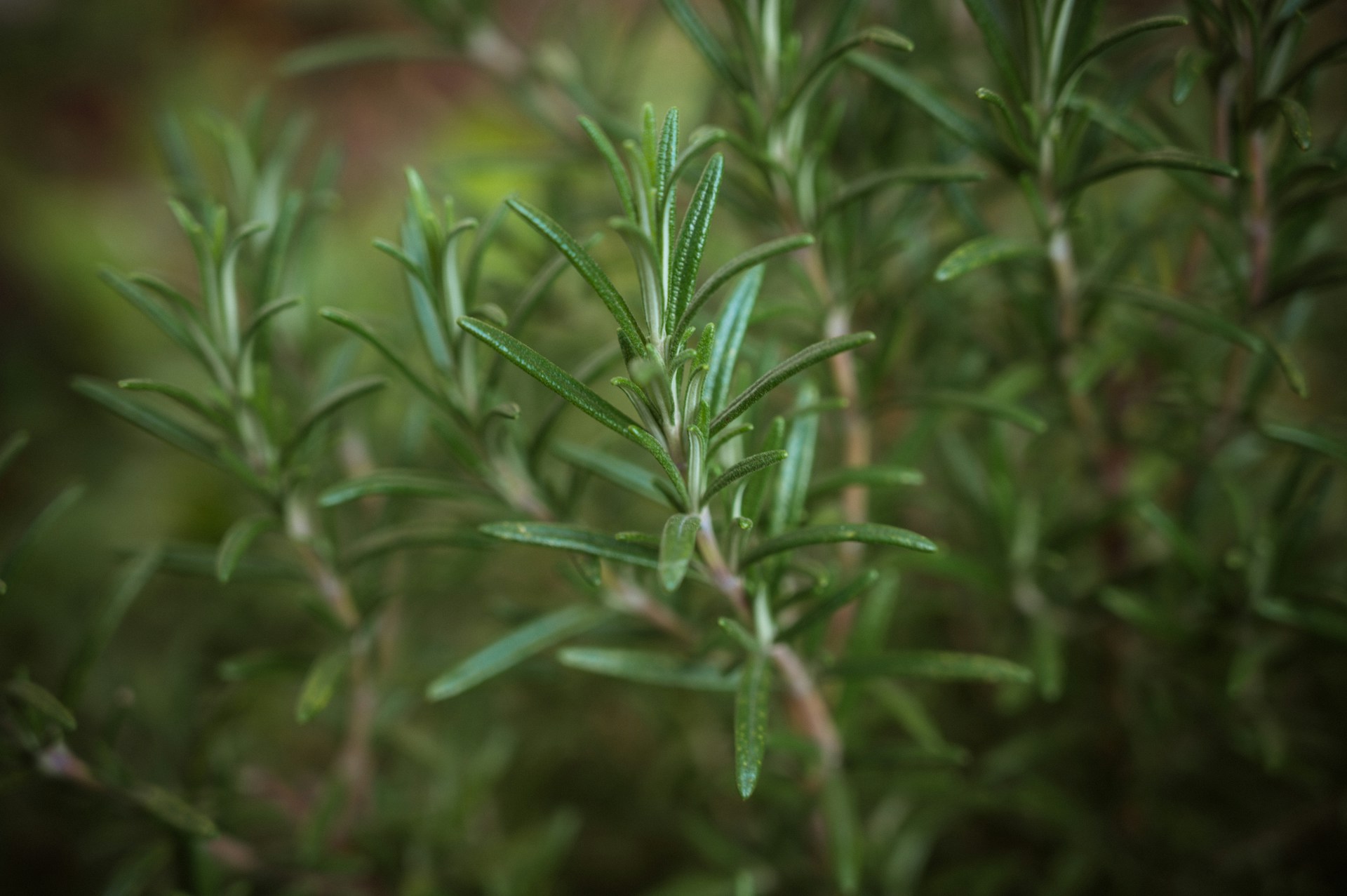
Rosemary is one of the most familiar scents in the kitchen and the garden: sharp, piney, a little like camphor, with a hint of something sweet underneath. It has been grown around the Mediterranean for thousands of years and carries a long trail of stories about memory, loyalty and remembrance. It is also a plant that thrives in Georgia gardens, which makes it an easy herb to know well.
Dew of the Sea
The name comes from the Latin ros marinus, meaning dew of the sea, a nod to the plant’s habit of growing on sunny coastal hillsides where it needs little more than sea mist to survive. Botanists long called it Rosmarinus officinalis; in recent years it was reclassified into the sage family as Salvia rosmarinus, though gardeners and cooks still use the old name. It is a woody evergreen shrub with needle-like leaves and small blue, purple or white flowers that bees love.
A Herb of Remembrance
In the ancient world, students in Greece were said to wear rosemary garlands while studying, and the plant became associated with memory. That link endured for centuries. In Shakespeare’s Hamlet, Ophelia hands out rosemary for remembrance. The herb appeared at both weddings, as a symbol of fidelity, and funerals, where sprigs were carried or cast into graves. In parts of Europe, it was burned in sickrooms and tucked into linen chests, more for its fresh scent than for anything proven about it.
Rosemary also traveled with cooks. Roman recipes used it, medieval monastery gardens grew it, and it remains a cornerstone of Mediterranean cooking, from roasted lamb to focaccia.
Rosemary in Aromatherapy
Rosemary essential oil is steam distilled from the leaves and flowering tops. Its scent is clean, herbal and bracing, and many people describe it as the smell of alertness. It appears often in morning diffuser blends, in combination with citrus oils, and in scented products for the bath and shower.
The oil comes in several chemotypes, which means plants of the same species grown in different places produce oils with noticeably different chemistry and scent. Some lean more camphorous, others softer and more herbal. The label may note the chemotype, and it is worth sniffing a few if you can.
Using It Thoughtfully
Rosemary is enjoyed as a fragrance and a flavor, not as a remedy, and we make no claims about it beyond that. A few sensible habits:
- Dilute rosemary essential oil in a carrier oil before any skin contact, and patch test first.
- Keep diffuser sessions short, around thirty minutes, in a ventilated room.
- Many aromatherapy references advise caution for people who are pregnant, have high blood pressure or have a seizure disorder. If any of those apply to you, talk with your doctor before using the oil.
- Keep it away from children and pets, and never swallow essential oil.
- For most everyday purposes, the fresh herb is the gentlest way to enjoy the scent.
Simple Ways to Enjoy Rosemary
Grow a plant by the back door and brush it as you pass. Add a sprig to a bowl of steaming water for a facial steam. Simmer a few stems with lemon peel on the stove for a natural room scent. Tie a small bundle with twine and hang it in the shower, where the warm water releases its fragrance. Tuck dried sprigs into a drawer of linens. None of these take more than a minute, and all of them bring a little of the sunny Mediterranean hillside into a Georgia spring.