Tag: summer

  • Sitali, the Cooling Breath: A Yoga Breathing Practice for Hot Days

    Sitali, the Cooling Breath: A Yoga Breathing Practice for Hot Days

    On a sweltering afternoon, most of us reach for a cold drink or a fan. Yoga offers another small tool: a breathing practice traditionally described as cooling. It is called sitali, and it takes only a few minutes, needs no equipment and can be done in a chair. Many people find the sensation of cool air moving across the tongue surprisingly refreshing.

    Where sitali comes from

    Sitali, also spelled shitali or sheetali, is one of the pranayama practices of hatha yoga. Pranayama refers to the deliberate shaping of the breath. The Hatha Yoga Pradipika, a well-known yoga text from the fifteenth century, describes sitali alongside a related practice called sitkari. The name comes from a Sanskrit word meaning cool, and the practice has long been associated with hot weather.

    We share it here as a pleasant, simple experience to try, not as a remedy for anything.

    How to practice sitali

    • Sit comfortably, with your back upright but relaxed. A chair is fine.
    • Take one or two ordinary breaths and let your shoulders drop.
    • Open your mouth and curl the sides of your tongue upward to form a tube, letting the tip extend slightly past your lips.
    • Inhale slowly and smoothly through the tube of your tongue, as if sipping air through a straw. Notice the coolness.
    • Close your mouth and exhale slowly through your nose.
    • Repeat for five to ten rounds, then return to normal breathing for a minute and notice how you feel.

    If you cannot curl your tongue

    Not everyone can roll the tongue into a tube, and that is perfectly fine. The alternative, sitkari, works for anyone. Bring your upper and lower teeth lightly together, part your lips and draw the breath in slowly through the gaps between your teeth, making a soft hissing sound. Close your mouth and exhale through your nose. The incoming air feels cool on the teeth and tongue in much the same way.

    When to try it, and when to skip it

    Sitali can be a nice companion to a summer day: after coming inside from the heat, after an evening walk, during an afternoon slump or as part of a wind-down routine on a warm night. Pair it with a cool shower or a glass of water rather than using it in place of them.

    Because you are breathing in through the mouth, practice where the air is clean. Skip it outdoors on heavy pollen days or anywhere smoky or dusty. Go slowly, and stop if you feel lightheaded, dizzy or uncomfortable. If you have a respiratory or heart condition, are pregnant or have any other health concern, talk to your doctor before trying new breathing practices. And on genuinely dangerous heat days, no breathing technique replaces shade, water, air conditioning and medical help when it is needed.

    Used gently, sitali is a small summer ritual: a few cool breaths, a few quiet moments and a reminder that even in the heaviest heat, you can pause, slow down and come back to yourself.

  • Herbal Iced Teas for Hot Afternoons: Hibiscus, Mint and Other Caffeine-Free Blends

    Herbal Iced Teas for Hot Afternoons: Hibiscus, Mint and Other Caffeine-Free Blends

    In the South, a pitcher of iced tea in the refrigerator is almost a household rule. Sweet or unsweet, it is offered to guests, carried to porches and poured over ice at every summer supper. Herbal iced teas, made from flowers, leaves and roots rather than the tea plant, are a lovely companion to the classic: naturally caffeine-free, endlessly varied and well suited to sipping in the late afternoon or evening.

    A short history of iced tea

    Recipes for iced tea appear in American cookbooks in the 1800s, and sweetened versions show up in Southern cookbooks before the end of that century. The drink’s fame grew in the early twentieth century, and the 1904 World’s Fair in St. Louis is often credited with introducing it to a wider audience during a hot summer. Refrigeration and cheap ice did the rest. By the middle of the twentieth century, iced tea was a fixture of Southern tables.

    Herbal blends worth trying

    • Hibiscus: dried hibiscus calyces brew into a ruby-red, tart, cranberry-like drink. It is known as agua de jamaica in Mexico, bissap in parts of West Africa and sorrel in the Caribbean, where it is a holiday tradition.
    • Mint: fresh spearmint or peppermint, alone or added to almost anything else, is the simplest cool flavor there is.
    • Rooibos: a South African plant, sometimes called red bush, that brews into a smooth, naturally sweet, reddish tea.
    • Lemon herbs: lemon balm, lemon verbena or a few blades of lemongrass give a bright citrus note without any fruit.
    • Chamomile: usually thought of as a hot bedtime tea, it is also mild and honeyed served over ice.
    • Peach and ginger: a few slices of ripe Georgia peach and fresh ginger steeped with any of the above.

    Hot brew or cold brew

    For a hot brew, steep about one tablespoon of dried herbs, or a small handful of fresh ones, per cup of just-boiled water for five to ten minutes. Strain, let it cool and then refrigerate. Hibiscus turns very tart if steeped too long, so taste as you go.

    For a gentler cold brew, combine herbs and cold water in a jar and leave it in the refrigerator for six to twelve hours, then strain. The flavor is softer and less bitter. Cold brewing in the refrigerator is also a food-safe alternative to old-fashioned sun tea, which sits for hours at the warm temperatures bacteria enjoy.

    Either way, keep herbal tea refrigerated and drink it within a couple of days. Sweeten lightly, if at all, with honey or simple syrup stirred in while the tea is still warm.

    A note on herbs and health

    Herbal teas are plants, and some can interact with medications or may not suit everyone. If you drink an herbal tea regularly, are pregnant or nursing, or take prescription medication, talk to your doctor or pharmacist about your choices. We enjoy these teas for their flavor and the pleasure of the ritual, and we encourage you to do the same.

    Pour a tall glass over ice, add a sprig of mint and carry it out to the shadiest spot you have. Summer afternoons were made for exactly this.

  • Long Light in June: Common Questions About Early Sunrises, Late Sunsets and Sleep

    Long Light in June: Common Questions About Early Sunrises, Late Sunsets and Sleep

    June in Middle Georgia brings the longest days of the year. Dawn arrives early, the sky stays bright well into the evening and the house can still be full of daylight at bedtime. For many people, this throws sleep a little off balance. Here are answers to some common questions about sleeping well in the long-light weeks of summer. This is general information; if sleep troubles are persistent, talk to your doctor.

    Why is it harder to wind down when it is still light out?

    Light is the strongest cue the body uses to set its internal clock. As evening light fades, the body begins producing more melatonin, the hormone associated with feeling sleepy at night. Bright light in the evening tends to delay that process. When the sky is still glowing at nine o’clock, your body may simply not have received the message that night has arrived, even if your schedule says it is time for bed.

    What helps in the evening?

    • Close the blinds on west-facing windows in the late afternoon. It keeps the house cooler and softens the evening light.
    • Switch from overhead lights to lamps after dinner, even if it still feels early.
    • Dim screens or put them away during the last hour before bed, since bright screens add to the light your eyes take in.
    • Keep a simple wind-down routine, such as a shower, a few pages of a book and lights out, at about the same time each night.

    Why do I keep waking up at dawn?

    Early light slipping around curtain edges is a common culprit. So is the dawn chorus, since birds start singing before sunrise, and so is morning warmth in a room that faces east. Blackout curtains or a lined shade can make a real difference. A comfortable sleep mask is an inexpensive alternative and handy for travel, too. If birdsong wakes you, a fan or a quiet white noise machine can soften it.

    If you wake early and cannot get back to sleep, try not to fight it. Lying quietly with your eyes closed and breathing slowly is still restful. Some people choose to get up and enjoy the cool of the morning instead, which can be one of the best parts of a summer day.

    Should I change my sleep schedule for summer?

    Many people naturally drift a little later in summer, staying up to enjoy the evening and sleeping in on weekends. A small shift is fine. What tends to matter more is consistency: going to bed and waking up at roughly the same times each day, weekends included, helps your body keep a steady rhythm. With children out of school, a regular bedtime and wake time can keep summer days from sliding into a jumble.

    When should I talk to someone?

    A few restless nights during a heat wave or a busy season are common. But if you regularly have trouble falling asleep or staying asleep, wake up feeling unrefreshed or feel very sleepy during the day, talk to your doctor, who can help you understand what is going on. In the meantime, a darker room in the morning, a dimmer house at night and a steady rhythm can help the long days of June feel like a gift rather than a disruption.

  • Skincare Basics for Men: A Simple Routine That Takes About Two Minutes

    Skincare Basics for Men: A Simple Routine That Takes About Two Minutes

    Plenty of men grew up with one bar of soap for everything, a razor and maybe an aftershave that stung. There is nothing wrong with keeping things simple, but a Georgia summer is hard on skin: sun, sweat, heat and long hours outdoors. A basic routine that takes about two minutes a day can make skin feel noticeably more comfortable. Here is a plain version, with no jargon and no shelf full of products.

    Step one: wash with something gentle

    Many bar soaps are made for the body and can leave facial skin feeling tight and dry. A mild facial cleanser, in a gel for oilier skin or a cream for drier skin, is gentler. Wash at night to clear away sweat, sunscreen and the day’s grime, and again in the morning if you like. After a sweaty afternoon of yard work, a quick rinse with cool water feels good and keeps the day’s sweat from sitting on your skin.

    Use lukewarm water rather than hot, and pat dry with a clean towel instead of rubbing.

    Step two: moisturize, with sunscreen in the morning

    Moisturizer is not only for dry skin. A light lotion helps skin feel comfortable after washing and shaving. The simplest approach is a daily moisturizer with broad-spectrum sunscreen of SPF 30 or higher, so one step does two jobs in the morning. On days you will be outside for long stretches, use a dedicated sunscreen and reapply it as the label directs.

    Do not forget the places men often miss: the ears, the back of the neck, the top of the head if your hair is thinning, and the lips. A lip balm with SPF fits easily in a pocket.

    A more comfortable shave

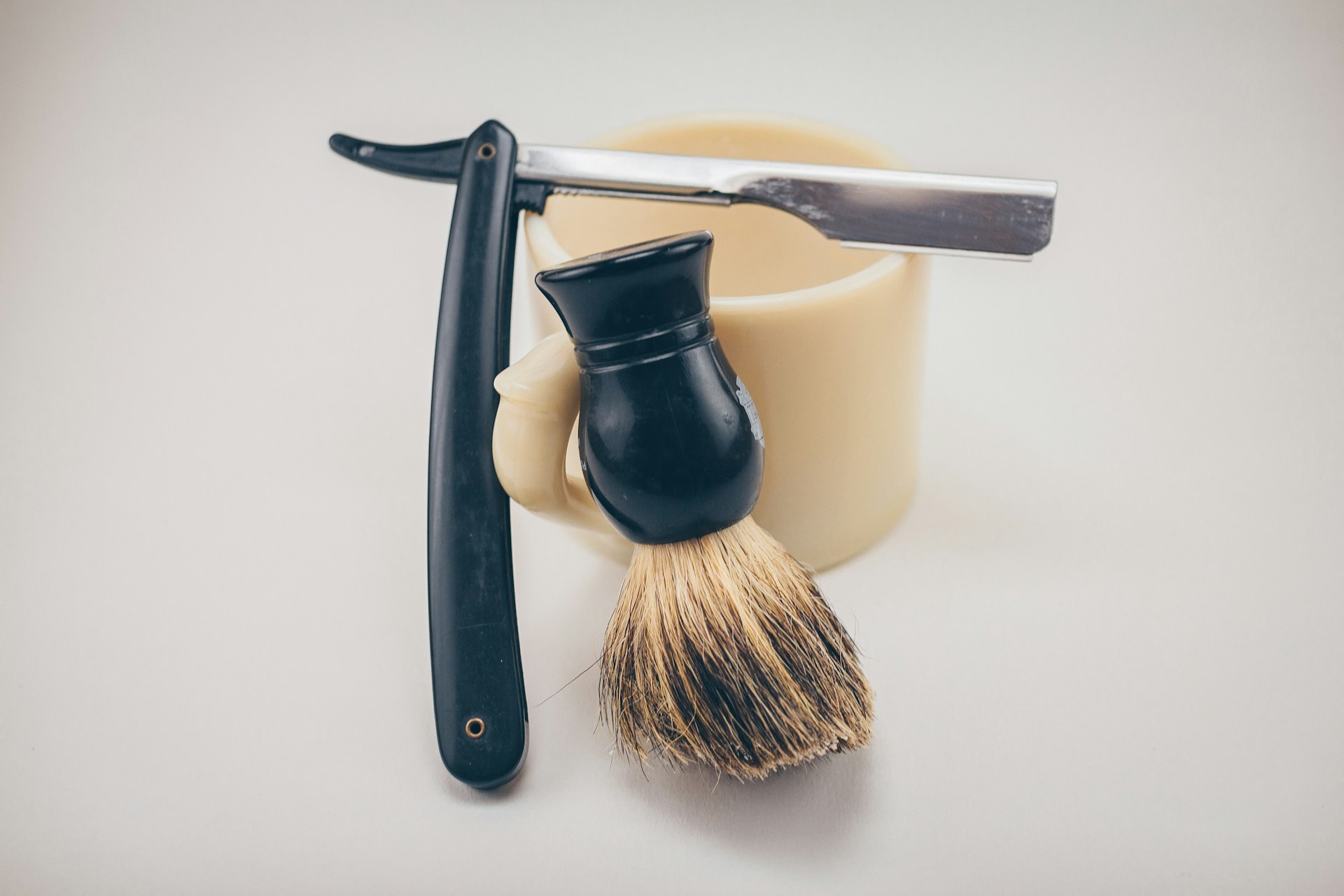
    • Shave after a warm shower, or at least after washing your face, so the hair is softened.
    • Use a shaving cream or gel rather than soap or plain water.
    • Use a sharp, clean blade. A dull one tugs and irritates.
    • If your skin gets irritated, try shaving in the direction the hair grows.
    • Rinse with cool water and follow with a gentle moisturizer. Alcohol-heavy aftershaves can sting freshly shaved skin.

    When to see a professional

    A simple routine is about comfort and habit, not about fixing problems. If you notice a spot or mole that changes in size, shape or color, a sore that does not settle, or irritation and razor bumps that keep coming back, make an appointment with your doctor or a dermatologist. It is one of the most worthwhile half hours you can spend.

    A starter kit makes a thoughtful Father’s Day gift, too: a gentle cleanser, a moisturizer with sunscreen and a good lip balm, with a note saying how much you want him around for a long time. Two minutes a day is not much to ask, and it is a small way of looking after the person in the mirror.

  • Reading for Rest: How to Build a Summer Reading Habit You Look Forward To

    Reading for Rest: How to Build a Summer Reading Habit You Look Forward To

    For many of us, summer reading brings back memories of library reading charts and required book lists. As adults, we get to keep the best part of that tradition and drop the rest. A summer reading habit built purely for pleasure can become one of the most dependable forms of rest you have: quiet, absorbing and available almost anywhere.

    Why reading can feel so restful

    Reading a good book asks for a particular kind of attention. You follow a single thread, at your own pace, without notifications or autoplay pulling you somewhere else. Many people describe getting lost in a story as one of the few times their minds feel genuinely quiet. It is a different kind of rest from scrolling, which tends to scatter attention in many directions at once.

    Choose books for pleasure

    The most important rule of summer reading is that it should be enjoyable. Set aside the books you feel you ought to read and pick the ones you want to read. That might be a mystery series, a sweeping historical novel, a memoir, poetry, a gardening book or a stack of cookbooks you read like novels. Rereading an old favorite counts, too. There is real comfort in returning to a story you already love.

    If a book is not holding you after fifty pages or so, it is fine to set it down. Life is long, but summer evenings are short.

    Make reading easy to reach

    • Keep a book where you rest. One by the porch chair, one on the nightstand, one in the beach bag or the car.
    • Use your local library. Public libraries lend books, e-books and audiobooks free with a library card, and many run summer reading programs for adults as well as children.
    • Try audiobooks for walks, long drives and chores, when your hands are busy but your mind is free.
    • Find your reading spot. A shady corner of the porch, a hammock or an armchair by a window. Outdoors, choose shade, since bright sun on a white page can tire the eyes.

    Give it a time of day

    Habits stick best when they are tied to a regular moment. For some people, that is twenty minutes with coffee before the house wakes up. For others, it is the hottest part of the afternoon, when going outside is out of the question anyway. Many people like reading as part of their bedtime routine, in place of a screen. A paper book, or an e-reader without a bright backlight, is gentler for that last stretch of the evening.

    A family reading hour can work beautifully in summer, too: everyone in the same room, each with a different book, the only sound pages turning.

    Let it be slow

    There is no reading goal to meet and no prize for finishing the most books. Read slowly. Reread a sentence you love. Put the book on your chest and look at the sky for a while. Summer reading is not about productivity. It is about giving yourself a few hours in another world and coming back a little more rested than you left.

  • Sleeping Well Away From Home: Hotel Rooms, Guest Rooms and Campsites

    Sleeping Well Away From Home: Hotel Rooms, Guest Rooms and Campsites

    You finally arrive, tired from the drive or the flight, and climb into a perfectly comfortable bed. Then you lie awake listening to the ice machine, the air conditioner and the unfamiliar creaks of a strange room. If the first night of a trip is often your worst, you are far from alone.

    The first-night effect

    Sleep researchers have a name for this: the first-night effect. People often sleep less deeply on their first night in an unfamiliar place, and some research suggests that part of the brain stays a little more alert, as if keeping watch in new surroundings. It usually eases by the second or third night. Knowing that can take some of the frustration out of a restless first night. It is normal, and it tends to pass.

    The rest of the work is helping a new space feel more familiar and more comfortable, as quickly as possible.

    In a hotel room

    • Control the light. Pack an eye mask, and a couple of binder clips or clothespins to pinch gaping curtains closed. Cover small glowing lights with a bit of tape or a folded tissue.
    • Soften the noise. Earplugs, a white noise app or the room’s fan setting can mask hallway sounds. When booking, it is reasonable to ask for a room away from elevators and ice machines.
    • Cool the room. Set the thermostat a little cool before you go to dinner, so the room is comfortable at bedtime.
    • Bring a familiar cue. Your own pillowcase, a favorite sleep shirt or a lavender sachet from home can make the room feel more like yours.

    In a relative’s guest room

    Staying with family brings its own challenges: different schedules, early risers, pets, a mattress that has seen better days. Bring your own small comforts, such as an eye mask, earplugs and a book. It is perfectly polite to ask about the household’s morning routine, so you know when the coffee maker starts and the dog goes out. If the room is warm, ask whether a fan is available. Most hosts are glad to help their guests sleep well, and a gentle request is easier than three restless nights.

    At a summer campsite

    Camping in a Georgia summer is mostly about staying cool. Choose a site with afternoon shade if you can, open the tent’s vents and windows for airflow and set up on level ground. A good sleeping pad makes more difference than most people expect, and a small battery fan can make a warm night far more pleasant. Respect the campground’s quiet hours, and check the park’s official website ahead of time for rules, closures and fire restrictions.

    Keep your rhythm

    Wherever you are, try to keep something of your usual wind-down routine: a warm shower, a few pages of a book, the same lights-out time you keep at home. Familiar habits signal that it is time to rest, even in an unfamiliar room. If you have ongoing trouble sleeping, at home or away, talk to your doctor. Otherwise, be patient with yourself on the first night. By the second, the room is usually starting to feel like yours.

  • The Hand Fan: A Short History of Keeping Cool in Style

    The Hand Fan: A Short History of Keeping Cool in Style

    Long before ceiling fans and central air, people kept cool with a flick of the wrist. The hand fan is one of humanity’s oldest comforts, and its history stretches from royal courts to small-town church pews. Even today, on a hot afternoon at an outdoor wedding or a ballgame in July, there is something pleasing about the slow, rhythmic sweep of a fan.

    Fans of the ancient world

    In ancient Egypt, large fans made of feathers on long handles were held by attendants to cool royalty and to mark their status. Fans were found among the treasures in the tomb of Tutankhamun, including one with a gold handle that once held ostrich feathers. Ancient China had rigid fans of silk, bamboo and feathers, and the round silk fan became a classic object of art, often painted with landscapes, flowers or poetry.

    The folding fan and its travels

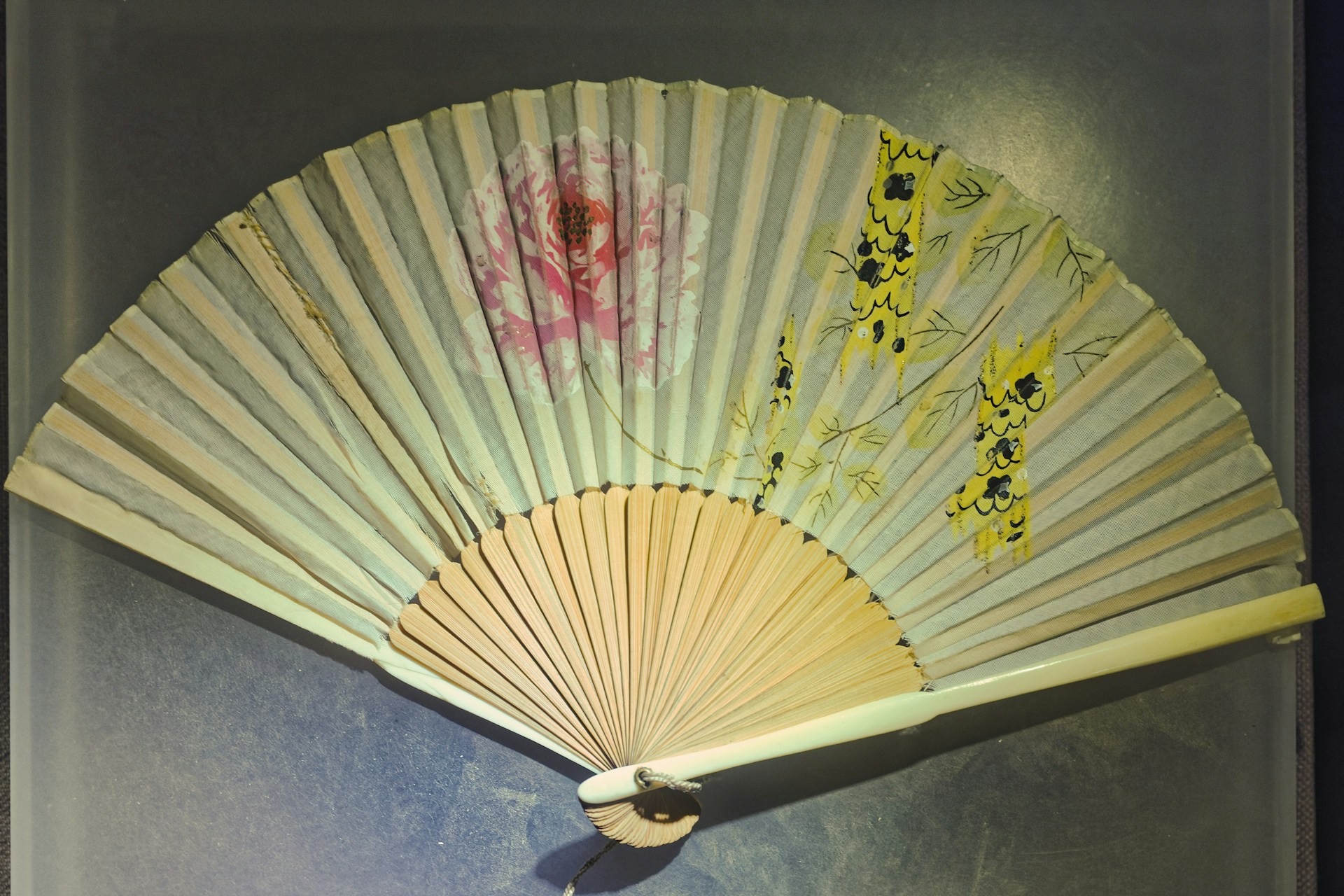
    The folding fan, which opens like a wing and closes into a slim baton, is generally thought to have developed in Japan, where early versions were made of thin strips of wood. It spread to China and later, through trade, to Europe. By the seventeenth and eighteenth centuries, fans had become essential fashion accessories in European society, made from painted paper, silk, lace, ivory and mother-of-pearl.

    Victorian booklets claimed to decode a secret language of the fan, in which the way a fan was held or moved sent messages across a crowded room. How often anyone actually used such signals is doubtful, but the idea captures the fan’s place in social life as much more than a cooling device.

    The church fan of the South

    In the American South, the most familiar fan is far humbler: a piece of printed cardboard stapled to a flat wooden stick. Before air conditioning, these fans were a fixture in church pews, often printed with a religious image on one side and an advertisement for a local funeral home or business on the other. On a Sunday morning in August, a whole congregation might be fanning in slow waves during the sermon. Many people still keep one tucked in a drawer, as much for memory as for cooling.

    Scented fans have their own tradition. Fans made from thin slats of sandalwood, common in parts of Asia, release a soft, woody fragrance with every stroke, combining cool air and scent in a single gesture.

    The quiet pleasure of fanning

    A hand fan does not lower the air temperature, but the breeze it creates helps sweat evaporate from your skin, which is why it feels cooler. There is more to it than physics, though. The steady back-and-forth has a calming rhythm, a little like rocking in a porch chair. It slows you down.

    • Keep a folding fan in your bag for outdoor events, hot waiting rooms and summer services.
    • Try fanning slowly in time with your breath: one sweep as you breathe in, another as you breathe out.
    • With children, fold a sheet of paper back and forth into an accordion, pinch one end and decorate it together.
    • Look for fans made from natural materials, such as paper, bamboo or wood, that will last for years.

    In an age of thermostats, the hand fan may seem old-fashioned. But on a sticky Georgia afternoon, it remains one of the most graceful ways to make the heat a little more bearable, one gentle stroke at a time.

  • The Siesta Tradition: What Hot-Climate Cultures Know About the Midday Pause

    The Siesta Tradition: What Hot-Climate Cultures Know About the Midday Pause

    In many hot parts of the world, the middle of the day has traditionally been a time to slow down. Shops close, streets empty and people retreat indoors to eat, rest and wait out the worst of the heat. The Spanish word siesta has become the shorthand for this habit, but the idea is older and more widespread than any one country, and the old South knew it well.

    The sixth hour

    The word siesta comes from the Latin hora sexta, the sixth hour. In the Roman way of counting, the hours of daylight began at dawn, so the sixth hour fell around midday. Over time, the phrase came to mean the rest taken at that time. Similar customs took shape in many warm places: the Italian riposo, the long quiet afternoon in parts of Greece and midday rest in parts of Latin America, the Philippines, North Africa, the Middle East and South Asia.

    The details vary, and modern work schedules have changed the habit in many cities. But the logic is the same everywhere: in a hot climate, it makes sense to work early and late and to protect the middle of the day.

    Before air conditioning in the South

    For generations in the rural South, the largest meal of the day was often eaten at midday and called dinner, with a lighter supper in the evening. Farm work started at first light and paused during the hottest hours. Afternoons were for shade, porches, fans and quiet indoor tasks, and work resumed as the day cooled. Many older Southerners still remember a slower summer afternoon, from the years before air conditioning made it possible to ignore the heat.

    Why it still makes sense

    Two things line up in the early afternoon. Most people feel a natural dip in alertness after midday, part of the body’s daily rhythm. And in summer, the sun’s ultraviolet light is strongest around the middle of the day, while air temperatures usually peak later, in mid to late afternoon. A pause in that window works with both the body and the weather rather than against them.

    Borrowing the siesta, even with a schedule

    Few of us can close up shop for two hours. But the spirit of the siesta can still shape a summer day:

    • Move outdoor errands, exercise and yard work to the morning or evening.
    • Take a real lunch break away from your desk, ideally somewhere cool and quiet.
    • Keep early afternoon for lighter tasks, such as reading, email or planning, rather than demanding work.
    • On weekends, try a true siesta: a light meal, a darkened room and twenty minutes of rest, whether or not you sleep.
    • Close the blinds and let the house be quiet for an hour.

    If you find you need long naps every day, or feel exhausted no matter how much you rest, talk to your doctor. For everyone else, the siesta is simply an old, sensible idea: the heat of the day is not the time to push. It is the time to pause, so that the cooler evening finds you rested and ready to enjoy it.

  • Why Perfume Smells Stronger in Summer: Heat, Humidity and Fragrance

    Why Perfume Smells Stronger in Summer: Heat, Humidity and Fragrance

    Many people notice it without quite knowing why. The perfume that felt soft and pleasant in winter seems twice as strong on a July afternoon. A candle that barely registered in December fills the whole house in June. Heat and humidity change the way fragrance behaves, and knowing a little about why can help you enjoy scent more comfortably all summer.

    Heat speeds everything up

    Fragrance reaches your nose when scent molecules evaporate into the air. Warmth makes that evaporation happen faster. On a hot day, and on skin that is already warm, a perfume releases more of its molecules more quickly, so it projects further and seems louder. The same speed means it also fades sooner. The light, fresh top notes, often citrus and herbs, can flash off within minutes, leaving the heavier heart and base notes to carry the scent.

    Humidity adds its own effect. Many people find that scents seem to hang in moist, still air and linger around them rather than drifting away. Combine heat, humidity and a crowded room, and a fragrance that is perfectly pleasant at arm’s length can become overwhelming.

    Wearing fragrance in the heat

    • Use less. One spray instead of three is often plenty in summer.
    • Choose lighter concentrations. From strongest to lightest, the common categories are parfum, eau de parfum, eau de toilette and eau de cologne. The lighter versions suit hot weather.
    • Apply to clean skin after a shower, when skin is cooler, rather than in the middle of a hot afternoon.
    • Skip rubbing your wrists together after spraying. Many perfumers suggest letting fragrance dry on its own.
    • Consider lighter families, such as citrus, green, aquatic and soft floral scents, though personal preference always wins.

    Some fragrances contain citrus oils that can make skin more sensitive to sunlight. If you will be outside for a long time, spraying fragrance on clothing rather than sun-exposed skin is a simple precaution, though test a hidden spot first, since some perfumes can mark delicate fabric.

    Be kind to the people near you

    Summer gathers people indoors in close quarters: restaurants, offices, churches, cars. Heat amplifies scent in all of those places, and some people are sensitive to strong fragrances. A light hand is a courtesy. A good rule is that your fragrance should be noticed by someone who leans in close, not by someone across the room.

    Storing scent through a Georgia summer

    Heat and light are hard on fragrance. They can break down the delicate molecules in a perfume, dulling its top notes or changing its character over time. The same is true of essential oils.

    • Keep perfumes and oils in a cool, dark place, such as a bedroom drawer or a closet shelf.
    • Avoid sunny windowsills and steamy bathrooms.
    • Never leave fragrance, essential oils or candles in a hot car, where temperatures climb quickly.
    • Close caps tightly to limit exposure to air.

    With a lighter touch and a cooler shelf, your favorite scents can stay pleasant all season, and so can the people who share the room with you.

  • Watermelon: The Long Journey of a Southern Summer Favorite

    Watermelon: The Long Journey of a Southern Summer Favorite

    Few foods are as tied to a Southern summer as watermelon. It turns up at church picnics, Fourth of July cookouts and roadside stands, cut into wedges and eaten over the porch rail with juice running down to the elbows. It is more than ninety percent water, which helps explain why it tastes like relief on a hot day. Its story, though, begins far from Georgia.

    An ancient fruit from Africa

    Watermelon’s wild ancestors grew in Africa, and people there have eaten and cultivated melons for thousands of years. Ancient Egyptians grew them, depicted them in tomb art and placed watermelon seeds among the provisions for the afterlife; seeds have been found in the tomb of Tutankhamun. From North Africa, watermelon spread around the Mediterranean, into the Middle East and India and eventually to China, which today grows more watermelon than any other country.

    Watermelon in the American South

    Watermelon arrived in the Americas with European colonists and with enslaved Africans, who brought both seeds and long knowledge of the fruit. It flourished in the long, hot growing season of the South. By the nineteenth century it was a common crop across the region, and it became woven into Southern summer life.

    Georgia remains one of the country’s leading watermelon-growing states, especially in its southern counties. The town of Cordele has long called itself the Watermelon Capital of the World, a title it carries with good humor and pride.

    Seedless watermelons, now the most common kind in stores, were developed in the twentieth century by crossing plants with different numbers of chromosomes to produce fruit that cannot form mature seeds. The small, pale, soft seeds you sometimes find in them are simply undeveloped seed coats.

    Choosing a good one

    • Look for the field spot. A creamy yellow patch on one side shows where the melon rested on the ground while it ripened. White or pale green may mean it was picked early.
    • Feel the weight. A ripe melon feels heavy for its size.
    • Check the rind. A dull rather than glossy surface is often a good sign.
    • Give it a thump if you like. Many people listen for a deep, hollow sound, though this one is more tradition than science.

    Simple ways to enjoy it

    Rinse the rind before cutting, since a knife can carry anything on the outside into the fruit. Keep cut watermelon covered in the refrigerator and eat it within a few days.

    Beyond the classic wedge, try cubes tossed with mint and a squeeze of lime, a few frozen cubes dropped into a glass of water or a salad of watermelon, cucumber and a little salty cheese. Pickled watermelon rind is an old Southern tradition that makes good use of the whole melon.

    Best of all, eat it the old way: outside, on a hot afternoon, with someone you like and nobody worrying about the mess. There is a reason watermelon has lasted thousands of years. Some pleasures do not need improving.