
Tea tree oil has a sharp, medicinal, camphor-like scent that most people recognize immediately, and a reputation that has traveled far beyond its native Australia. It appears in shampoos, soaps, foot products and household cleaners, and it is one of the most commonly sold essential oils. Because it is so widely used, it is also one of the most frequently misused. This article covers its history and the sensible handling that keeps it a pleasant part of a routine. We make no claims about what tea tree does; for any skin or health concern, talk with your doctor.
Where the Name Comes From
The oil is distilled from the leaves of Melaleuca alternifolia, a small tree native to the swampy coastal regions of New South Wales and Queensland in eastern Australia. It is not related to the tea plant. The name is usually traced to the late eighteenth century, when the crew of Captain James Cook’s expedition brewed the aromatic leaves of melaleuca and related trees as a substitute for tea. Aboriginal Australians, in particular the Bundjalung people of the region where the tree grows, had long-standing traditional uses for the leaves.
Commercial distillation of the oil began in Australia in the 1920s, and the industry grew through the twentieth century. Today most tea tree oil still comes from plantations in New South Wales.
Why It Is So Popular
Tea tree has a clean, assertive scent that many people associate with freshness, which is why it appears in so many products for the bathroom and laundry. People use it in homemade cleaning sprays, in diffusers for a sharp, clearing aroma and in foot soaks, mostly for the smell.
Safe Handling
Because tea tree is sold so widely and often marketed as mild, people sometimes treat it carelessly. A few points matter:
- Never swallow it. Tea tree oil is toxic if ingested, and even small amounts can cause serious harm. Keep bottles tightly capped and well away from children.
- Keep it away from pets. Cats and dogs are especially sensitive to tea tree oil, whether applied to their fur, diffused heavily in a small room or licked from a surface. Ask your veterinarian before using any essential oil in a home with animals.
- Dilute before skin contact. Undiluted tea tree is a known cause of allergic contact dermatitis, and the risk rises as the oil ages and oxidizes. Mix a small amount into a carrier oil and patch test on your inner arm first.
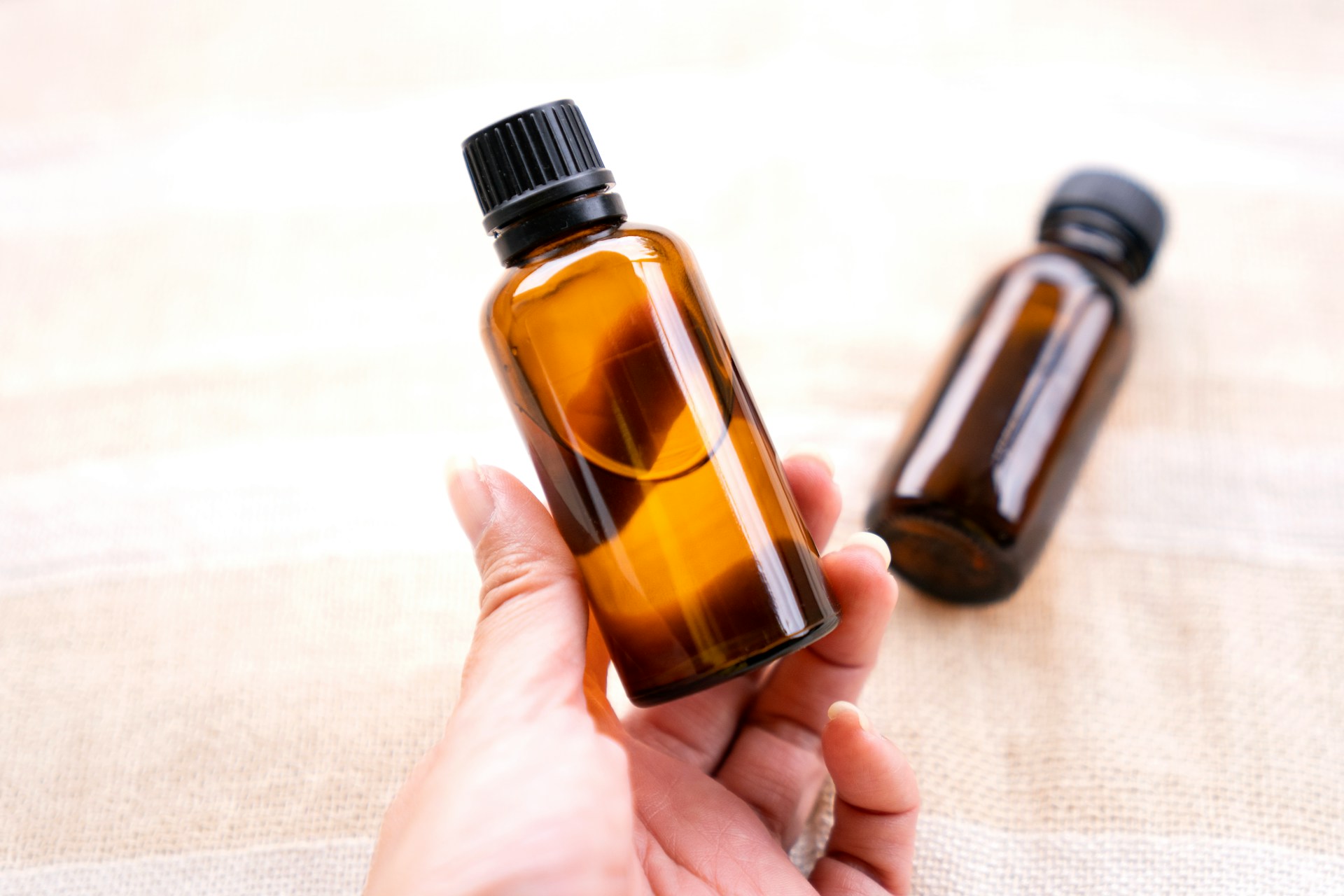
- Store it well. Keep it in a dark glass bottle, tightly closed, away from heat and light, and replace it if it has been open for more than a year or smells harsher than it used to.
- Avoid the eyes and other sensitive areas entirely.
- Talk with your doctor before using it if you are pregnant, nursing or caring for a young child.
Sensible Everyday Uses
With those cautions in mind, tea tree can be a pleasant part of a household routine. A few drops in a bucket of water for mopping leaves a fresh scent. Two or three drops in a diffuser with lemon makes a bright, clean-smelling blend for a morning of housework. A drop in a bowl of warm water for a foot soak adds a spa-like aroma. Many commercial shampoos and soaps include it at low, properly formulated levels, which is the simplest way to enjoy the scent on skin or hair.
A Note on Marketing
You will see tea tree sold with many promises attached. Be skeptical. An essential oil is a fragrant plant extract, not a medicine, and the strength that makes its scent so recognizable is the same reason it deserves careful handling. Enjoy it for what it is, treat it with respect and keep it on a high shelf.