
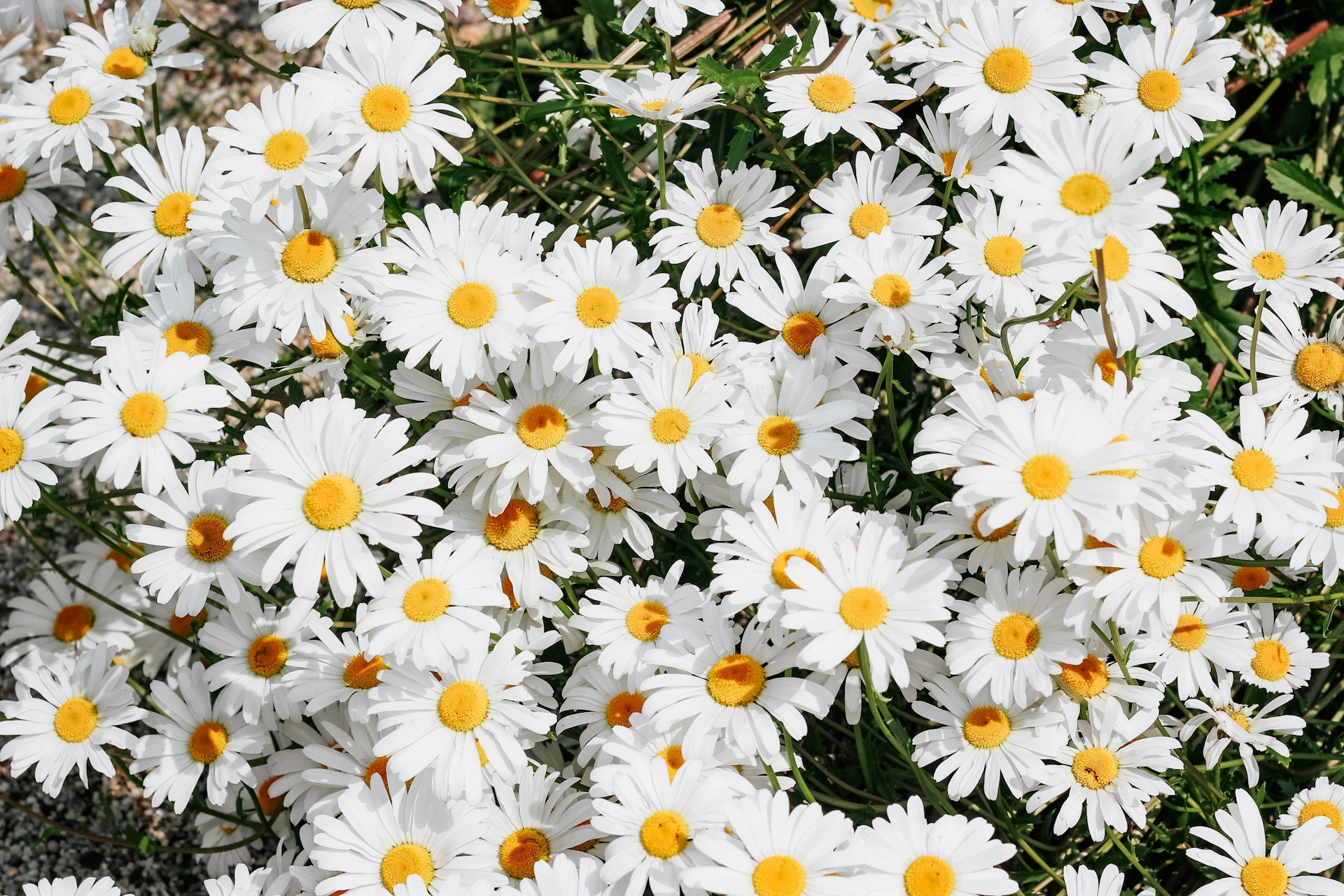
Chamomile is the gentlest member of the aromatic plant family. Its small, daisy-like flowers, white petals around a yellow center, have been dried for tea, tucked into pillows and distilled into oil for centuries. The scent is soft, sweet and faintly apple-like, which is where the name comes from. If lavender is the best-known calming scent, chamomile is its quieter cousin.
Earth Apple
The word chamomile traces back to the Greek chamaimelon, roughly meaning ground apple, a description of the plant’s low growth and the apple-like scent of its crushed flowers. Ancient Egyptians, Greeks and Romans all grew it. In medieval Europe, chamomile was a strewing herb, scattered on floors so that footsteps released its fragrance, and it was planted as a fragrant lawn in English gardens. Spanish sherry makers used it to flavor manzanilla, which is also the Spanish word for chamomile.
Two Plants Share the Name
Most of what is sold as chamomile comes from one of two plants:
- German chamomile, Matricaria chamomilla, is an annual with a sweet, hay-like scent. It is the chamomile most often found in tea bags.
- Roman chamomile, Chamaemelum nobile, is a low perennial with a fruitier, more apple-like aroma. It is the one traditionally used for lawns and is popular in aromatherapy.
Both belong to the daisy family, which also includes ragweed and chrysanthemums. People who are allergic to those plants may react to chamomile, so if you have plant allergies, talk with your doctor before using it in any form.
A Blue Surprise
One of the more delightful facts about chamomile is the color of its oil. German chamomile essential oil is a deep inky blue when freshly distilled. The color comes from a compound called chamazulene, which forms during the distillation process and is not present in the living flower. It fades toward green and then yellow as the oil ages. Roman chamomile oil, by contrast, is pale yellow or nearly clear. The blue oil is one of the easiest ways to tell the two apart.
Chamomile in Daily Life
For most people, chamomile tea is the familiar form: dried flowers steeped in hot water for a few minutes, often enjoyed in the evening. The ritual itself, warm cup in hand, is part of the appeal. We make no claims about what the tea does; it is simply a pleasant, caffeine-free drink. If you are pregnant, take medications or have health concerns, check with your doctor before adding herbal teas to your routine.
Beyond tea, chamomile appears in gentle skincare, in bath products and in aromatherapy blends, where its sweet scent softens sharper oils like rosemary or eucalyptus. A few drops of the essential oil, diluted in a carrier oil, is a common addition to a relaxing massage oil. As with any essential oil, dilute before skin contact, patch test and keep it out of reach of children and pets.
Growing Your Own
German chamomile grows easily from seed in a sunny spot and self-sows freely. Harvest the flowers when the petals begin to curl back from the center, then dry them on a screen in a dark, airy room. A small jar of home-dried chamomile, opened on a quiet spring evening, carries the scent of the whole summer ahead. It is a humble flower, but few plants offer so much gentleness for so little effort.
