Healing Starts Within

💌 Discover our wellness rituals designed to reduce stress and revitalize.

Book Now · Call (478) 303-6936

Reserve your personalized wellness session today and take the first step toward deep healing.

Welcome to Lotus Natural Wellness

With Sonya Gordon

  • The Dog Days of Summer: Where the Phrase Comes From and How to Rest Through Them

    Sometime in July, the heat in Middle Georgia stops feeling like weather and starts feeling like a place you live. The air is thick by breakfast, the afternoons shimmer, and even the dogs stretch out flat in the shade. Many of us call this stretch the dog days of summer without thinking much about why. The answer goes back thousands of years, and it has nothing to do with drowsy dogs.

    A star called the Dog

    The phrase comes from Sirius, the brightest star in the night sky. Sirius sits in the constellation Canis Major, the Greater Dog, and it has long been known as the Dog Star. In the ancient Mediterranean world, there was a period each summer when Sirius rose in the east just before the sun, a moment astronomers call its heliacal rising. That event lined up with the hottest, driest weeks of the year.

    The Romans called this season the dies caniculares, the days of the little dog, after Canicula, one of their names for the star. Greek and Roman writers often linked the Dog Star with scorching heat, drought and a general sense that things were going wrong. Some believed the star’s light actually added to the sun’s warmth. We know now that it does not, but the association stuck.

    In ancient Egypt, the same star carried a happier meaning. Its return to the dawn sky was watched closely because it came around the time of the Nile’s yearly flood, which renewed the farmland along the river.

    Why the dates drift

    Ask three sources when the dog days fall and you may get three answers. Many almanacs place them from early July to mid-August. Others tie them to the star itself, whose dawn rising has slowly shifted later over the centuries because of a gradual wobble in Earth’s axis. In practice, most of us simply use the phrase for the deep middle of summer, when the heat feels settled in and the breaks are few.

    A scattering of folk sayings has gathered around the season in the South, too. One old belief held that snakes went blind during the dog days, perhaps because a snake’s eyes turn cloudy for a time before it sheds its skin. Lore like this says more about how hard people found these weeks than about snakes.

    Resting through the dog days

    Whatever the dates, the old idea holds a useful truth: this part of summer asks something of us. Instead of fighting it, think of the dog days as a season with its own pace.

    • Shrink the list. Choose one or two things that truly need doing each day and let the rest wait for September.
    • Do your moving early. Walks, errands and yard work feel kinder before the heat builds.
    • Claim a cool corner. A shaded chair, a fan and a glass of water can become your afternoon retreat.
    • Plan small pleasures. A cold supper on the porch, a swim, a summer novel or a slow evening walk gives the week something to look forward to.

    A season to wait out gently

    There is something comforting in knowing that people have grumbled about these same weeks for more than two thousand years. The dog days have always ended. The star moves on, the evenings begin to soften, and eventually a morning arrives that carries the first faint hint of fall.

    Until then, give yourself permission to slow down. Heat can be serious, so if you or someone with you feels faint, confused or unwell, get to a cool place and seek medical help right away. For everything else, a little patience, a lot of shade and a willingness to do less may be the oldest summer wisdom there is.


  • Fans, Parked Cars and the Hottest Hour: Summer Cooling Myths and Facts

    Fans, Parked Cars and the Hottest Hour: Summer Cooling Myths and Facts

    Southerners have been finding ways to beat the heat for a very long time, and a good deal of folk wisdom has gathered along the way. Some of it is sound. Some of it is not. Here are six common summer beliefs, gently checked against what is actually known.

    At home

    Myth: A fan cools the room. Fans do not lower the temperature of the air. They create a breeze that helps sweat evaporate from your skin, which makes you feel cooler. That means a fan running in an empty room is cooling no one. The U.S. Department of Energy suggests turning fans off when you leave a room.

    Myth: Ceiling fan direction does not matter. It does. In summer, a ceiling fan should spin counterclockwise when you look up at it, pushing air down toward you for a cooling breeze. Most fans have a small switch on the motor housing to change direction, and many people reverse it for winter.

    Myth: Setting the thermostat very low cools the house faster. Most home air conditioners cool at the same rate no matter how low you set them. A much lower setting simply makes the system run longer and use more energy, and the house may end up colder than you wanted. Choose the temperature you actually want and give the system time to reach it.

    On the road

    Myth: Cracking the windows keeps a parked car safe. A closed car heats up very quickly in the sun, even on a day that feels only warm, and cracking the windows does little to slow it. Never leave a child, an older adult or a pet in a parked car, not even for a quick errand. It is also wise to check the back seat every time you leave the car, and to keep cars locked so children cannot climb in on their own.

    Outdoors

    Myth: Noon is the hottest part of the day. It depends on what you mean by hot. The sun’s ultraviolet light is strongest around the middle of the day, when the sun is highest. Air temperature, though, usually keeps climbing into mid to late afternoon, because the ground and pavement go on absorbing heat for hours. For outdoor plans in summer, the most comfortable hours are early morning and evening.

    Myth: If it is not raining, lightning is not a danger. Lightning can strike miles away from the rain. The National Weather Service advises that if you can hear thunder, you are close enough to be struck, and recommends going indoors and waiting until thirty minutes after the last thunder before heading back out. On summer afternoons in Georgia, when storms build quickly, that is worth remembering at the pool, the ballfield and the lake.

    The common thread

    Most of these myths grow from good instincts: wanting to cool off quickly, trusting the breeze, making a quick stop. The facts simply refine them. Use fans for people, not rooms. Let the thermostat do its work. Think of a parked car as dangerous, always. Plan around both the midday sun and the afternoon heat, and respect the thunder. A Georgia summer is easier to enjoy when the habits we lean on are ones that truly work.

  • Beach Days on the Georgia Coast: Sun, Salt Water and Sharing the Sand

    Beach Days on the Georgia Coast: Sun, Salt Water and Sharing the Sand

    For many families in Middle Georgia, summer means at least one trip to the coast. Georgia’s shoreline is short, roughly a hundred miles as the crow flies, but it is lined with barrier islands, salt marshes and wide, gently sloping beaches: Tybee Island near Savannah, the Golden Isles around Brunswick and the wild beaches of Cumberland Island National Seashore. A day there can be deeply restful with a little preparation.

    Sun care at the shore

    The beach asks more of your sun care than almost anywhere else. Sand and water reflect sunlight back toward you, and the ocean breeze can hide how strong the sun really is.

    • Apply a broad-spectrum, water-resistant sunscreen before you leave the car, and reapply as the label directs, including after swimming and toweling off.
    • Bring your own shade. A beach umbrella or a small tent makes long days far more comfortable.
    • Wear a wide-brimmed hat and sunglasses when you are out of the water.
    • Plan your longest stretch on the sand for the morning or late afternoon.
    • Pack more water than you think you need, and keep it in a cooler.

    Salt, sand and skin

    Salt water and wind can leave skin feeling tight and hair feeling stiff. Rinse off with fresh water as soon as you can after swimming, then apply a light moisturizer once you are dry. A sprinkle of cornstarch on sandy skin helps the sand brush off easily before you get back in the car. If you use citrus-scented body oils or perfumes, leave them at home for a beach day, since some citrus oils can make skin more sensitive to sunlight.

    Ocean safety

    Swim near a lifeguard when one is on duty, and pay attention to warning flags and posted signs. The National Weather Service publishes surf forecasts that include rip current risk at weather.gov. If you are ever caught in a rip current, do not fight it by swimming straight back to shore. Stay calm, float or swim parallel to the beach until you are out of the current, then wave and call for help if you need it. Keep children within arm’s reach in the water at all times.

    Sharing the sand with sea turtles

    From late spring through summer, loggerhead sea turtles come ashore at night to nest on Georgia’s beaches, and hatchlings keep emerging into early fall. Hatchlings find the ocean by heading toward the brightest horizon, which on a natural beach is the open water. Artificial light can lead them the wrong way. Loggerheads are a protected species, and a few simple habits help:

    • Fill in holes and knock down sandcastles before you leave, since they can trap hatchlings.
    • Take chairs, umbrellas and toys off the beach at the end of the day.
    • Keep flashlights and phone lights off the beach at night.
    • Give marked nests and any turtles you see plenty of room, and never touch them.

    Then settle in. Walk the tide line, collect a few shells, listen to the waves and let the long horizon do its work. Georgia’s tides are notably large, so the beach at low tide can look completely different from the beach at high tide. Watching it change is one of the quiet pleasures of a day by the sea.

  • Seersucker, Linen and Cotton: Dressing Comfortably for a Humid Southern Summer

    Seersucker, Linen and Cotton: Dressing Comfortably for a Humid Southern Summer

    In a Georgia summer, what you wear can make the difference between a pleasant afternoon and a miserable one. Some fabrics breathe, absorb and dry. Others trap heat and cling. Generations of Southerners, long before air conditioning, learned which materials made the heat easier to bear, and three of them still stand out: seersucker, linen and cotton.

    Seersucker: milk and sugar

    The name seersucker comes from the Persian phrase shir o shakar, meaning milk and sugar, a reference to its alternating stripes of smooth and puckered texture. The fabric is woven so that some threads bunch together, creating that crinkled surface. Those puckers help hold the cloth away from the skin, letting air circulate, and they mean seersucker rarely needs ironing.

    The fabric reached Britain through trade with India and later crossed to the United States, where it was first a practical, inexpensive cloth for workwear. In the early twentieth century, a New Orleans clothier is often credited with turning it into a lightweight summer suit, and seersucker became a Southern warm-weather classic, especially in pale blue and white.

    Linen: one of the oldest fabrics

    Linen is made from the fibers of the flax plant and is among the oldest textiles known. The ancient Egyptians wove fine linen and used it for clothing and for wrapping the dead. Linen is prized in hot climates because it is highly breathable, absorbs moisture readily and dries quickly. It feels cool to the touch, and it softens beautifully with every wash.

    Its one drawback is wrinkling, which many linen lovers simply embrace as part of its relaxed, lived-in character. In a humid Southern July, a slightly rumpled linen shirt is a sign of good sense, not carelessness.

    Cotton: the everyday workhorse

    Cotton is soft, breathable and absorbent, which is why it remains the backbone of most summer wardrobes. Lightweight weaves such as voile, lawn and chambray are especially comfortable in heat, as is madras, a light cotton named for the Indian city once called Madras, now Chennai. The one thing to know is that cotton holds on to moisture once it is soaked, so a heavy cotton shirt can stay damp after a sweaty afternoon.

    Modern synthetic performance fabrics are designed to pull moisture away from the skin, and many people find them useful for exercise. For everyday wear, though, plenty of people still prefer the feel of natural fibers.

    Simple tips for staying comfortable

    • Choose loose fits over tight ones. Air moving between fabric and skin does much of the cooling.
    • Light colors reflect more sunlight and tend to feel cooler in direct sun.
    • Pick lightweight fabrics for everyday wear; for long hours in the sun, a tighter weave or sun-protective clothing covers you better.
    • Change out of damp clothes after yard work or exercise rather than letting them dry on you.
    • Carry a light layer for chilly offices, restaurants and stores.

    Dressing for the heat is a small act of self-care that pays off every hour of a summer day. The old Southern wardrobe of seersucker, linen and cotton was never only about style. It was about comfort, and that wisdom still holds.

  • Sitali, the Cooling Breath: A Yoga Breathing Practice for Hot Days

    Sitali, the Cooling Breath: A Yoga Breathing Practice for Hot Days

    On a sweltering afternoon, most of us reach for a cold drink or a fan. Yoga offers another small tool: a breathing practice traditionally described as cooling. It is called sitali, and it takes only a few minutes, needs no equipment and can be done in a chair. Many people find the sensation of cool air moving across the tongue surprisingly refreshing.

    Where sitali comes from

    Sitali, also spelled shitali or sheetali, is one of the pranayama practices of hatha yoga. Pranayama refers to the deliberate shaping of the breath. The Hatha Yoga Pradipika, a well-known yoga text from the fifteenth century, describes sitali alongside a related practice called sitkari. The name comes from a Sanskrit word meaning cool, and the practice has long been associated with hot weather.

    We share it here as a pleasant, simple experience to try, not as a remedy for anything.

    How to practice sitali

    • Sit comfortably, with your back upright but relaxed. A chair is fine.
    • Take one or two ordinary breaths and let your shoulders drop.
    • Open your mouth and curl the sides of your tongue upward to form a tube, letting the tip extend slightly past your lips.
    • Inhale slowly and smoothly through the tube of your tongue, as if sipping air through a straw. Notice the coolness.
    • Close your mouth and exhale slowly through your nose.
    • Repeat for five to ten rounds, then return to normal breathing for a minute and notice how you feel.

    If you cannot curl your tongue

    Not everyone can roll the tongue into a tube, and that is perfectly fine. The alternative, sitkari, works for anyone. Bring your upper and lower teeth lightly together, part your lips and draw the breath in slowly through the gaps between your teeth, making a soft hissing sound. Close your mouth and exhale through your nose. The incoming air feels cool on the teeth and tongue in much the same way.

    When to try it, and when to skip it

    Sitali can be a nice companion to a summer day: after coming inside from the heat, after an evening walk, during an afternoon slump or as part of a wind-down routine on a warm night. Pair it with a cool shower or a glass of water rather than using it in place of them.

    Because you are breathing in through the mouth, practice where the air is clean. Skip it outdoors on heavy pollen days or anywhere smoky or dusty. Go slowly, and stop if you feel lightheaded, dizzy or uncomfortable. If you have a respiratory or heart condition, are pregnant or have any other health concern, talk to your doctor before trying new breathing practices. And on genuinely dangerous heat days, no breathing technique replaces shade, water, air conditioning and medical help when it is needed.

    Used gently, sitali is a small summer ritual: a few cool breaths, a few quiet moments and a reminder that even in the heaviest heat, you can pause, slow down and come back to yourself.

  • Cooking Less in the Heat: Simple No-Cook Suppers for Summer Evenings

    Cooking Less in the Heat: Simple No-Cook Suppers for Summer Evenings

    By late June in Middle Georgia, the last thing anyone wants at six in the evening is a hot oven. Cooking heats the kitchen, the kitchen heats the house and the cook ends up sticky and tired before the meal is even on the table. One of the easiest ways to lighten a summer routine is to cook less, or not at all, on the hottest nights. Supper becomes a matter of assembly rather than effort.

    Build a supper from four parts

    Most satisfying no-cook meals combine a few simple building blocks:

    • Something hearty: good bread, tortillas, crackers or a grain salad made earlier in the week.
    • Something with protein: canned beans rinsed well, a store-bought rotisserie chicken, canned tuna or salmon, eggs boiled in the cool of the morning, cheese, hummus or nuts.
    • Plenty of produce: tomatoes, cucumbers, sweet peppers, fresh corn cut from the cob, peaches, melon, berries and leafy greens.
    • Something to tie it together: a simple vinaigrette, a squeeze of lemon, a spoonful of pesto or a handful of fresh herbs.

    Choose one from each group and you have dinner. Nobody has to stand over a stove.

    A few ideas to start

    A tomato and cucumber salad with herbs, olive oil, salt and torn bread that soaks up the juices makes a meal on its own. A bean salad with corn, peppers and lime keeps for days in the refrigerator. Wraps filled with chicken, greens and hummus come together in minutes. A summer supper board of cheese, crackers, fruit, nuts and sliced vegetables feels festive and asks nothing of the cook. Gazpacho, the chilled tomato soup of southern Spain, is made in a blender and served cold.

    Prep in the cool of the morning

    If some cooking is unavoidable, do it early, when the house is coolest. Boil eggs, cook a pot of rice or pasta for a salad or make a jar of dressing while the coffee brews. Wash and cut vegetables and keep them in containers in the refrigerator, ready to grab. On the weekend, a single batch of grain salad or a big bowl of beans can carry you through several weeknight suppers.

    Keep food safety in mind in hot weather. Refrigerate leftovers promptly, rinse produce before eating and do not leave perishable dishes sitting out on a warm evening longer than necessary.

    Make supper restful

    Once the cooking is out of the way, supper can become a pause instead of a chore. Eat outdoors when the evening cools, or by an open window as the light softens. Use real plates and a cloth napkin, even for a simple meal. Put phones away. Let the meal be slow, since there is no oven timer waiting.

    No-cook suppers are not about strict rules or perfect menus. They are about working with the season: eating what is ripe, keeping the house cool and giving the person who usually cooks a break. On a July evening in Georgia, that may be the most thoughtful recipe of all.

  • Herbal Iced Teas for Hot Afternoons: Hibiscus, Mint and Other Caffeine-Free Blends

    Herbal Iced Teas for Hot Afternoons: Hibiscus, Mint and Other Caffeine-Free Blends

    In the South, a pitcher of iced tea in the refrigerator is almost a household rule. Sweet or unsweet, it is offered to guests, carried to porches and poured over ice at every summer supper. Herbal iced teas, made from flowers, leaves and roots rather than the tea plant, are a lovely companion to the classic: naturally caffeine-free, endlessly varied and well suited to sipping in the late afternoon or evening.

    A short history of iced tea

    Recipes for iced tea appear in American cookbooks in the 1800s, and sweetened versions show up in Southern cookbooks before the end of that century. The drink’s fame grew in the early twentieth century, and the 1904 World’s Fair in St. Louis is often credited with introducing it to a wider audience during a hot summer. Refrigeration and cheap ice did the rest. By the middle of the twentieth century, iced tea was a fixture of Southern tables.

    Herbal blends worth trying

    • Hibiscus: dried hibiscus calyces brew into a ruby-red, tart, cranberry-like drink. It is known as agua de jamaica in Mexico, bissap in parts of West Africa and sorrel in the Caribbean, where it is a holiday tradition.
    • Mint: fresh spearmint or peppermint, alone or added to almost anything else, is the simplest cool flavor there is.
    • Rooibos: a South African plant, sometimes called red bush, that brews into a smooth, naturally sweet, reddish tea.
    • Lemon herbs: lemon balm, lemon verbena or a few blades of lemongrass give a bright citrus note without any fruit.
    • Chamomile: usually thought of as a hot bedtime tea, it is also mild and honeyed served over ice.
    • Peach and ginger: a few slices of ripe Georgia peach and fresh ginger steeped with any of the above.

    Hot brew or cold brew

    For a hot brew, steep about one tablespoon of dried herbs, or a small handful of fresh ones, per cup of just-boiled water for five to ten minutes. Strain, let it cool and then refrigerate. Hibiscus turns very tart if steeped too long, so taste as you go.

    For a gentler cold brew, combine herbs and cold water in a jar and leave it in the refrigerator for six to twelve hours, then strain. The flavor is softer and less bitter. Cold brewing in the refrigerator is also a food-safe alternative to old-fashioned sun tea, which sits for hours at the warm temperatures bacteria enjoy.

    Either way, keep herbal tea refrigerated and drink it within a couple of days. Sweeten lightly, if at all, with honey or simple syrup stirred in while the tea is still warm.

    A note on herbs and health

    Herbal teas are plants, and some can interact with medications or may not suit everyone. If you drink an herbal tea regularly, are pregnant or nursing, or take prescription medication, talk to your doctor or pharmacist about your choices. We enjoy these teas for their flavor and the pleasure of the ritual, and we encourage you to do the same.

    Pour a tall glass over ice, add a sprig of mint and carry it out to the shadiest spot you have. Summer afternoons were made for exactly this.

  • Basil, the Royal Herb: Its Long History and Simple Ways to Enjoy It in the Heat

    Basil, the Royal Herb: Its Long History and Simple Ways to Enjoy It in the Heat

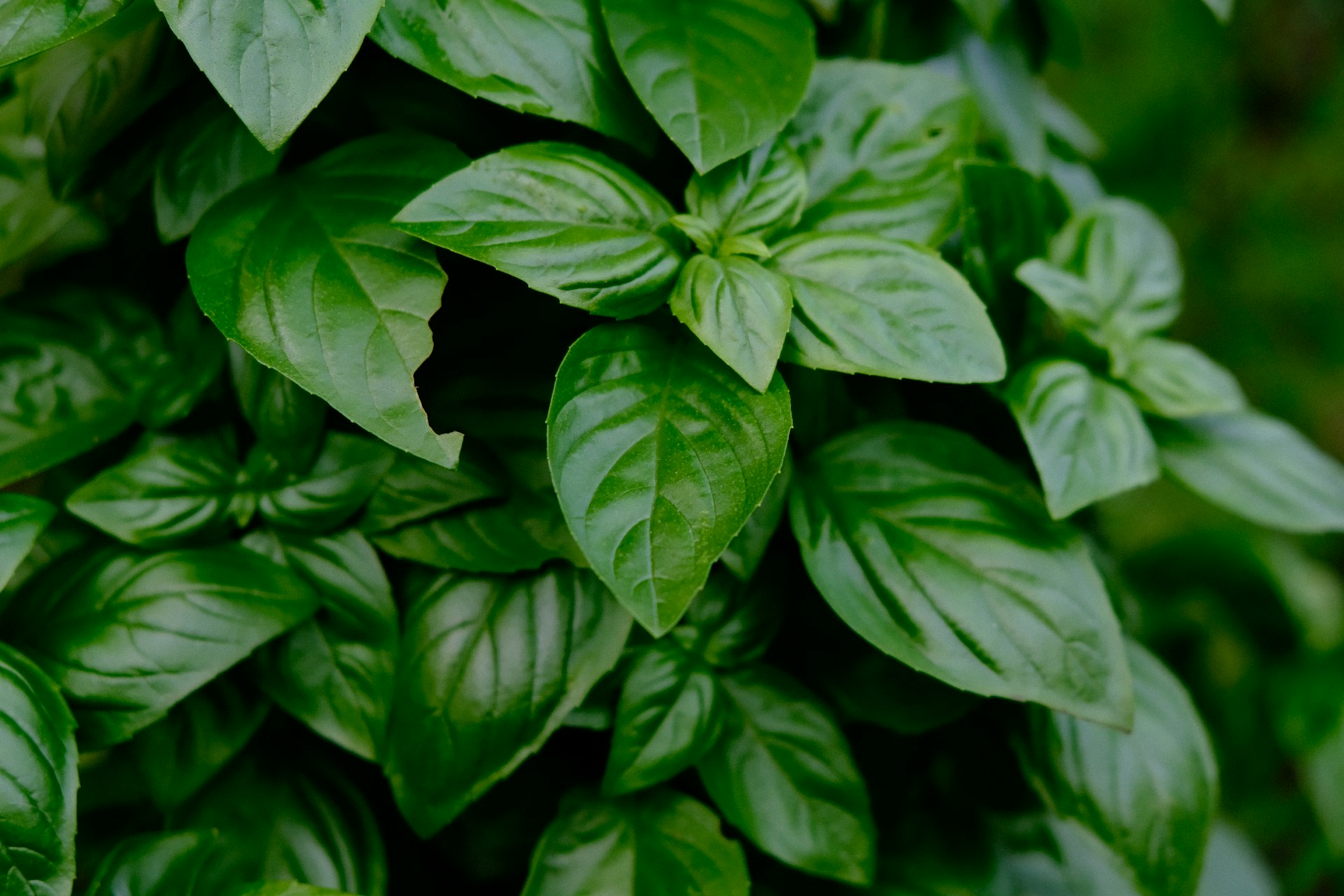
    When much of a Georgia garden starts to droop in late June, basil is just getting going. It loves heat, sun and long days, and a single healthy plant can produce more leaves than one household can easily use. Brush against it and your hands carry its sweet, peppery, faintly clove-like scent for an hour. Few herbs say summer so clearly.

    A herb with a royal name

    The name basil comes from the Greek basilikon, meaning royal, and the herb has long been held in something like reverence. Sweet basil, the kind most of us grow, is thought to have originated in tropical Asia and spread west over many centuries to the Mediterranean, where it became inseparable from the cooking of Italy and southern France. Pesto, the famous basil sauce, comes from Genoa and the surrounding region of Liguria.

    Basil has a place in literature, too. In a story from Boccaccio’s Decameron, later retold in John Keats’s poem Isabella, or the Pot of Basil, a grieving young woman keeps a pot of basil that she waters with her tears. It is a melancholy tale, but it shows how closely the herb was woven into everyday life and imagination.

    A sacred cousin

    Holy basil, known in India as tulsi, is a related species with a sweeter, spicier, more clove-like scent. In Hindu tradition it is considered sacred, and many households keep a tulsi plant in a special container in a courtyard or by the door, where it is cared for each day. If you grow holy basil, you may notice how different its fragrance is from the familiar Italian kind.

    Growing basil in a Georgia summer

    • Plant after nights stay warm. Basil dislikes cold and can be damaged by temperatures below about fifty degrees.
    • Give it full sun and steady water, especially in pots, which dry out quickly in July.
    • Harvest from the top, cutting just above a pair of leaves. The plant will branch and grow bushier.
    • Pinch off flower buds as they appear to keep the plant producing tender leaves longer.
    • Keep cut basil in a glass of water on the counter, like a bouquet, rather than in the refrigerator, where the leaves tend to darken.

    Simple ways to enjoy it

    Tear a few leaves over sliced tomatoes with a little salt and olive oil. Drop a sprig into a pitcher of cold water with lemon slices. Set a small vase of basil stems on the kitchen windowsill, where the scent drifts with each breeze. Or just pause in the garden, rub a leaf between your fingers and take a slow breath.

    Basil essential oil appears in some blends, but it is strong and should always be well diluted. Keep it away from children and pets, and talk with your doctor before using it during pregnancy or if you have a health concern. For most of us, the living plant is the better pleasure: green, generous and at its best in exactly the heat we would otherwise complain about.

  • The Night Chorus: Listening to Cicadas, Katydids, Crickets and Tree Frogs

    The Night Chorus: Listening to Cicadas, Katydids, Crickets and Tree Frogs

    Step outside on a June night in Middle Georgia and the dark is anything but silent. There is a rising and falling buzz from the trees, a rhythmic rasp from the shrubs, steady chirps from the grass and, near water, a chorus of honks and trills. To someone from a cooler, drier place, it can sound almost deafening. To many Southerners, it is the sound of summer itself, and listening to it closely is a lovely way to settle into the evening.

    Cicadas: summer’s loudest singers

    The long, pulsing buzz that swells on hot afternoons and fades into the evening usually belongs to cicadas. Male cicadas produce their song with tymbals, ribbed membranes on the sides of the body that buckle in and out very rapidly, a little like pressing the bottom of a metal can. The partly hollow body helps amplify the sound, and each species has its own song for attracting mates.

    The cicadas heard every summer are often called annual or dog-day cicadas, because some appear every year in the hottest part of the season. Periodical cicadas are different: they spend thirteen or seventeen years underground and emerge in enormous numbers in particular years and regions. When they come, they are hard to miss.

    Katydids and crickets: the night shift

    As darkness settles, katydids and crickets take over. Both make sound by rubbing parts of their wings together, a technique called stridulation. Katydids, leafy green relatives of grasshoppers, are heard far more often than seen. The common true katydid’s harsh, rhythmic call is said to sound like its name, katy-did, katy-didn’t, repeated through the night from the treetops.

    Crickets produce the gentler, steady chirps. In 1897, a physicist named Amos Dolbear published a formula connecting the chirp rate of crickets to air temperature, because chirping speeds up as nights get warmer. For the snowy tree cricket, the best candidate, counting the chirps in fifteen seconds and adding forty gives a rough estimate of the temperature in degrees Fahrenheit. It is an approximation, but a charming one to try from the porch.

    Tree frogs: the voices near water

    Near ponds, creeks and even backyard birdbaths, tree frogs add their voices on warm nights, especially after rain. Male frogs call to attract mates, and different species sound very different. Some sound like a honk or a bell, others like a musical trill. Hearing a chorus swell after a summer storm is one of the season’s small wonders.

    A simple listening practice

    • Sit outside after dark, or by an open window, with the lights off or low.
    • Close your eyes and take a few slow breaths.
    • Listen first to the whole wash of sound without trying to name anything.
    • Then pick out one voice, the loudest, the closest or the steadiest, and follow it for a minute.
    • Move to another layer, and another, noticing how they overlap.
    • When your thoughts drift, return to whichever sound is nearest.

    Ten minutes is enough to feel the evening settle around you. Some people find the summer chorus through an open window a pleasant backdrop for falling asleep, while others prefer a fan on the loudest nights. Either way, it is worth stepping outside at least once this month simply to listen. The singers have been waiting all year.

  • Long Light in June: Common Questions About Early Sunrises, Late Sunsets and Sleep

    Long Light in June: Common Questions About Early Sunrises, Late Sunsets and Sleep

    June in Middle Georgia brings the longest days of the year. Dawn arrives early, the sky stays bright well into the evening and the house can still be full of daylight at bedtime. For many people, this throws sleep a little off balance. Here are answers to some common questions about sleeping well in the long-light weeks of summer. This is general information; if sleep troubles are persistent, talk to your doctor.

    Why is it harder to wind down when it is still light out?

    Light is the strongest cue the body uses to set its internal clock. As evening light fades, the body begins producing more melatonin, the hormone associated with feeling sleepy at night. Bright light in the evening tends to delay that process. When the sky is still glowing at nine o’clock, your body may simply not have received the message that night has arrived, even if your schedule says it is time for bed.

    What helps in the evening?

    • Close the blinds on west-facing windows in the late afternoon. It keeps the house cooler and softens the evening light.
    • Switch from overhead lights to lamps after dinner, even if it still feels early.
    • Dim screens or put them away during the last hour before bed, since bright screens add to the light your eyes take in.
    • Keep a simple wind-down routine, such as a shower, a few pages of a book and lights out, at about the same time each night.

    Why do I keep waking up at dawn?

    Early light slipping around curtain edges is a common culprit. So is the dawn chorus, since birds start singing before sunrise, and so is morning warmth in a room that faces east. Blackout curtains or a lined shade can make a real difference. A comfortable sleep mask is an inexpensive alternative and handy for travel, too. If birdsong wakes you, a fan or a quiet white noise machine can soften it.

    If you wake early and cannot get back to sleep, try not to fight it. Lying quietly with your eyes closed and breathing slowly is still restful. Some people choose to get up and enjoy the cool of the morning instead, which can be one of the best parts of a summer day.

    Should I change my sleep schedule for summer?

    Many people naturally drift a little later in summer, staying up to enjoy the evening and sleeping in on weekends. A small shift is fine. What tends to matter more is consistency: going to bed and waking up at roughly the same times each day, weekends included, helps your body keep a steady rhythm. With children out of school, a regular bedtime and wake time can keep summer days from sliding into a jumble.

    When should I talk to someone?

    A few restless nights during a heat wave or a busy season are common. But if you regularly have trouble falling asleep or staying asleep, wake up feeling unrefreshed or feel very sleepy during the day, talk to your doctor, who can help you understand what is going on. In the meantime, a darker room in the morning, a dimmer house at night and a steady rhythm can help the long days of June feel like a gift rather than a disruption.