Healing Starts Within

💌 Discover our wellness rituals designed to reduce stress and revitalize.

Book Now · Call (478) 303-6936

Reserve your personalized wellness session today and take the first step toward deep healing.

Welcome to Lotus Natural Wellness

With Sonya Gordon

  • A Morning at the U-Pick Farm: Blueberry Picking as a Slow Summer Ritual

    A Morning at the U-Pick Farm: Blueberry Picking as a Slow Summer Ritual

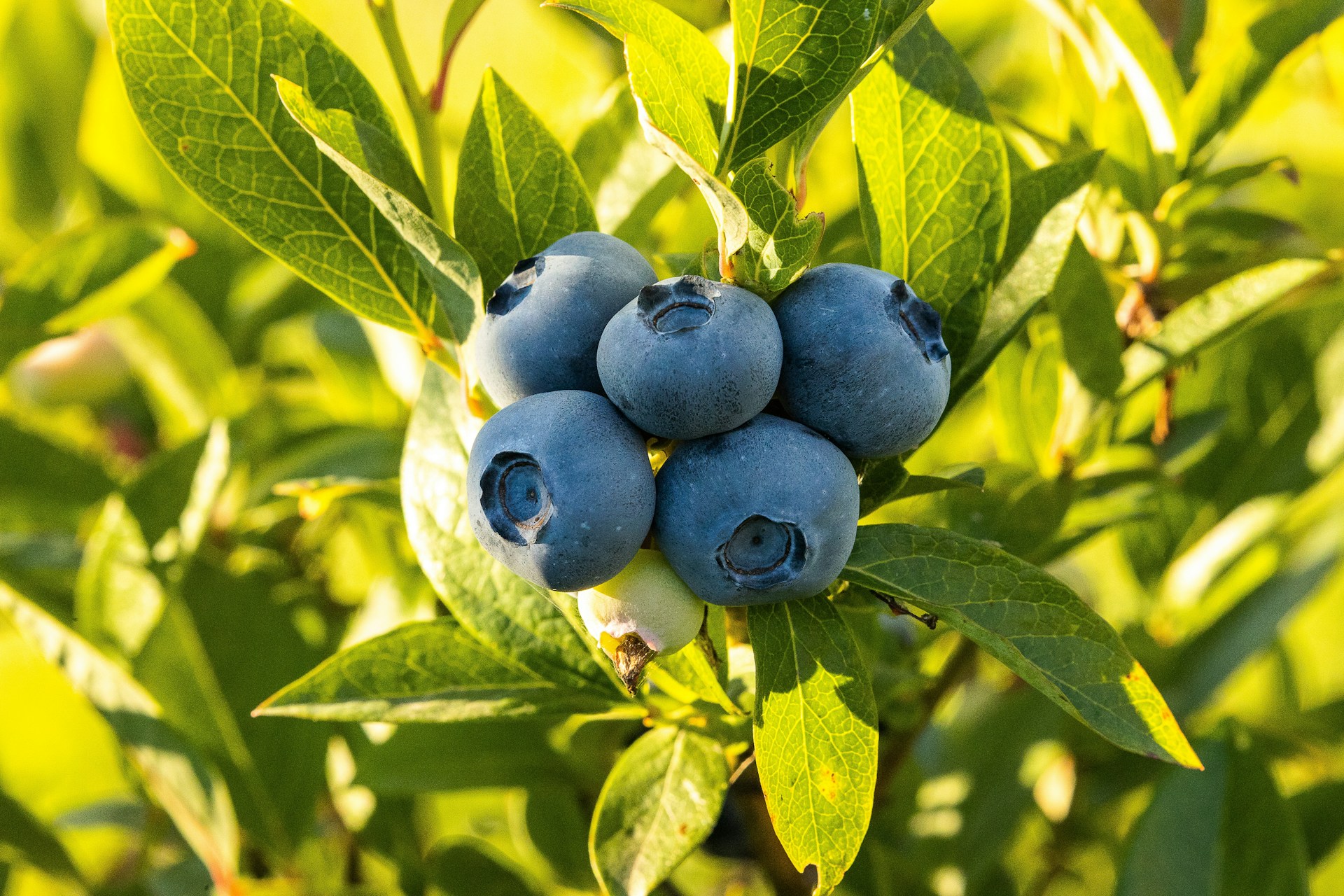
    There is a particular kind of quiet in a blueberry field early on a summer morning. The dew is still on the leaves, the air has not yet turned heavy and the only sounds are birds, distant voices and the soft drum of berries dropping into a bucket. Picking blueberries is repetitive, unhurried work, and that is exactly what makes it so restful.

    Georgia’s blueberry season

    Blueberries are one of the few fruits native to North America that are grown on a large scale, and Georgia has become one of the country’s major blueberry-producing states. Two main types thrive here: rabbiteye blueberries, which are native to the Southeast, and southern highbush varieties, which tend to ripen earlier. Depending on the variety and the weather, picking season in Georgia generally runs from late spring through midsummer.

    Many farms around the state open their rows to the public for pick-your-own. Hours, prices and picking conditions change from week to week, so check the farm’s website or call before you go. Some farms close for the day once the ripe berries are picked over.

    Planning your morning

    • Go early. The first hours after opening are the coolest and often the best for picking.
    • Dress for the field. A wide-brimmed hat, sunscreen, light long sleeves and closed shoes for uneven ground.
    • Bring water and a snack, plus a damp cloth in a bag for sticky fingers.
    • Ask about containers. Some farms provide buckets; others welcome your own.
    • Follow the farm’s rules about where to pick and whether tasting in the rows is welcome.

    How to pick like a regular

    Ripe blueberries are fully blue all over, with no red or green near the stem. The best way to pick is gentle: cup your hand under a cluster and roll the berries lightly with your thumb. Ripe ones drop into your palm, and unripe ones stay on the bush for another day. Look under the leaves and toward the inside of the bush, where shaded berries are often plump and missed by others.

    Bringing the harvest home

    Keep your berries out of the sun on the way home, and refrigerate them as soon as you can. Do not wash them until just before eating, since moisture makes them spoil faster. To freeze, spread unwashed berries on a tray in a single layer, freeze until firm and then pour them into a bag. They will stay separate and ready for pancakes, smoothies or a handful straight from the freezer on a hot afternoon.

    Letting it be slow

    The real pleasure of a U-pick morning is not the full bucket at the end. It is the rhythm of the work: reach, cup, roll, drop. Let your attention settle on the feel of the berries and the sound they make. Notice the sweetness of a sun-warmed berry compared with one from the shade. Talk with whoever came with you, or do not talk at all.

    Children often love it, too, once they discover that the best berries hide low on the bush, right at their eye level. An hour in the rows, a cold drink in the car and a bowl of berries on the kitchen table: it is a small, complete summer day, finished before the heat has even arrived.


  • Watermelon: The Long Journey of a Southern Summer Favorite

    Watermelon: The Long Journey of a Southern Summer Favorite

    Few foods are as tied to a Southern summer as watermelon. It turns up at church picnics, Fourth of July cookouts and roadside stands, cut into wedges and eaten over the porch rail with juice running down to the elbows. It is more than ninety percent water, which helps explain why it tastes like relief on a hot day. Its story, though, begins far from Georgia.

    An ancient fruit from Africa

    Watermelon’s wild ancestors grew in Africa, and people there have eaten and cultivated melons for thousands of years. Ancient Egyptians grew them, depicted them in tomb art and placed watermelon seeds among the provisions for the afterlife; seeds have been found in the tomb of Tutankhamun. From North Africa, watermelon spread around the Mediterranean, into the Middle East and India and eventually to China, which today grows more watermelon than any other country.

    Watermelon in the American South

    Watermelon arrived in the Americas with European colonists and with enslaved Africans, who brought both seeds and long knowledge of the fruit. It flourished in the long, hot growing season of the South. By the nineteenth century it was a common crop across the region, and it became woven into Southern summer life.

    Georgia remains one of the country’s leading watermelon-growing states, especially in its southern counties. The town of Cordele has long called itself the Watermelon Capital of the World, a title it carries with good humor and pride.

    Seedless watermelons, now the most common kind in stores, were developed in the twentieth century by crossing plants with different numbers of chromosomes to produce fruit that cannot form mature seeds. The small, pale, soft seeds you sometimes find in them are simply undeveloped seed coats.

    Choosing a good one

    • Look for the field spot. A creamy yellow patch on one side shows where the melon rested on the ground while it ripened. White or pale green may mean it was picked early.
    • Feel the weight. A ripe melon feels heavy for its size.
    • Check the rind. A dull rather than glossy surface is often a good sign.
    • Give it a thump if you like. Many people listen for a deep, hollow sound, though this one is more tradition than science.

    Simple ways to enjoy it

    Rinse the rind before cutting, since a knife can carry anything on the outside into the fruit. Keep cut watermelon covered in the refrigerator and eat it within a few days.

    Beyond the classic wedge, try cubes tossed with mint and a squeeze of lime, a few frozen cubes dropped into a glass of water or a salad of watermelon, cucumber and a little salty cheese. Pickled watermelon rind is an old Southern tradition that makes good use of the whole melon.

    Best of all, eat it the old way: outside, on a hot afternoon, with someone you like and nobody worrying about the mess. There is a reason watermelon has lasted thousands of years. Some pleasures do not need improving.

  • Why Perfume Smells Stronger in Summer: Heat, Humidity and Fragrance

    Why Perfume Smells Stronger in Summer: Heat, Humidity and Fragrance

    Many people notice it without quite knowing why. The perfume that felt soft and pleasant in winter seems twice as strong on a July afternoon. A candle that barely registered in December fills the whole house in June. Heat and humidity change the way fragrance behaves, and knowing a little about why can help you enjoy scent more comfortably all summer.

    Heat speeds everything up

    Fragrance reaches your nose when scent molecules evaporate into the air. Warmth makes that evaporation happen faster. On a hot day, and on skin that is already warm, a perfume releases more of its molecules more quickly, so it projects further and seems louder. The same speed means it also fades sooner. The light, fresh top notes, often citrus and herbs, can flash off within minutes, leaving the heavier heart and base notes to carry the scent.

    Humidity adds its own effect. Many people find that scents seem to hang in moist, still air and linger around them rather than drifting away. Combine heat, humidity and a crowded room, and a fragrance that is perfectly pleasant at arm’s length can become overwhelming.

    Wearing fragrance in the heat

    • Use less. One spray instead of three is often plenty in summer.
    • Choose lighter concentrations. From strongest to lightest, the common categories are parfum, eau de parfum, eau de toilette and eau de cologne. The lighter versions suit hot weather.
    • Apply to clean skin after a shower, when skin is cooler, rather than in the middle of a hot afternoon.
    • Skip rubbing your wrists together after spraying. Many perfumers suggest letting fragrance dry on its own.
    • Consider lighter families, such as citrus, green, aquatic and soft floral scents, though personal preference always wins.

    Some fragrances contain citrus oils that can make skin more sensitive to sunlight. If you will be outside for a long time, spraying fragrance on clothing rather than sun-exposed skin is a simple precaution, though test a hidden spot first, since some perfumes can mark delicate fabric.

    Be kind to the people near you

    Summer gathers people indoors in close quarters: restaurants, offices, churches, cars. Heat amplifies scent in all of those places, and some people are sensitive to strong fragrances. A light hand is a courtesy. A good rule is that your fragrance should be noticed by someone who leans in close, not by someone across the room.

    Storing scent through a Georgia summer

    Heat and light are hard on fragrance. They can break down the delicate molecules in a perfume, dulling its top notes or changing its character over time. The same is true of essential oils.

    • Keep perfumes and oils in a cool, dark place, such as a bedroom drawer or a closet shelf.
    • Avoid sunny windowsills and steamy bathrooms.
    • Never leave fragrance, essential oils or candles in a hot car, where temperatures climb quickly.
    • Close caps tightly to limit exposure to air.

    With a lighter touch and a cooler shelf, your favorite scents can stay pleasant all season, and so can the people who share the room with you.

  • Vetiver: The Earthy Root That Cooled and Scented India’s Summers

    Vetiver: The Earthy Root That Cooled and Scented India’s Summers

    Most fragrant plants give us their scent through flowers or leaves. Vetiver is different. Its treasure is underground, in a dense mass of fine roots that smell earthy, woody and faintly smoky, like damp soil after rain. For centuries that scent has been tied to summer in South Asia, and the story of how it was used is one of the most charming chapters in the history of keeping cool.

    A grass with deep roots

    Vetiver is a tall, clumping grass native to India. Above ground it looks like a large ornamental grass. Below ground, its roots grow straight down to remarkable depths, forming a fibrous curtain that holds soil in place. That trait has made vetiver valuable far beyond perfumery. It has been planted in many tropical countries to stabilize hillsides and slow soil erosion, and international development programs promoted it for that purpose in the late twentieth century.

    Khus: the summer screens of northern India

    In Hindi and Urdu, vetiver is known as khus. Before electric cooling, households in the hot plains of northern India wove the dried roots into thick mats, often called khus tattis, and hung them in doorways and windows during the hottest months. The mats were sprinkled or soaked with water. As hot, dry wind passed through, evaporation cooled the air, and the roots released their fragrance into the room.

    The result was a breeze that was both cooler and scented, a natural version of what we now do with fans and diffusers. Khus also found its way into summer refreshments, including a bright green khus syrup mixed with cold water or milk. For many people, the scent simply became the smell of a summer afternoon.

    From the root to the perfume bottle

    Vetiver essential oil is distilled from the roots, and it is one of the thickest, darkest and slowest-evaporating oils in perfumery. It is valued as a base note, the part of a fragrance that lingers longest, and it appears in many classic colognes and perfumes. Today much of the world’s vetiver oil comes from Haiti, along with Indonesia, India and the island of Réunion, each with its own character.

    Because the roots must be dug up to be distilled, it is worth buying vetiver from suppliers who are open about where and how it is grown.

    Enjoying vetiver in a Georgia summer

    Vetiver’s earthiness pairs beautifully with brighter scents. A drop blended with lime or grapefruit, or with lavender, gives a summer blend depth without heaviness. Its thickness can make it tricky in some diffusers, so many people enjoy it on a passive diffuser, such as a terracotta disc or a cotton pad, or well diluted in a body oil for the evening.

    As with any essential oil, dilute carefully, try a small patch first and stop if you notice irritation. Keep oils away from children and pets, and talk with your doctor before using them if you are pregnant or have a health concern.

    You do not need to hang a woven mat in the doorway to borrow the idea. A cool shower in the evening, windows opened to the night air and a faint, earthy scent in the room can feel like a small echo of those old summer screens and the art of making the heat a little more graceful.

  • Butterflies in the Garden: Planting for Pollinators and Pausing for Wings

    Butterflies in the Garden: Planting for Pollinators and Pausing for Wings

    On a sunny June afternoon, a patch of flowers in Middle Georgia can be busy with wings: big yellow-and-black swallowtails gliding from bloom to bloom, small orange skippers darting low, a monarch passing through. Butterfly watching asks very little. You do not need binoculars or a field guide to start, only a sunny spot, some flowers and a few minutes of stillness.

    Georgia’s state butterfly

    The eastern tiger swallowtail is Georgia’s official state butterfly, and it is one of the most common large butterflies in the Southeast. Males are bright yellow with black tiger stripes. Females can be either yellow or a dark, nearly black form, often with a wash of blue on the hind wings. Their caterpillars feed on the leaves of trees such as tulip poplar and wild cherry, which grow throughout the state.

    Host plants and nectar plants

    A butterfly-friendly garden needs two kinds of plants. Nectar plants feed adult butterflies. Host plants feed caterpillars, and many butterflies lay their eggs only on particular plants. A few classic pairings:

    • Monarchs depend on milkweeds, including the native butterfly weed with its bright orange flowers.
    • Black swallowtails lay eggs on parsley, dill and fennel, so plant a little extra to share.
    • Gulf fritillaries rely on passionflower, including the native maypop.

    For nectar, many butterflies visit coneflowers, black-eyed Susans, zinnias, lantana, salvias, Joe Pye weed and butterfly weed. Plant flowers in clusters rather than one here and one there, so butterflies can find them easily, and choose plants that bloom in turn from spring into fall. Your county office of the University of Georgia Cooperative Extension can suggest native plants suited to your area.

    When caterpillars start chewing your parsley, try to see it as a success rather than a problem. That is the garden doing its job.

    Small touches that help

    Butterflies depend on outside warmth to fly, which is why they are most active on sunny days, often from late morning through afternoon. A few flat stones in a sunny spot give them a place to bask. A shallow dish of damp sand or a muddy patch offers minerals, and on summer days you may see butterflies gathered there in a behavior called puddling. Going easy on pesticides, especially broad-spectrum insecticides, protects caterpillars as well as adults.

    June is also when many communities celebrate National Pollinator Week, a yearly reminder of how much our gardens and farms depend on bees, butterflies, moths and other pollinators.

    Butterfly watching as a slow practice

    Choose a shady seat near your flowers and simply watch. Follow one butterfly as it moves from bloom to bloom. Notice how it lands, how its wings open and close, how long it stays. Try to see its colors in detail: the edging on the wings, the spots, the way the light catches the scales. When it flies away, wait for the next.

    It is a lesson in patience and in letting go. You cannot make a butterfly land where you want it to. You can only sit, pay attention and enjoy what arrives. On a hot afternoon, there are few better ways to spend fifteen minutes in the shade.

  • Summer Stargazing for Beginners: The Summer Triangle, the Milky Way and a Quiet Mind

    Summer Stargazing for Beginners: The Summer Triangle, the Milky Way and a Quiet Mind

    There is something about lying on your back under a summer sky that puts the rest of life in perspective. The stars do not hurry. They ask nothing. And you do not need a telescope, an app or any special knowledge to enjoy them, only a dark spot, a little patience and a willingness to stay up a bit late.

    When and where to look

    Around the solstice, the sky in Middle Georgia does not get fully dark until after ten o’clock, so summer stargazing is a late-evening affair. Moonless nights are best, since a bright moon washes out fainter stars. Summer humidity and haze can also soften the view, so the clearer, drier nights after a front passes through are especially good.

    Light pollution matters most of all. In town, you will see the brightest stars. Away from city lights, the sky fills in dramatically. Georgia has some genuinely dark places, including Stephen C. Foster State Park near the Okefenokee Swamp, which has been recognized as an International Dark Sky Park. If you plan a trip, check the park’s official website for hours and rules about night visits.

    Finding the Summer Triangle

    The easiest summer pattern for beginners is not a constellation but an asterism, a shape made from bright stars in different constellations. The Summer Triangle is formed by three of them:

    • Vega, a brilliant blue-white star in the small constellation Lyra. On June evenings it climbs in the east and is often the first bright star you notice there.
    • Deneb, the tail of Cygnus, the Swan, lower and to the left of Vega.
    • Altair, in Aquila, the Eagle, lower down and to the right, completing a large, lopsided triangle.

    Once you find it, the triangle becomes a familiar friend that rides higher each week as summer goes on.

    The Milky Way and other sights

    On a truly dark night, a soft, cloudy band stretches across the sky, running right through the Summer Triangle. That is the Milky Way, our own galaxy seen edge-on from within. Its brightest, densest region lies low in the south in summer, toward the constellations Sagittarius and Scorpius. Look for Antares, a reddish star in Scorpius, low over the southern horizon.

    While you watch, you may see satellites gliding steadily across the sky and the occasional meteor streaking past. If you enjoy those, the Perseid meteor shower peaks each August and is worth marking on the calendar.

    Making it a restful ritual

    Bring a blanket or a reclining chair, insect repellent and a light layer, since even summer nights can feel damp after a while. Give your eyes at least twenty minutes to adjust to the dark, and avoid looking at your phone, which resets that adjustment. If you need light, a flashlight covered with red cellophane is gentler on night vision.

    Then simply lie back and look. Let your breathing slow. Notice how more stars appear the longer you wait, as if the sky were slowly opening. You do not need to name a single one. Being still beneath them is the whole point, and on a warm June night it is one of the most peaceful things you can do.

  • Lightning Bugs in the Yard: Firefly Watching as a Summer Evening Practice

    Lightning Bugs in the Yard: Firefly Watching as a Summer Evening Practice

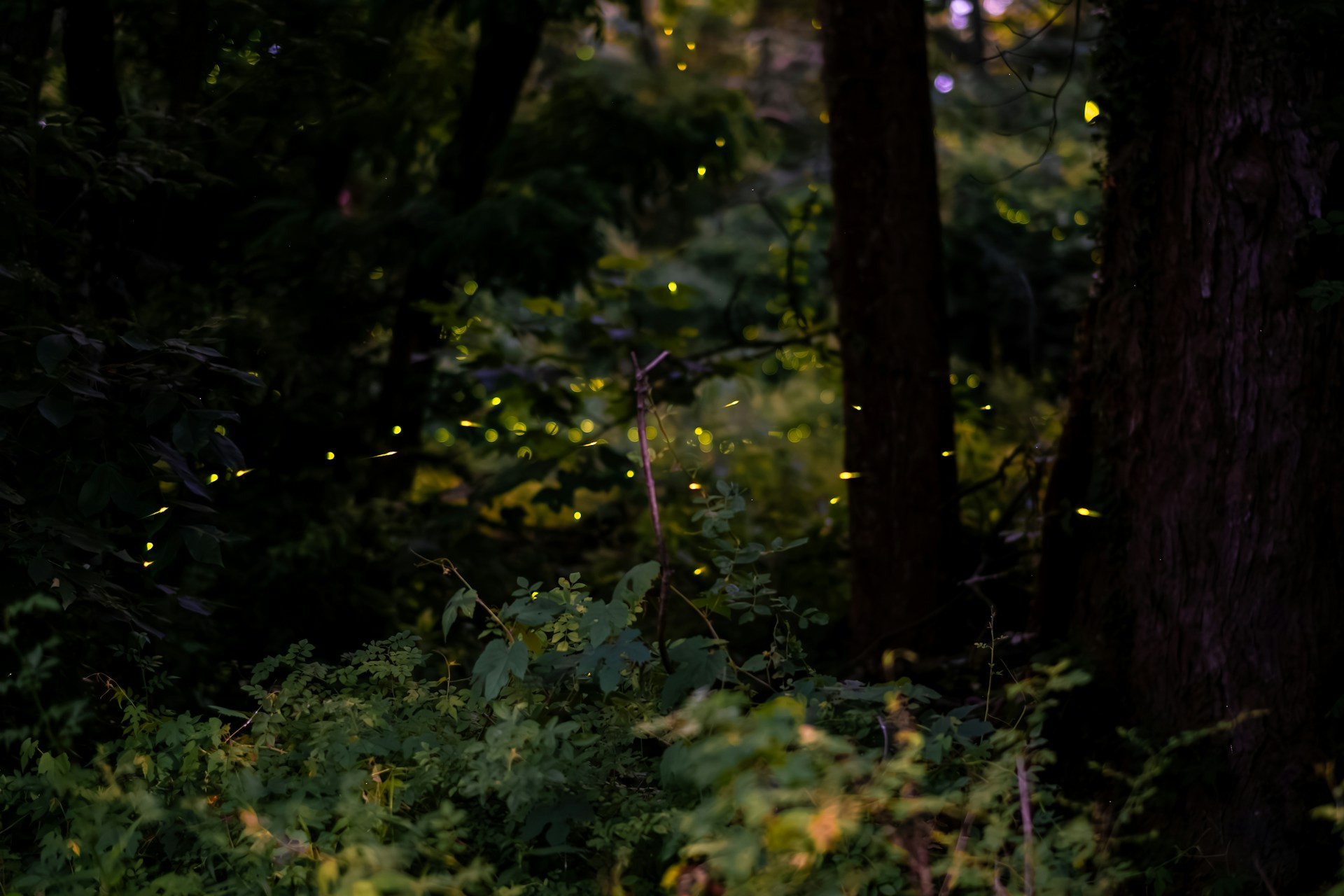
    Sometime in late spring, on an evening when the air is warm and still, the first lightning bugs rise from the grass. By June in Middle Georgia, yards, fields and woodland edges can be full of them, blinking on and off in the dusk. Whether you grew up calling them lightning bugs or fireflies, watching them is one of the simplest and most calming things a summer evening has to offer.

    Beetles that make their own light

    Despite the name, fireflies are not flies. They are beetles, part of a family with many species around the world. Their glow comes from special light organs in the abdomen, where a chemical called luciferin reacts with oxygen with the help of an enzyme called luciferase. The reaction gives off very little heat, which is why firefly light is often called cold light.

    Fireflies glow even before they can fly. Their larvae, sometimes called glowworms, live on the ground in leaf litter and damp soil, where they feed on snails, slugs and worms. Many species spend a year or more as larvae before emerging as adults for just a few weeks of summer.

    A language of flashes

    The blinking is a conversation. In many species, males fly and flash a pattern particular to their kind, and females waiting in the grass or in low plants answer with a flash of their own. Some patterns are quick single blinks, some are long glows and some are a series of rapid flashes. With a little patience, you may notice different patterns in different parts of the yard or at different times of the evening.

    There is drama, too. Females of some firefly species imitate the signals of other species to lure in males, which they then eat. Even the gentlest summer scene has its secrets.

    In the Great Smoky Mountains, one species is famous for flashing in near unison, and viewing is managed by the park each year. Details are on nps.gov if you are curious.

    A firefly evening, step by step

    • Go outside about twenty to thirty minutes after sunset, when activity often picks up.
    • Turn off porch and yard lights so your eyes can adjust and the fireflies can see each other’s signals.
    • Settle into a chair or onto a blanket and let your eyes relax. Adjusting to darkness takes a while, so be patient.
    • Watch one area of the yard. Notice the rhythm of the flashes, their color, which can range from yellow to green, and how high the fireflies fly.
    • If children want to catch a few, use a jar with air holes, keep them for just a short time and let them go the same evening.

    Making your yard friendlier to fireflies

    Many people say there seem to be fewer fireflies than when they were young, and researchers who study them point to concerns such as habitat loss, pesticide use and light pollution. A few small choices can help in your own yard. Keep outdoor lights off or low at night, since artificial light can drown out the signals fireflies use to find each other. Leave some leaf litter and a patch of taller grass or an unmowed garden edge. Use fewer pesticides, especially on the lawn.

    Then, on a warm June night, sit and watch. There is nothing to do and nothing to count unless you want to. It is just you, the dusk and a yard full of tiny lights, saying what fireflies have said to each other every summer for a very long time.

  • Petrichor: Why Rain on Dry Ground Smells So Good

    Petrichor: Why Rain on Dry Ground Smells So Good

    After a run of hot, dry days in a Georgia summer, the first fat raindrops on the driveway release a smell almost everyone recognizes. It is earthy, clean and a little sweet, and it seems to rise from the ground itself. For centuries people simply called it the smell of rain. Since the 1960s, it has had a proper name: petrichor.

    A word invented in 1964

    Two Australian scientists, Isabel Joy Bear and Richard Thomas, coined the term in a paper published in the journal Nature in 1964. They built it from two Greek words: petra, meaning stone, and ichor, the ethereal fluid said to flow in the veins of the gods in Greek mythology. The name suits a scent that seems to be drawn out of rock and soil.

    Their research found that during dry periods, oils given off by plants collect on rocks and in soil. When rain finally arrives, those oils are released into the air along with other compounds, creating the familiar smell.

    The earthy note: geosmin

    A large part of the scent comes from a compound called geosmin, whose name means earth smell. It is produced by microbes that live in soil, including bacteria in the group known as Streptomyces. Human noses are remarkably sensitive to geosmin and can detect astonishingly small amounts of it, which helps explain why the smell of rain on dry ground can feel so strong and so sudden.

    There is also a sharper, cleaner smell that sometimes arrives just before a thunderstorm. That one is often ozone, a form of oxygen created when lightning splits molecules in the air, which storm winds can carry ahead of the rain.

    How the scent reaches us

    In 2015, researchers at the Massachusetts Institute of Technology used high-speed cameras to watch raindrops land on porous surfaces such as soil. They found that a drop can trap tiny bubbles of air that rise and burst, flinging a fine mist of particles upward, a little like the fizz from a glass of soda. Those particles carry scent with them. Light and moderate rain released more of them than heavy downpours, which may be why a gentle first shower often smells strongest.

    Bottling the smell of earth

    In the town of Kannauj in northern India, long known for its traditional perfumes, artisans make a fragrance called mitti attar, or earth attar. Clay is baked and then distilled, and its scent is captured in sandalwood oil, creating a perfume that smells like the first monsoon rain on parched ground. It is a lovely example of people cherishing this smell enough to preserve it.

    The next time a summer shower begins, step to an open door or a covered porch and take a slow breath. If there is thunder, enjoy the moment from inside, since lightning can strike well away from the storm itself. Notice the earthiness, the sweetness, the sudden cool. It is one of the oldest smells there is, and one of the few that seems to make everyone stop and breathe a little deeper.

  • Planting a Moon Garden: White Blooms and Evening Fragrance for Summer Nights

    Planting a Moon Garden: White Blooms and Evening Fragrance for Summer Nights

    In the heat of a Georgia summer, many of us see our gardens best after dark. The day’s work is done, the air has softened and the porch is finally pleasant. A moon garden is designed for exactly those hours: a planting of white and pale flowers, silvery leaves and blooms that release their fragrance in the evening, so the garden seems to glow and perfume the air just when you are ready to enjoy it.

    Why white flowers glow at dusk

    As light fades, our eyes change how they see. In bright light, color vision dominates. In dim light, the eye relies more on cells that are most sensitive to blue-green light and do not distinguish color well. Reds and deep purples are among the first colors to turn gray at dusk, while whites, pale yellows and silvers stay visible much longer. This shift is called the Purkinje effect, after the nineteenth-century Czech scientist who described it. It is why a white blossom can seem to float in the twilight.

    One of the most famous examples of the idea is the White Garden at Sissinghurst Castle in England, planted in the mid-twentieth century by the writer Vita Sackville-West. You need only a few pots or a border by the porch to borrow its magic.

    Plants that suit a Southern summer night

    • Moonflower: a fast-growing vine whose large white flowers unfurl at dusk, often quickly enough to watch, and give off a sweet scent.
    • Four o’clocks: old-fashioned, heat-tolerant plants that open in late afternoon. White and pale varieties are lovely, and many are fragrant.
    • Flowering tobacco: tall, tubular blooms that are especially fragrant in the evening.
    • Gardenia: a Southern classic with creamy white flowers and a heavy evening scent in late spring and early summer.
    • White vinca, white zinnias and white salvias: heat lovers that bloom all summer and catch the last light.
    • Silver foliage: dusty miller and other silvery plants reflect light and frame the flowers.

    Many night-scented flowers are pollinated by moths, including large hawk moths that hover like hummingbirds. If you sit quietly at dusk, you may see one at work.

    A note of caution: some popular night bloomers, including datura and angel’s trumpet, are toxic, and many garden plants should never be eaten. If you have children or pets, check each plant before you buy it. The ASPCA keeps a list of plants that are toxic to animals, and your county extension office can help with local questions.

    Placing it where you will use it

    Put your moon garden where you actually spend evenings: beside the porch steps, around the patio or under a bedroom window that is open on cooler nights. A pale gravel path or light-colored pots add to the glow. Go easy on bright outdoor lights. A few low, warm lights, or none at all, will let the flowers, the moon and any fireflies do the work.

    Enjoying it slowly

    Once it is planted, the moon garden asks only that you visit. Step outside after supper with a glass of something cold. Watch the colors drain from the yard until only the white remains. Notice which scent arrives first. It is a gentle way to end a hot day, and a reminder that some of summer’s best moments only begin when the sun goes down.

  • Marking the Summer Solstice: A Simple Ritual for the Longest Day of the Year

    Marking the Summer Solstice: A Simple Ritual for the Longest Day of the Year

    Each year around June 20 or 21, the Northern Hemisphere reaches its longest day. In Middle Georgia, daylight stretches a little past fourteen hours, the sun rises early and dusk lingers well past eight-thirty in the evening. It is a natural moment to pause at the top of the year’s arc and notice where you are.

    What the solstice is

    The solstice happens because Earth’s axis is tilted. Around late June, the Northern Hemisphere leans most directly toward the sun, so the sun climbs highest in the midday sky and stays up longest. After that, days slowly begin to shorten again, a few seconds at first and then minutes, until the winter solstice in December.

    The word comes from the Latin sol, sun, and sistere, to stand still. In the weeks around the solstice, the sun’s rising and setting points along the horizon seem to pause before turning around and moving the other way.

    Oddly, the longest day is not the hottest. Land and water keep absorbing heat for weeks afterward, which is why the steamiest stretch of a Georgia summer usually comes in July and August.

    Midsummer around the world

    People have marked this turning point for thousands of years. At Stonehenge in England, the great stones are aligned with the sunrise on the summer solstice. In Sweden, Midsummer is one of the most beloved holidays of the year, celebrated with flower crowns, dancing around a leafy maypole and long meals outdoors in the bright northern evening. Across much of Europe, the feast of St. John the Baptist on June 24 absorbed older midsummer customs, with bonfires and the gathering of herbs. St. John’s wort takes its name from blooming around that day.

    These traditions share a theme: gratitude for light and abundance, and an awareness that the season is turning.

    A simple solstice day at home

    • Greet the sunrise. Take coffee or tea outside early, before the heat, and watch the light come up.
    • Gather something. Cut a handful of herbs or flowers from the yard for the table, in the old midsummer spirit.
    • Make a flower crown with children, twisting soft stems, herbs and greenery around a ring of florist wire or a flexible vine.
    • Eat outdoors once the evening cools, keeping the meal simple.
    • Watch the long dusk. Leave the lights off and notice the slow fading of color across the sky.

    A question for the longest day

    Many people like to pair the solstice with a moment of reflection. At the winter solstice, the questions are often about rest and what we hope will return. At midsummer, they can be about what has grown. Sit somewhere comfortable at dusk and ask: what has flourished in my life since winter? What would I like to tend more carefully as the days begin to shorten?

    Write a few lines, light a candle on the porch table or simply sit with the question until the first fireflies appear. There is nothing to achieve. The point is to notice the turning of the year and to let a little of the long light settle in.