Tag: garden

  • Basil, the Royal Herb: Its Long History and Simple Ways to Enjoy It in the Heat

    Basil, the Royal Herb: Its Long History and Simple Ways to Enjoy It in the Heat

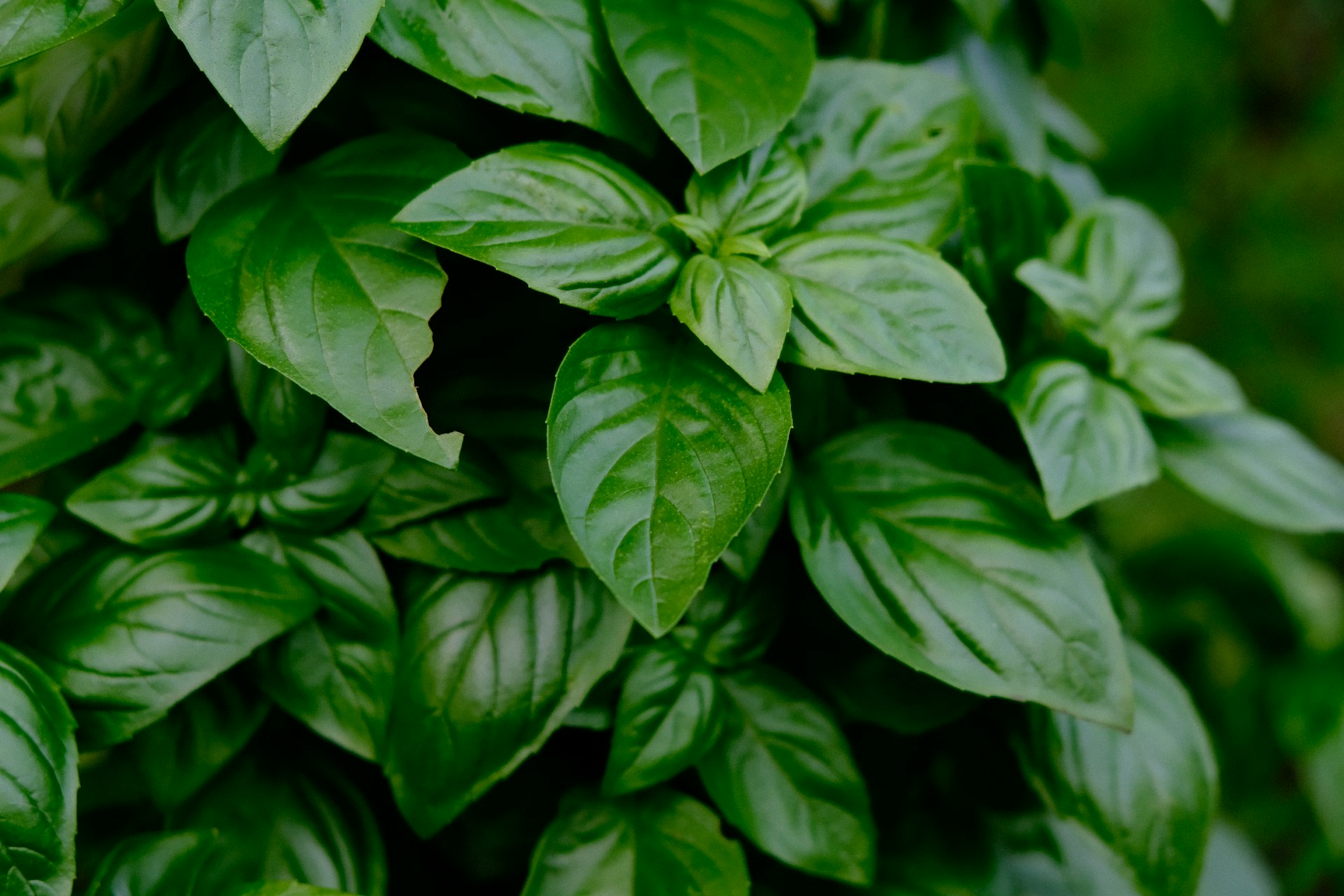
    When much of a Georgia garden starts to droop in late June, basil is just getting going. It loves heat, sun and long days, and a single healthy plant can produce more leaves than one household can easily use. Brush against it and your hands carry its sweet, peppery, faintly clove-like scent for an hour. Few herbs say summer so clearly.

    A herb with a royal name

    The name basil comes from the Greek basilikon, meaning royal, and the herb has long been held in something like reverence. Sweet basil, the kind most of us grow, is thought to have originated in tropical Asia and spread west over many centuries to the Mediterranean, where it became inseparable from the cooking of Italy and southern France. Pesto, the famous basil sauce, comes from Genoa and the surrounding region of Liguria.

    Basil has a place in literature, too. In a story from Boccaccio’s Decameron, later retold in John Keats’s poem Isabella, or the Pot of Basil, a grieving young woman keeps a pot of basil that she waters with her tears. It is a melancholy tale, but it shows how closely the herb was woven into everyday life and imagination.

    A sacred cousin

    Holy basil, known in India as tulsi, is a related species with a sweeter, spicier, more clove-like scent. In Hindu tradition it is considered sacred, and many households keep a tulsi plant in a special container in a courtyard or by the door, where it is cared for each day. If you grow holy basil, you may notice how different its fragrance is from the familiar Italian kind.

    Growing basil in a Georgia summer

    • Plant after nights stay warm. Basil dislikes cold and can be damaged by temperatures below about fifty degrees.
    • Give it full sun and steady water, especially in pots, which dry out quickly in July.
    • Harvest from the top, cutting just above a pair of leaves. The plant will branch and grow bushier.
    • Pinch off flower buds as they appear to keep the plant producing tender leaves longer.
    • Keep cut basil in a glass of water on the counter, like a bouquet, rather than in the refrigerator, where the leaves tend to darken.

    Simple ways to enjoy it

    Tear a few leaves over sliced tomatoes with a little salt and olive oil. Drop a sprig into a pitcher of cold water with lemon slices. Set a small vase of basil stems on the kitchen windowsill, where the scent drifts with each breeze. Or just pause in the garden, rub a leaf between your fingers and take a slow breath.

    Basil essential oil appears in some blends, but it is strong and should always be well diluted. Keep it away from children and pets, and talk with your doctor before using it during pregnancy or if you have a health concern. For most of us, the living plant is the better pleasure: green, generous and at its best in exactly the heat we would otherwise complain about.
  • Drying Herbs and Flowers From the Summer Garden: Bundles, Sachets and the Story of Potpourri

    Drying Herbs and Flowers From the Summer Garden: Bundles, Sachets and the Story of Potpourri

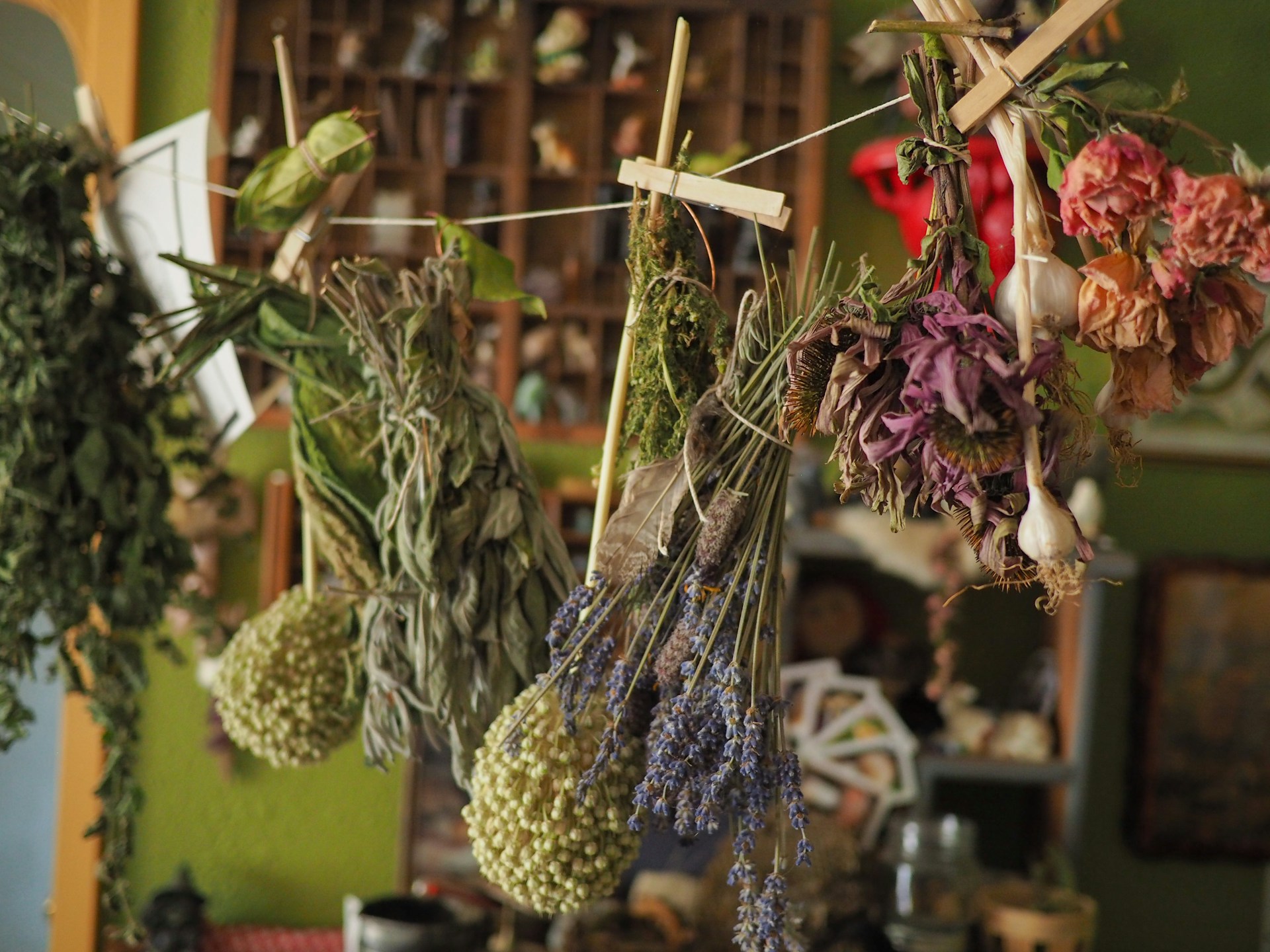
    By late June, a Georgia herb garden is often producing faster than anyone can keep up with. The mint has climbed out of its pot, the rosemary is bushy and the basil needs cutting every few days. Drying some of that abundance is an old and satisfying way to keep summer’s scents for the months ahead, in sachets, bowls and jars of tea.

    Why potpourri means rotten pot

    The word potpourri comes from French and means, quite literally, rotten pot. It was borrowed from the Spanish olla podrida, a slow-cooked stew of many ingredients. The earliest scented potpourris were made by a moist method: layers of partly dried petals and salt were packed into a crock and left to ferment for weeks, producing a damp, unattractive but intensely fragrant mixture kept in lidded jars and opened to scent a room. The pretty bowls of dried petals we know today come from the later dry method, which favors color and appearance as well as scent.

    Air-drying in humid weather

    Georgia humidity makes drying slower than it is in drier climates, and mold is the main risk. A few habits help:

    • Harvest on a dry morning, after the dew has evaporated but before the heat of the day.
    • Gather small bundles of five to ten stems and secure them with a rubber band, which tightens as the stems shrink.
    • Hang bundles upside down indoors, in an air-conditioned room out of direct sunlight. Garages, porches and attics are usually too humid in summer.
    • Check after a week or two. Herbs are ready when the leaves crumble easily between your fingers.
    • If a bundle stays limp or shows any sign of mold, compost it and try again with smaller bundles.

    Rosemary, mint, lemon balm, oregano, thyme and sage all dry well this way. Among flowers, roses, statice, strawflowers and globe amaranth hold their color. Hydrangeas are a special case: many people stand the cut blooms in a vase with a little water and simply let them dry as the water evaporates.

    Simple sachets

    A sachet is just a small fabric pouch filled with dried, fragrant plant material. Use a cotton or muslin bag, or sew a simple square from scrap fabric. Fill it with dried lavender, rosemary, mint or rose petals, alone or mixed, and tie it closed. Tuck sachets into drawers, closets, suitcases and pillowcases. When the scent fades, squeeze the sachet gently to release more, or refill it with fresh herbs.

    Storing herbs for tea and the kitchen

    Herbs you plan to use for tea or cooking deserve a little extra care. Strip the dried leaves from the stems, keep them as whole as possible and store them in clean, airtight glass jars away from heat and light. Label each jar with the name and date. Most dried herbs are at their best within about a year.

    Keep bowls of potpourri out of reach of children and pets, who may be tempted to taste it, and be especially careful with simmering liquid potpourri around cats and dogs. Your veterinarian can answer questions about specific plants. Then, some gray morning next winter, open a jar of summer mint or a drawer with a sachet inside, and the garden will come back to you for a moment.

  • Butterflies in the Garden: Planting for Pollinators and Pausing for Wings

    Butterflies in the Garden: Planting for Pollinators and Pausing for Wings

    On a sunny June afternoon, a patch of flowers in Middle Georgia can be busy with wings: big yellow-and-black swallowtails gliding from bloom to bloom, small orange skippers darting low, a monarch passing through. Butterfly watching asks very little. You do not need binoculars or a field guide to start, only a sunny spot, some flowers and a few minutes of stillness.

    Georgia’s state butterfly

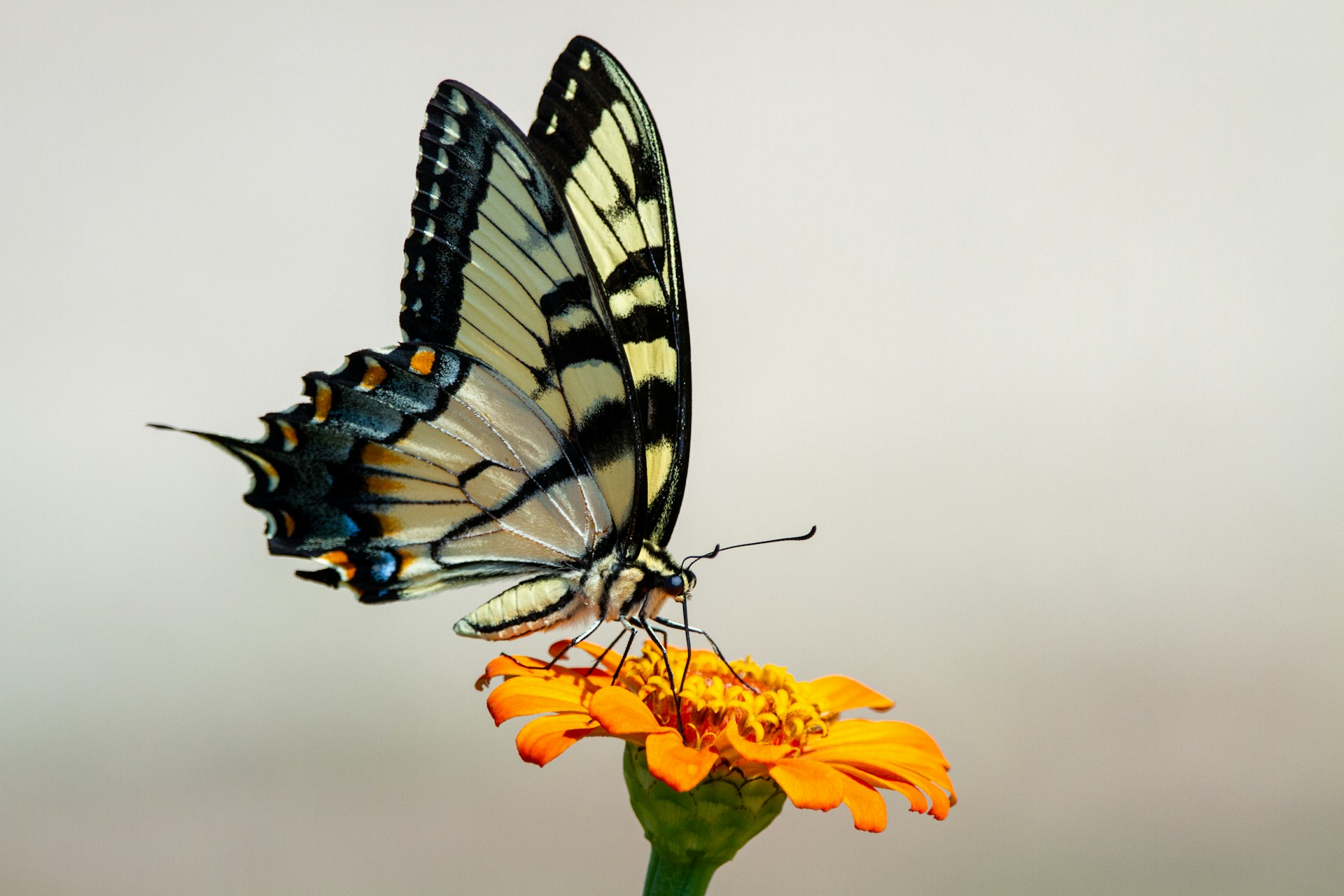
    The eastern tiger swallowtail is Georgia’s official state butterfly, and it is one of the most common large butterflies in the Southeast. Males are bright yellow with black tiger stripes. Females can be either yellow or a dark, nearly black form, often with a wash of blue on the hind wings. Their caterpillars feed on the leaves of trees such as tulip poplar and wild cherry, which grow throughout the state.

    Host plants and nectar plants

    A butterfly-friendly garden needs two kinds of plants. Nectar plants feed adult butterflies. Host plants feed caterpillars, and many butterflies lay their eggs only on particular plants. A few classic pairings:

    • Monarchs depend on milkweeds, including the native butterfly weed with its bright orange flowers.
    • Black swallowtails lay eggs on parsley, dill and fennel, so plant a little extra to share.
    • Gulf fritillaries rely on passionflower, including the native maypop.

    For nectar, many butterflies visit coneflowers, black-eyed Susans, zinnias, lantana, salvias, Joe Pye weed and butterfly weed. Plant flowers in clusters rather than one here and one there, so butterflies can find them easily, and choose plants that bloom in turn from spring into fall. Your county office of the University of Georgia Cooperative Extension can suggest native plants suited to your area.

    When caterpillars start chewing your parsley, try to see it as a success rather than a problem. That is the garden doing its job.

    Small touches that help

    Butterflies depend on outside warmth to fly, which is why they are most active on sunny days, often from late morning through afternoon. A few flat stones in a sunny spot give them a place to bask. A shallow dish of damp sand or a muddy patch offers minerals, and on summer days you may see butterflies gathered there in a behavior called puddling. Going easy on pesticides, especially broad-spectrum insecticides, protects caterpillars as well as adults.

    June is also when many communities celebrate National Pollinator Week, a yearly reminder of how much our gardens and farms depend on bees, butterflies, moths and other pollinators.

    Butterfly watching as a slow practice

    Choose a shady seat near your flowers and simply watch. Follow one butterfly as it moves from bloom to bloom. Notice how it lands, how its wings open and close, how long it stays. Try to see its colors in detail: the edging on the wings, the spots, the way the light catches the scales. When it flies away, wait for the next.

    It is a lesson in patience and in letting go. You cannot make a butterfly land where you want it to. You can only sit, pay attention and enjoy what arrives. On a hot afternoon, there are few better ways to spend fifteen minutes in the shade.

  • Planting a Moon Garden: White Blooms and Evening Fragrance for Summer Nights

    Planting a Moon Garden: White Blooms and Evening Fragrance for Summer Nights

    In the heat of a Georgia summer, many of us see our gardens best after dark. The day’s work is done, the air has softened and the porch is finally pleasant. A moon garden is designed for exactly those hours: a planting of white and pale flowers, silvery leaves and blooms that release their fragrance in the evening, so the garden seems to glow and perfume the air just when you are ready to enjoy it.

    Why white flowers glow at dusk

    As light fades, our eyes change how they see. In bright light, color vision dominates. In dim light, the eye relies more on cells that are most sensitive to blue-green light and do not distinguish color well. Reds and deep purples are among the first colors to turn gray at dusk, while whites, pale yellows and silvers stay visible much longer. This shift is called the Purkinje effect, after the nineteenth-century Czech scientist who described it. It is why a white blossom can seem to float in the twilight.

    One of the most famous examples of the idea is the White Garden at Sissinghurst Castle in England, planted in the mid-twentieth century by the writer Vita Sackville-West. You need only a few pots or a border by the porch to borrow its magic.

    Plants that suit a Southern summer night

    • Moonflower: a fast-growing vine whose large white flowers unfurl at dusk, often quickly enough to watch, and give off a sweet scent.
    • Four o’clocks: old-fashioned, heat-tolerant plants that open in late afternoon. White and pale varieties are lovely, and many are fragrant.
    • Flowering tobacco: tall, tubular blooms that are especially fragrant in the evening.
    • Gardenia: a Southern classic with creamy white flowers and a heavy evening scent in late spring and early summer.
    • White vinca, white zinnias and white salvias: heat lovers that bloom all summer and catch the last light.
    • Silver foliage: dusty miller and other silvery plants reflect light and frame the flowers.

    Many night-scented flowers are pollinated by moths, including large hawk moths that hover like hummingbirds. If you sit quietly at dusk, you may see one at work.

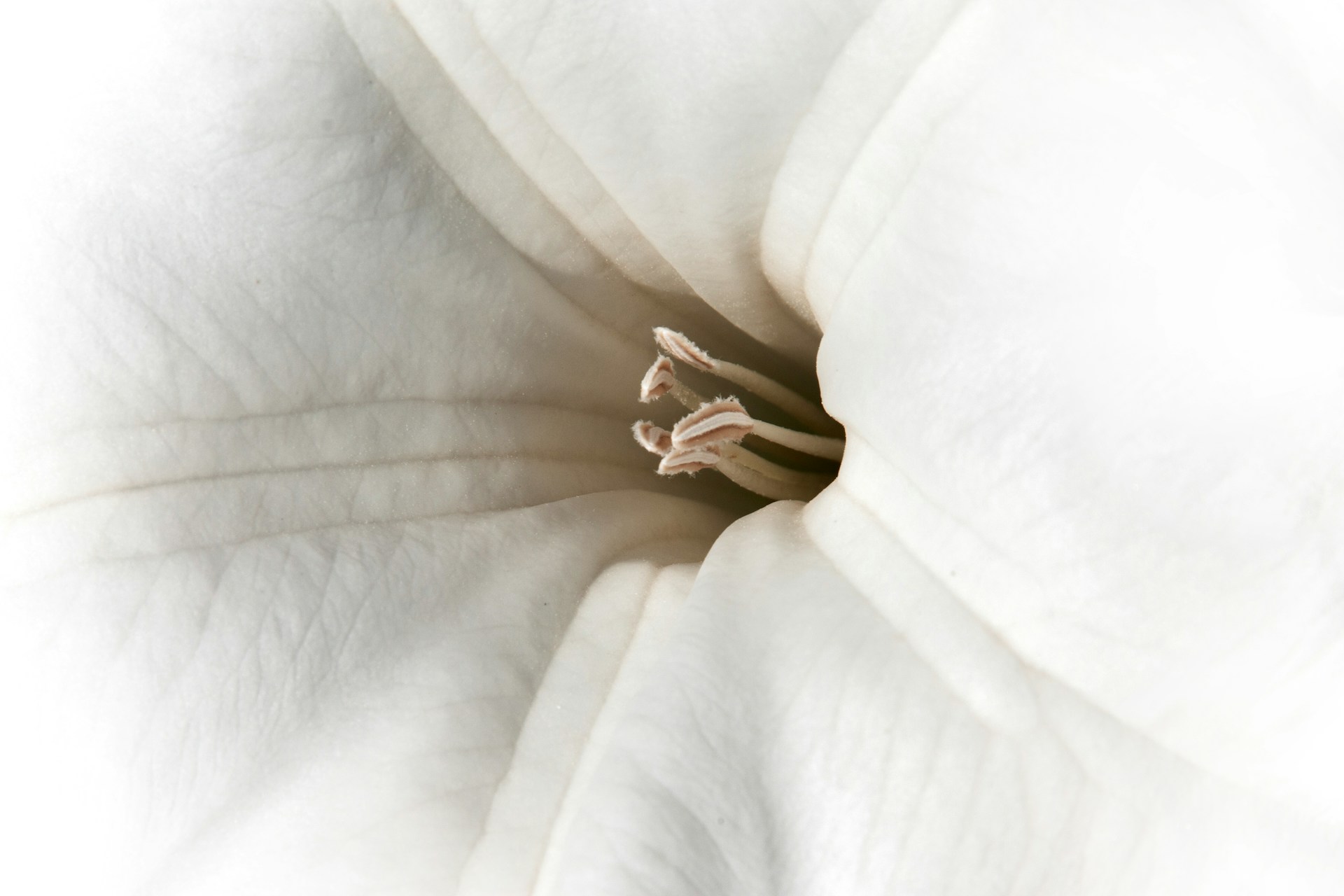
    A note of caution: some popular night bloomers, including datura and angel’s trumpet, are toxic, and many garden plants should never be eaten. If you have children or pets, check each plant before you buy it. The ASPCA keeps a list of plants that are toxic to animals, and your county extension office can help with local questions.

    Placing it where you will use it

    Put your moon garden where you actually spend evenings: beside the porch steps, around the patio or under a bedroom window that is open on cooler nights. A pale gravel path or light-colored pots add to the glow. Go easy on bright outdoor lights. A few low, warm lights, or none at all, will let the flowers, the moon and any fireflies do the work.

    Enjoying it slowly

    Once it is planted, the moon garden asks only that you visit. Step outside after supper with a glass of something cold. Watch the colors drain from the yard until only the white remains. Notice which scent arrives first. It is a gentle way to end a hot day, and a reminder that some of summer’s best moments only begin when the sun goes down.

  • A Jar of Garden Flowers: The Mindful Ritual of Bringing the Outdoors In

    A Jar of Garden Flowers: The Mindful Ritual of Bringing the Outdoors In

    There is a particular pleasure in walking the yard on a May morning with a pair of scissors and a jar of water, looking for what is ready. A few stems of hydrangea, a sprig of mint, a branch of something green: brought indoors and set on the kitchen table, they change the feel of a room. The arranging itself can be a small, absorbing ritual, the kind of task that quiets the mind because it asks for your full attention.

    A lesson from ikebana

    Ikebana, the Japanese art of arranging flowers, grew out of flower offerings made at Buddhist temples and developed over centuries into a formal discipline with many schools. Its oldest school traces its roots to a temple in Kyoto. Where Western arrangements often aim for abundance, ikebana values line, empty space, asymmetry and a clear sense of the season.

    You do not need to study ikebana to borrow its spirit. Try choosing three stems instead of thirty. Let one be tall, one medium and one short. Leave space between them and notice how the gaps make each stem easier to see. A single branch in a bottle, placed with care, can be more striking than a crowded bouquet.

    Cutting and conditioning, the simple way

    • Cut in the cool of the early morning or evening, when stems are full of water. Midday cuttings in the Georgia heat tend to wilt quickly.
    • Carry a bucket or jar of water with you and put stems in as soon as you cut them.
    • Recut each stem at an angle indoors, and strip off any leaves that would sit below the waterline.
    • Let the stems rest in cool water for an hour or two before arranging, which helps them settle and drink.
    • Change the water every day or two and trim the stems again when you do.

    What a late-spring yard offers

    Look beyond the obvious flower beds. Early hydrangea heads, roses and gardenias make lovely cut flowers, and as the season moves on, zinnias and black-eyed Susans join them. Herbs such as mint, basil and rosemary add fragrance and a casual, kitchen-garden look. Ferns, magnolia leaves, ivy and bare twigs supply line and greenery when flowers are scarce. Even a few grasses or seed heads can be beautiful on their own.

    Two cautions are worth keeping in mind. Cut only from your own yard or with permission, and leave wildflowers in parks and natural areas where they grow. And if you share your home with cats, keep lilies out of the house entirely, because they are highly toxic to cats. The ASPCA maintains a list of plants that are toxic to pets, and your veterinarian can answer questions about others.

    Making it a weekly practice

    The ritual works best when it is small and regular. Choose one day a week, perhaps Saturday morning, and fill one jar. Arrange slowly. Turn the jar to find its best side. Notice the smell of the stems, the weight of the water, the way the light falls across the petals. When the flowers fade, compost them and begin again.

    Over a summer, the jar becomes a quiet record of the season: gardenias giving way to hydrangeas, herbs to zinnias, green to gold. It is a reminder, right there on the table, that something is always blooming if you take the time to look.

  • Lemon Balm: The Gentle Lemon-Scented Herb of Early Summer Gardens

    Lemon Balm: The Gentle Lemon-Scented Herb of Early Summer Gardens

    Brush past a lemon balm plant in May and the air fills with a scent somewhere between fresh lemon and sweet green leaves. It is a modest herb, easy to overlook next to showier flowers, but it has been loved in gardens for a very long time. Late spring is when it looks and smells its best in Georgia.

    A herb named for the bees

    Lemon balm’s botanical name is Melissa officinalis. “Melissa” comes from the Greek word for honeybee, and the connection is no accident: bees are drawn to its small, pale flowers, and beekeepers in the ancient Mediterranean world grew it near their hives. Greek and Roman writers mentioned it, medieval monastery gardens kept it and it became a standard plant in the kitchen gardens of Europe.

    In the 1600s a lemon-balm-based toilet water made by Carmelite nuns in Paris became fashionable across Europe, one of many scented waters of the period. From there the plant crossed the Atlantic with European settlers and has been growing in American gardens ever since.

    What it is like to grow

    Lemon balm is a member of the mint family, and it behaves like one. It is vigorous, happy in sun or part shade, tolerant of ordinary soil and inclined to spread. In a Georgia garden it appreciates a little afternoon shade once the summer heat arrives. Many gardeners keep it in a pot for exactly that reason: the plant stays where it is put and can be moved out of the harshest sun.

    Cutting it back after it flowers keeps it bushy and fresh. The leaves are most fragrant before the plant blooms, so late spring is the sweet spot for harvesting.

    Simple ways to enjoy it

    • Steep a handful of fresh leaves in hot water for a mild, lemony tisane, or add them to a pitcher of cold water in the refrigerator
    • Tuck a few sprigs into a vase with other garden cuttings so the scent drifts through a room
    • Crush a leaf between your fingers during a garden break and simply breathe it in
    • Dry the leaves on a screen in a warm, airy spot and keep them in a jar for winter

    If you make an herb a daily habit, or you are pregnant, nursing or taking medication, it is sensible to mention it to your doctor first. We enjoy lemon balm for its scent and its place in the garden, not as a remedy, and we encourage you to think of it the same way.

    Lemon balm and aromatherapy

    True lemon balm essential oil, usually sold as melissa oil, is one of the most expensive oils on the market because the plant yields so little. Much of what is sold cheaply under that name is blended or substituted with lemongrass or citronella. If you buy it, buy from a supplier that lists the botanical name, dilute it well and treat it as a rare pleasure rather than an everyday oil.

    For most of us, the plant itself is the better experience: a pot by the back door, a leaf crushed in passing, and a scent that says early summer in Georgia as surely as cut grass and warm rain.