Tag: nature

  • Lightning Bugs in the Yard: Firefly Watching as a Summer Evening Practice

    Lightning Bugs in the Yard: Firefly Watching as a Summer Evening Practice

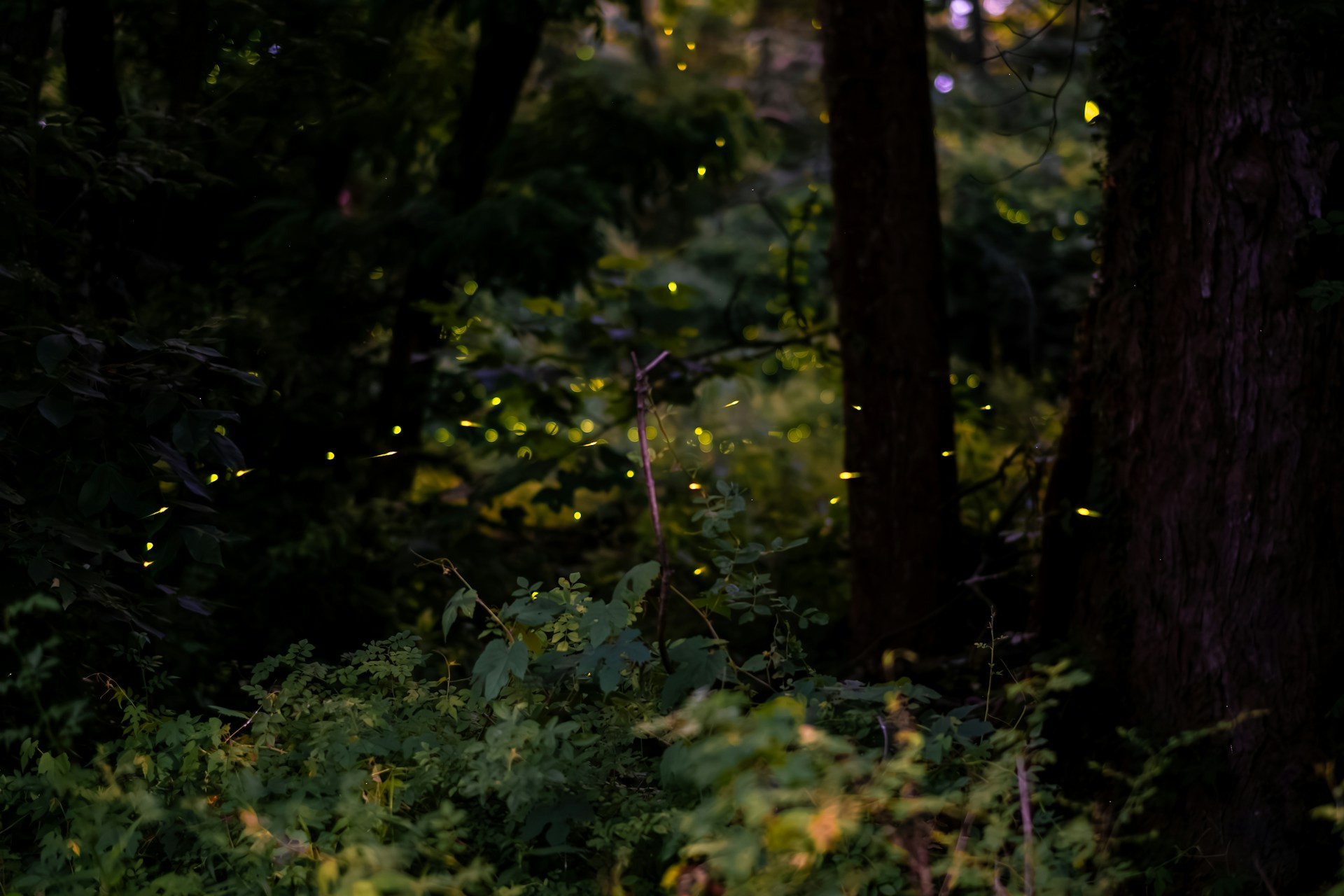
    Sometime in late spring, on an evening when the air is warm and still, the first lightning bugs rise from the grass. By June in Middle Georgia, yards, fields and woodland edges can be full of them, blinking on and off in the dusk. Whether you grew up calling them lightning bugs or fireflies, watching them is one of the simplest and most calming things a summer evening has to offer.

    Beetles that make their own light

    Despite the name, fireflies are not flies. They are beetles, part of a family with many species around the world. Their glow comes from special light organs in the abdomen, where a chemical called luciferin reacts with oxygen with the help of an enzyme called luciferase. The reaction gives off very little heat, which is why firefly light is often called cold light.

    Fireflies glow even before they can fly. Their larvae, sometimes called glowworms, live on the ground in leaf litter and damp soil, where they feed on snails, slugs and worms. Many species spend a year or more as larvae before emerging as adults for just a few weeks of summer.

    A language of flashes

    The blinking is a conversation. In many species, males fly and flash a pattern particular to their kind, and females waiting in the grass or in low plants answer with a flash of their own. Some patterns are quick single blinks, some are long glows and some are a series of rapid flashes. With a little patience, you may notice different patterns in different parts of the yard or at different times of the evening.

    There is drama, too. Females of some firefly species imitate the signals of other species to lure in males, which they then eat. Even the gentlest summer scene has its secrets.

    In the Great Smoky Mountains, one species is famous for flashing in near unison, and viewing is managed by the park each year. Details are on nps.gov if you are curious.

    A firefly evening, step by step

    • Go outside about twenty to thirty minutes after sunset, when activity often picks up.
    • Turn off porch and yard lights so your eyes can adjust and the fireflies can see each other’s signals.
    • Settle into a chair or onto a blanket and let your eyes relax. Adjusting to darkness takes a while, so be patient.
    • Watch one area of the yard. Notice the rhythm of the flashes, their color, which can range from yellow to green, and how high the fireflies fly.
    • If children want to catch a few, use a jar with air holes, keep them for just a short time and let them go the same evening.

    Making your yard friendlier to fireflies

    Many people say there seem to be fewer fireflies than when they were young, and researchers who study them point to concerns such as habitat loss, pesticide use and light pollution. A few small choices can help in your own yard. Keep outdoor lights off or low at night, since artificial light can drown out the signals fireflies use to find each other. Leave some leaf litter and a patch of taller grass or an unmowed garden edge. Use fewer pesticides, especially on the lawn.

    Then, on a warm June night, sit and watch. There is nothing to do and nothing to count unless you want to. It is just you, the dusk and a yard full of tiny lights, saying what fireflies have said to each other every summer for a very long time.
  • Azaleas, Dogwoods and Wisteria: Noticing the Spring Bloom in Middle Georgia

    Azaleas, Dogwoods and Wisteria: Noticing the Spring Bloom in Middle Georgia

    For a few weeks each spring, Middle Georgia puts on one of the great flower shows of the American South. Azaleas blaze in every shade from white to deep magenta, dogwoods open their pale four-petaled blooms in the understory and wisteria drapes purple over fences and pines. The display follows the cherry blossoms and overlaps with the heaviest pollen, and it rewards anyone willing to slow down and look. Here is a short field guide to the three stars of the season and a few ways to enjoy them mindfully.

    Azaleas

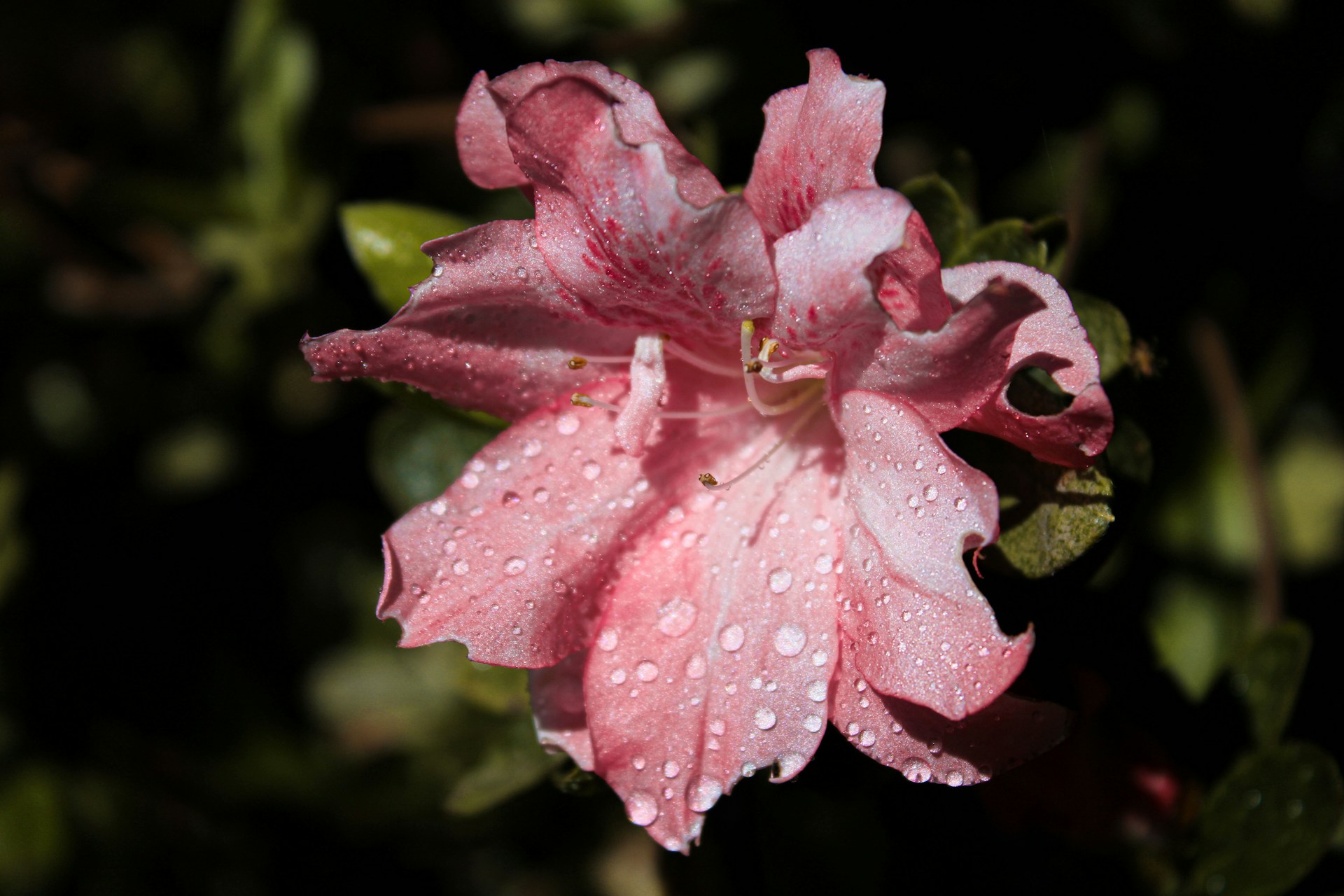
    Azaleas belong to the rhododendron family, and the ones most people picture, the dense evergreen shrubs covered in bloom, are mostly Asian varieties introduced to Southern gardens over the past two centuries. They thrive in the acidic soil and dappled shade under Georgia’s pines and oaks, which is why they are everywhere in older neighborhoods. Peak bloom in Macon usually falls in late March and April, depending on the year.

    Georgia also has native azaleas, deciduous shrubs with looser, more fragrant flowers in white, pink, orange and yellow. The native azalea is Georgia’s official state wildflower, and the Piedmont azalea, with its honeysuckle-like scent, can still be found blooming wild along streams and woodland edges in spring.

    Dogwoods

    The flowering dogwood is a small understory tree native to the eastern United States. What look like its four white petals are actually modified leaves called bracts surrounding a cluster of tiny true flowers in the center. Each bract has a small notch at its tip. Dogwoods bloom just as their leaves emerge, often a week or two after the azaleas begin, and they glow in the shade of taller trees. In fall the same trees turn red and produce bright berries for birds. Dogwood festivals are a spring tradition in several Southern cities, and the tree is beloved enough to appear in countless front yards across Georgia.

    Wisteria

    Wisteria is the most dramatic and most complicated of the three. The cascading purple blooms that drape over abandoned barns, fence lines and tall pines in April are usually Chinese or Japanese wisteria, vigorous vines introduced as ornamentals that have escaped into the wild across the Southeast. They are beautiful and heavily scented, and they are also considered invasive, capable of strangling trees and spreading through woodlands. Admire them freely, but think twice before planting one.

    There is a gentler option. American wisteria, a native vine, has shorter, less fragrant flower clusters and a much more restrained habit. Several cultivars are sold at nurseries for gardeners who want the look without the takeover.

    Seeing Them Slowly

    The bloom lasts only a few weeks, which is an argument for paying attention now. A few ways to do that:

    • Take the same walk once a week through April and notice what has opened and what has faded.
    • Stand under a dogwood and look up through the bracts at the sky. The light through them is one of the quiet pleasures of the season.
    • Smell a native azalea or a wisteria cluster from a few inches away, then step back and notice how far the scent carries.
    • Sit on a bench near a mass of azaleas for ten minutes and watch the bees and butterflies work.
    • Sketch or photograph a single bloom rather than the whole hedge.

    A note for allergy season: the showy flowers in this article are mostly insect-pollinated and release little airborne pollen; the yellow dust on your car comes from pines and other wind-pollinated trees blooming at the same time. If you have allergies, talk with your doctor about what affects you. For everyone else, the spring bloom is simply an invitation. It asks nothing but your attention, and it is gone by May.

  • Why Everything Turns Yellow: The Story of Georgia’s Spring Pollen

    Why Everything Turns Yellow: The Story of Georgia’s Spring Pollen

    Every spring, for a few weeks, Middle Georgia is dusted in yellow. It coats cars, collects in puddles, streaks the porch and drifts in clouds from the tops of pines on windy mornings. Newcomers are startled. Longtime residents simply wash the car and wait for rain. Here is the story behind the yellow season, where it comes from and why it is both less and more than it appears. This is general information; if you have allergies or breathing concerns, talk with your doctor.

    What Pollen Is

    Pollen is the fine powder that plants produce to reproduce. Each grain carries the male genetic material of a plant and needs to reach the female part of another flower of the same species. Plants with showy flowers rely on insects and birds to carry it. Plants without them, including most trees and grasses, rely on wind, which is a wasteful courier. To make up for the loss, wind-pollinated plants produce pollen in enormous quantities, and that is what settles on your windshield.

    Why Georgia Turns Yellow

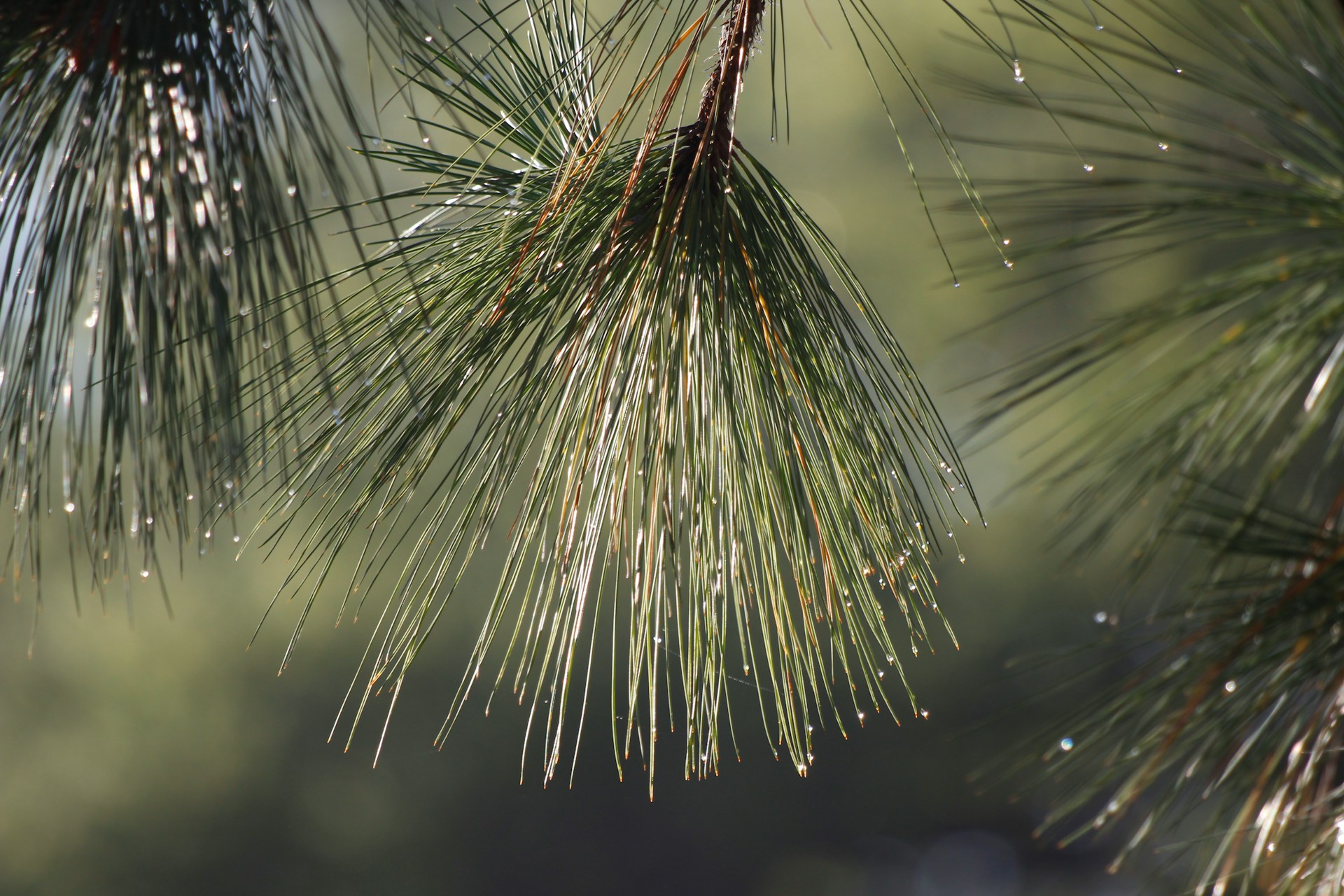
    The yellow coating is mostly pine pollen. Georgia is one of the most heavily forested states in the country, and pines dominate much of that forest, especially loblolly pines across the middle of the state. Each tree releases vast quantities of pollen from clusters of small cones over a few weeks in spring, typically from mid-March into April depending on the weather. Pine pollen grains are relatively large and are equipped with two small air sacs that help them float, which is why they are so visible and travel so far.

    A warm, dry, breezy day is peak conditions. After a soaking rain, the air clears and the yellow washes into the gutters, only to return as soon as the sun dries the trees again.

    The Pollen You Cannot See

    Here is the part that surprises many people. Pine pollen, for all its visibility, is only one part of the spring pollen picture. Oaks, which are everywhere in Macon’s older neighborhoods, release pollen at roughly the same time, along with pecans, hickories, birches and others. Their grains are smaller and much less visible. Many sources note that the pollens most often associated with seasonal symptoms are these smaller, less conspicuous ones rather than the dramatic pine dust. If you have questions about what affects you personally, your doctor or an allergist can help; we make no health claims here.

    Reading the Pollen Count

    Local weather reports and several websites publish daily pollen counts, usually a number representing grains per cubic meter of air sampled over the previous day. Counts are often broken down by type: trees, grasses and weeds. In Georgia, tree pollen dominates in spring, grass pollen rises in late spring and summer, and weed pollen, including ragweed, peaks in late summer and fall. Checking the count is a simple way to plan outdoor time around the heaviest hours.

    Living Alongside It

    A few habits make the yellow weeks easier for everyone, whether or not pollen bothers you:

    • Rinse the car and the porch regularly rather than letting the layer build.
    • Favor outdoor time after rain and in the evening when the air is still.
    • Keep windows closed on dry, windy mornings.
    • Rinse off and change clothes after long stretches outside.

    The yellow dust is a sign of a landscape doing what it has done for millions of years. Georgia’s pines are the backbone of its forests, and their pollen is the price of the shade, the birdsong and the scent of warm needles that make summer here what it is. Understanding the season does not make the car any cleaner, but it does make the spring feel a little less like an intrusion and a little more like a rhythm you belong to.

  • What Is Forest Bathing? The Japanese Practice of Shinrin-yoku

    What Is Forest Bathing? The Japanese Practice of Shinrin-yoku

    The phrase forest bathing sounds like it involves water, but there is no swimming required. It is a translation of the Japanese term shinrin-yoku, which simply means taking in the atmosphere of the forest. The practice asks you to walk slowly among trees, with no destination and no agenda, using all of your senses. For anyone who loves the woods and trails of Middle Georgia, it is a gentle way to turn a walk into something closer to a retreat.

    Where the Idea Comes From

    The term was coined in Japan in the early 1980s, when the national forestry agency encouraged people to spend unhurried time in the country’s forests as a form of recreation and respite from city life. It drew on much older traditions of reverence for trees in Shinto and Buddhist culture. Over the following decades, designated forest therapy trails were established in Japan, and the idea spread to Europe and North America, where guides now offer group walks.

    Researchers have taken an interest in time spent in nature, and you may see various claims attached to forest bathing. We will not make any here. Forest bathing is a pleasant, calming experience for many people, and that is reason enough to try it. If you have a health concern, talk with your doctor.

    How It Differs From a Hike

    A hike has a trailhead, a destination and usually a pace. Forest bathing has none of these. You might cover a quarter of a mile in an hour. The point is to notice rather than to arrive. Most practitioners suggest leaving headphones at home, silencing your phone and, if you walk with someone, agreeing to be quiet for stretches.

    A Simple Way to Begin

    • Choose a wooded place you can reach easily. A city park with mature trees works as well as a state forest.
    • At the entrance, stop. Take a few slow breaths and let your shoulders drop.
    • Walk slowly, slower than feels natural. Pause often.
    • Move through your senses one at a time. Spend a few minutes just listening, then just looking, then noticing smells, then the feel of air and bark and ground.
    • Find a spot to sit for ten or fifteen minutes. Watch what changes around you when you are still.
    • Before you leave, pause again at the edge of the trees and notice how you feel compared with when you arrived.

    Twenty minutes is a fine start. Two hours is lovely if you have them.

    Sensory Prompts to Try

    If slowing down feels awkward at first, a prompt can help. Look for the smallest living thing you can find. Count how many different bird sounds you can pick out. Touch three kinds of bark and compare them. Find where the light is moving on the forest floor. Smell a handful of pine needles or the air after rain. The prompts give the restless part of your mind a job while the rest of you settles.

    Practical Notes for Georgia Woods

    Spring forests here are beautiful but busy. Wear closed shoes and long pants, check for ticks when you get home, and give snakes room if you see one. On high-pollen days, you may prefer a walk after rain. Bring water, let someone know where you are going, and stick to marked trails in unfamiliar places. The forest asks for very little in return for its quiet, and a little preparation lets you give it your full attention.