
Tag: pollinators

  • Fennel: Feathery Fronds, Greek Legends and a Favorite of Swallowtail Caterpillars

    Few herbs are as graceful as fennel. Its tall stems rise in clouds of fine, feathery leaves, green or a lovely smoky bronze, topped in summer with flat, golden flower clusters. Brush against it and you catch a sweet, licorice-like scent. Fennel has a long history in the Mediterranean world, and in a Georgia garden it brings an unexpected gift: a summer home for butterflies.

    Fennel in Greek history and myth

    The ancient Greek word for fennel was marathon. The plain of Marathon, site of the famous battle in 490 BC, is generally thought to have been named for the fennel that grew there. That makes the modern marathon race, named for the legendary run from that battlefield, a distant cousin of the herb.

    Fennel’s relatives appear in myth, too. In the story of Prometheus, the Titan who stole fire from the gods to give to humanity, the fire was carried hidden inside the hollow stalk of a giant fennel plant, a close relative of garden fennel whose dry stems smolder slowly. Giant fennel stalks were also used to make the thyrsus, the staff carried by followers of the god Dionysus.

    Fennel through the centuries

    Fennel traveled widely. Romans used it in cooking, and in medieval Europe it was hung over doorways on Midsummer’s Eve as part of old seasonal customs. In colonial New England, fennel and dill seeds were reportedly carried to long church services and nibbled during sermons, earning the nickname meeting seeds.

    In India, fennel seeds, often roasted or candy-coated, are commonly offered after meals as a mouth freshener, and you will often see a small bowl of them near the door of Indian restaurants. In Italian cooking, fennel bulb is sliced raw into salads or roasted until sweet, and fennel seed flavors many sausages.

    Growing fennel in Georgia

    Herb fennel, grown for its leaves and seeds, handles summer heat well and is easy to grow from seed in full sun and well-drained soil. Bulb fennel, the kind grown for its swollen base, prefers cooler weather and is usually best planted for spring or fall harvests here. A few tips:

    • Give it space. Fennel can grow several feet tall and does best with room around it. Many gardeners grow it apart from other vegetables.
    • Cut the flower heads before they drop seed if you do not want volunteer seedlings next year, or let a few mature to harvest the seeds.
    • Be certain of what you have. Fennel belongs to the carrot family, which includes some dangerous lookalikes such as poison hemlock, so never forage wild plants that resemble it.

    Sharing with swallowtails

    If you grow fennel, there is a good chance you will meet the caterpillars of the black swallowtail butterfly, which feed on plants in the carrot family, including fennel, dill and parsley. The striking green, black and yellow caterpillars can strip a plant quickly, but they will become the beautiful black-and-blue butterflies that drift through Southern gardens in summer.

    Many gardeners simply plant extra fennel and think of it as a butterfly nursery. Watching the caterpillars grow, and perhaps spotting a chrysalis hanging from a stem, is one of the quiet joys of a July garden. It is a lovely reminder that a garden can feed more than just the people who tend it.
  • Butterflies in the Garden: Planting for Pollinators and Pausing for Wings

    Butterflies in the Garden: Planting for Pollinators and Pausing for Wings

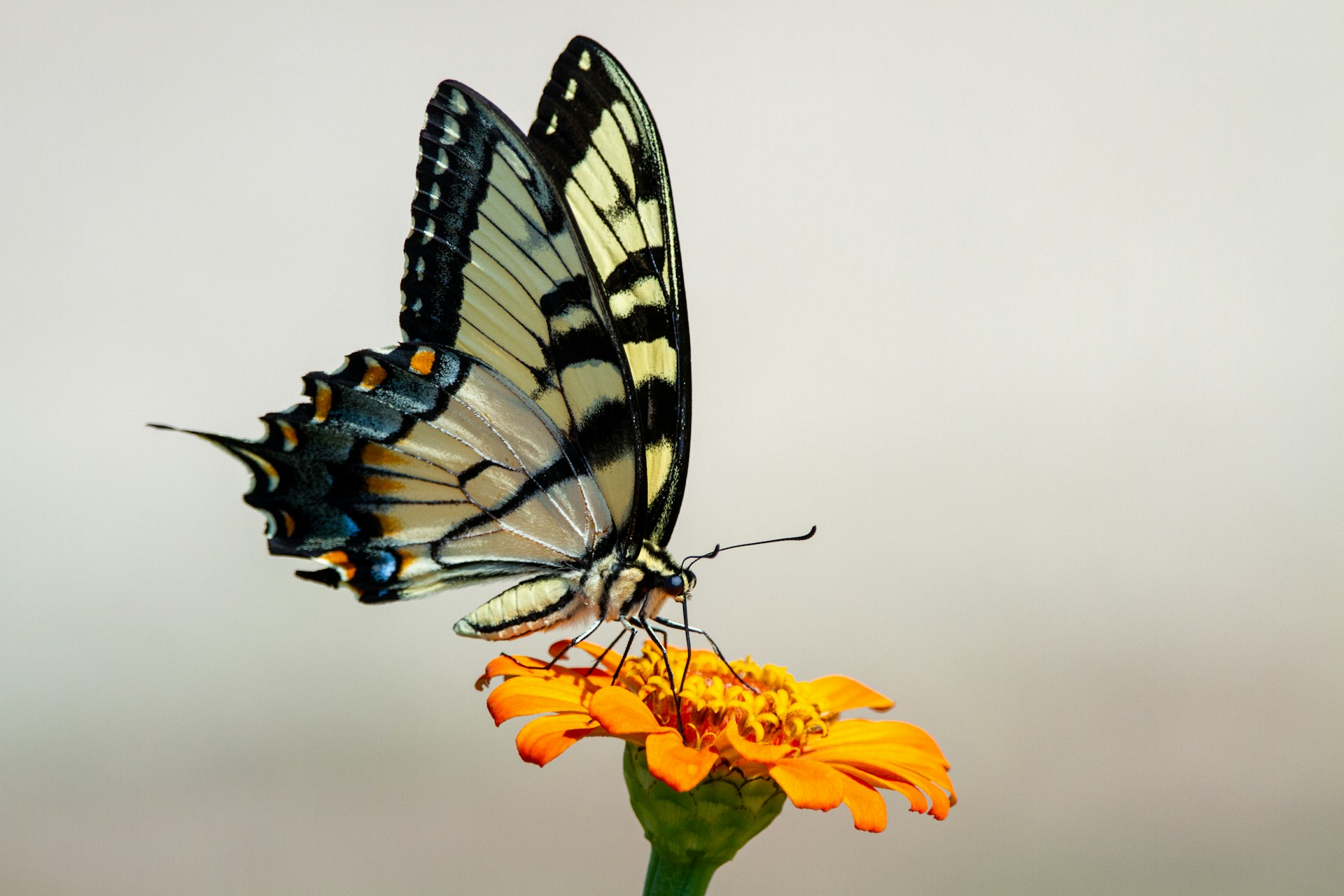
    On a sunny June afternoon, a patch of flowers in Middle Georgia can be busy with wings: big yellow-and-black swallowtails gliding from bloom to bloom, small orange skippers darting low, a monarch passing through. Butterfly watching asks very little. You do not need binoculars or a field guide to start, only a sunny spot, some flowers and a few minutes of stillness.

    Georgia’s state butterfly

    The eastern tiger swallowtail is Georgia’s official state butterfly, and it is one of the most common large butterflies in the Southeast. Males are bright yellow with black tiger stripes. Females can be either yellow or a dark, nearly black form, often with a wash of blue on the hind wings. Their caterpillars feed on the leaves of trees such as tulip poplar and wild cherry, which grow throughout the state.

    Host plants and nectar plants

    A butterfly-friendly garden needs two kinds of plants. Nectar plants feed adult butterflies. Host plants feed caterpillars, and many butterflies lay their eggs only on particular plants. A few classic pairings:

    • Monarchs depend on milkweeds, including the native butterfly weed with its bright orange flowers.
    • Black swallowtails lay eggs on parsley, dill and fennel, so plant a little extra to share.
    • Gulf fritillaries rely on passionflower, including the native maypop.

    For nectar, many butterflies visit coneflowers, black-eyed Susans, zinnias, lantana, salvias, Joe Pye weed and butterfly weed. Plant flowers in clusters rather than one here and one there, so butterflies can find them easily, and choose plants that bloom in turn from spring into fall. Your county office of the University of Georgia Cooperative Extension can suggest native plants suited to your area.

    When caterpillars start chewing your parsley, try to see it as a success rather than a problem. That is the garden doing its job.

    Small touches that help

    Butterflies depend on outside warmth to fly, which is why they are most active on sunny days, often from late morning through afternoon. A few flat stones in a sunny spot give them a place to bask. A shallow dish of damp sand or a muddy patch offers minerals, and on summer days you may see butterflies gathered there in a behavior called puddling. Going easy on pesticides, especially broad-spectrum insecticides, protects caterpillars as well as adults.

    June is also when many communities celebrate National Pollinator Week, a yearly reminder of how much our gardens and farms depend on bees, butterflies, moths and other pollinators.

    Butterfly watching as a slow practice

    Choose a shady seat near your flowers and simply watch. Follow one butterfly as it moves from bloom to bloom. Notice how it lands, how its wings open and close, how long it stays. Try to see its colors in detail: the edging on the wings, the spots, the way the light catches the scales. When it flies away, wait for the next.

    It is a lesson in patience and in letting go. You cannot make a butterfly land where you want it to. You can only sit, pay attention and enjoy what arrives. On a hot afternoon, there are few better ways to spend fifteen minutes in the shade.