
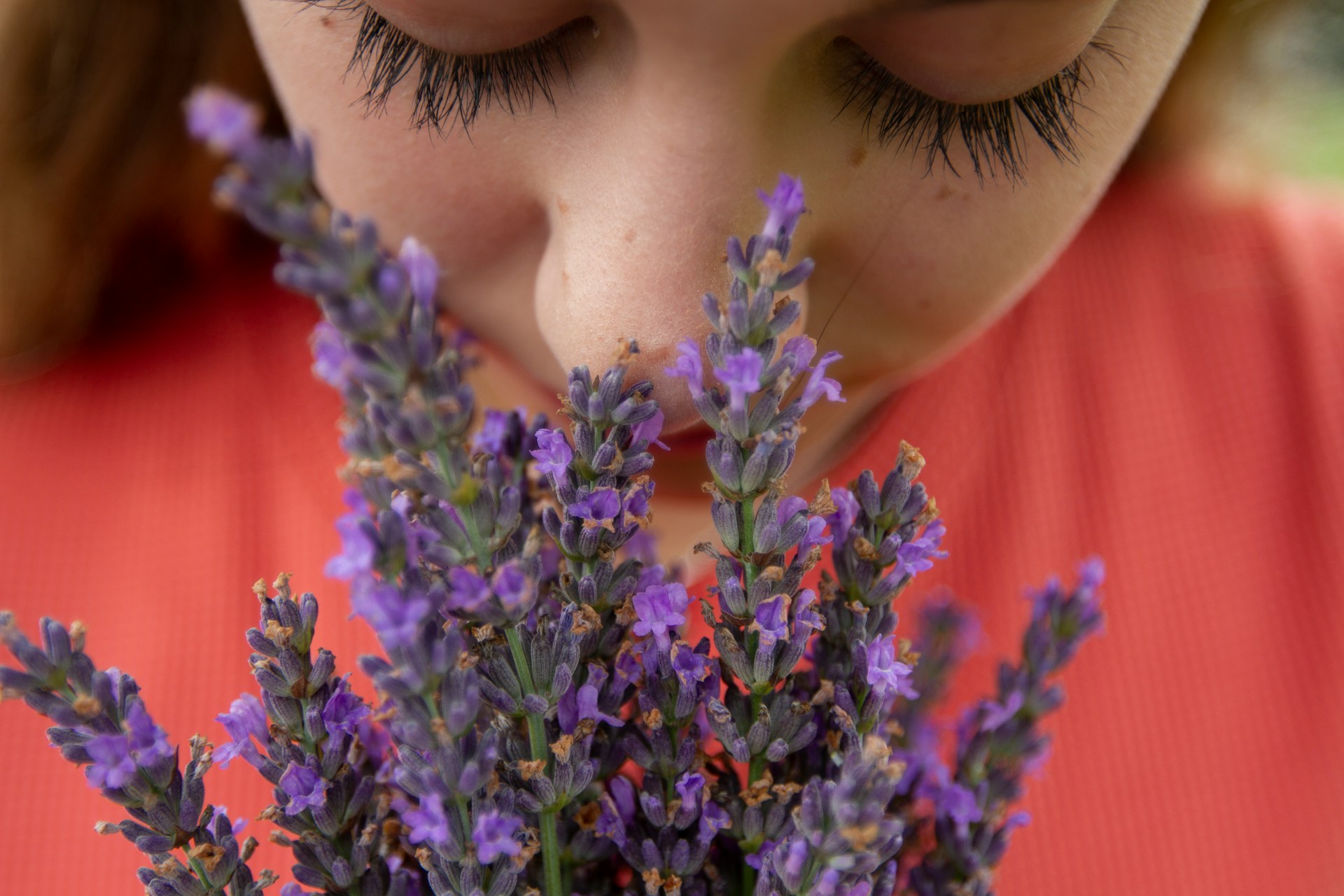
Almost everyone has had the experience. A whiff of a certain soap, sunscreen or wood smoke, and suddenly you are eight years old at your grandmother’s house or standing on a beach you have not visited in twenty years. The memory arrives whole, with feelings attached, before you can even name the smell. This phenomenon is so common that it has a name, the Proust effect, and the reasons behind it say a great deal about why scent matters in self-care.
The Madeleine
The name comes from the French novelist Marcel Proust, whose long novel In Search of Lost Time includes a famous scene in which the narrator tastes a small cake called a madeleine dipped in tea. The taste and smell unlock a flood of childhood memories he had thought lost. The scene became so well known that scientists who study smell and memory still refer to Proustian memories: involuntary, vivid and emotionally charged recollections triggered by a scent.
Why Smell Is Different
Our other senses take a relatively long route to the parts of the brain involved in emotion and memory. Smell is more direct. Odor molecules reach receptors high in the nose, and signals pass to the olfactory bulb, which sits close to and connects with the brain regions associated with emotion and memory. That short path is widely thought to be part of why a smell can summon a feeling before a thought.
Scent memories also tend to be older than other memories. Researchers who ask people to describe memories triggered by smells find they often date to early childhood, while memories triggered by words or pictures cluster in the teenage years and early adulthood. The smell of a crayon box or a particular floor cleaner can reach back further than almost anything else.
Why This Matters for Self-Care
If scent and feeling are so closely linked, the smells you surround yourself with are not trivial. They become part of the emotional texture of your days. A few ways people use this on purpose:
- Choosing one scent for an evening wind-down and using it only then, so that the smell itself starts to signal rest.
- Bringing a familiar scent, such as a small roll-on or a sachet, when traveling, so a hotel room feels a little like home.
- Pairing a new habit with a new scent, which can help the habit feel distinct and pleasant.
- Keeping a scent from a happy time, like the sunscreen from a good vacation, for days that need a lift.
None of this is a treatment, and we make no claims about what scents do. It is simply an observation about how memory works, and a gentle invitation to be deliberate.
Building Your Own Scent Memory
You can create associations as well as discover them. Spring is a good time to try, because the season is full of distinctive smells: cut grass, rain on warm pavement, honeysuckle, fresh basil. Pick a scent you encounter often, pause for a few seconds each time you notice it and pay attention to how you feel. Over a season, that smell will begin to carry those moments with it.
At home, the same works with a candle, a diffuser blend or a particular hand cream. Use it during the good parts of your day, the quiet cup of coffee or the evening walk, rather than during chores. You are quietly teaching your memory what that scent means.
A Note on Fading
Scent memories are powerful but not permanent. Smelling something constantly dulls your awareness of it, which is why people stop noticing the smell of their own homes. Rotating scents with the seasons keeps them vivid. Let a favorite rest for a few months, and when it returns, so will everything it carries.