Tag: mindfulness

  • Rub, Breathe, Notice: A Mindful Breathing Practice With Fresh Garden Herbs

    Some of the most calming moments of summer begin with a simple gesture: reaching down to rub a leaf of mint or rosemary between your fingers and breathing in. The scent arrives all at once, bright and green, and for a moment your attention is completely in the present. That small act can become a mindful breathing practice of its own, one that uses the herbs growing on your porch or windowsill.

    Why fresh herbs work well

    Fresh herbs carry their aroma in tiny oil glands on their leaves and stems. When you gently rub or crush a leaf, those glands release their scent into the air. The fragrance is natural and noticeable but much softer than a concentrated essential oil, which makes fresh herbs a gentle partner for breathing practice. They also give your hands something to do and your eyes something to look at, which can make it easier to stay present.

    You do not need a garden. A pot of basil on the kitchen windowsill or a bunch of mint from the farmers market in a glass of water works just as well.

    The practice, step by step

    • Choose an herb. Mint, basil, rosemary, lemon balm, thyme and lavender are all good choices.
    • Sit or stand comfortably, and take one natural breath to arrive.
    • Look closely at the plant for a moment. Notice the shape, color and texture of the leaves.
    • Gently rub a leaf between your thumb and fingers, or pinch it lightly.
    • Bring your fingers near your nose, without touching, and breathe in slowly through your nose.
    • Pause for a moment at the top of the breath, then exhale slowly through your mouth, as if blowing gently across a cup of tea.
    • Repeat for three to five breaths, noticing how the scent changes as you go.

    Noticing and naming

    As you breathe, try to describe the scent in three words, silently or aloud. Is it sharp, sweet, cool, peppery, piney or lemony? Does it remind you of anything, such as a kitchen, a season or a person? Notice where you feel the breath most, in your nose, chest or belly. When your mind wanders, return to the scent on your fingers.

    If you have more than one herb, move slowly from one to the next. Comparing mint with basil, or rosemary with thyme, is a playful way to sharpen your attention. Children often enjoy this as a game, and it can be a nice way to share a quiet moment in the garden.

    Gentle cautions

    Stick to herbs you can identify with confidence, and avoid any plant you are allergic to. A few plants, such as rue, can irritate the skin, so it is best to work with familiar culinary herbs. Wash your hands afterward and avoid rubbing your eyes. If strong scents tend to bother your breathing or bring on headaches, skip this practice or keep the herbs at a comfortable distance, and talk to your doctor if you have concerns.

    Bringing it into the day

    Keep a small pot or a jar of cut herbs where you pass often, such as a kitchen counter, a desk or the porch steps. Each time you walk by, pause for a single scented breath. On hot July afternoons, a quick break with a sprig of cool mint can become a small, refreshing ritual. Over time, the herb itself becomes a reminder to slow down, notice and breathe.

  • Bhramari, the Humming Bee Breath: A Soft Sound to Close the Day

    There is something soothing about a low, steady hum. Many of us do it without thinking while we cook or fold laundry. In yoga, humming is the heart of a breathing practice called bhramari, often translated as the bee breath. Its soft, buzzing sound fills the head and chest, and many people find it a lovely way to settle at the end of a busy summer day.

    Like all breathing practices, bhramari should feel easy and comfortable. If you have a respiratory, heart or ear condition, are pregnant or have any other health concern, talk with your doctor before trying it, and stop if you feel dizzy or uncomfortable.

    Where bhramari comes from

    The name comes from the Sanskrit word bhramara, a kind of large black bee, because the sound of the practice resembles a bee’s hum. Bhramari is described in classic texts of hatha yoga, including the Hatha Yoga Pradipika, a manual written in the fifteenth century that lists it among several traditional breathing practices. Today it is taught in yoga classes around the world, and many teachers share a simplified version with children as bee breathing.

    How to practice

    • Sit comfortably on a chair, a cushion or the edge of your bed, with your spine tall and your shoulders relaxed.
    • Close your eyes. Rest your hands on your knees or in your lap.
    • Gently close your lips, keep your teeth slightly apart and let your jaw relax.
    • Breathe in slowly through your nose.
    • As you breathe out, make a steady, low humming sound, like a bee, for as long as is comfortable.
    • At the end of the exhale, breathe in again through your nose and repeat.

    Start with five to seven rounds. Afterward, sit quietly for a minute with your eyes closed and notice how your body feels, without trying to change anything.

    Exploring the sound

    Try varying the pitch of the hum. A lower hum may be felt more in your chest, while a higher one tends to buzz in your face and head. Notice where you feel the vibration most. Some people like to rest their fingertips gently on their cheeks or throat to feel it more clearly.

    A traditional variation involves pressing the small flap of cartilage at the front of each ear gently with the index fingers, softening outside sounds so the hum seems to fill the inside of the head. If you try this, use the lightest touch, never push anything into the ear canal and skip it entirely if it feels uncomfortable or if you have any ear concerns.

    When to try it

    Bhramari fits well into an evening routine: after a shower, before reading in bed or at the end of a long day when you want to shift gears. Because the sound can carry, many people prefer a quiet room where they will not feel self-conscious. It can also be a fun practice to share with children, who often enjoy pretending to be bees and seeing how long they can make their buzz last.

    There is no need to do it perfectly. The point is simply to breathe slowly, enjoy the sound and let the hum mark the moment when the day begins to wind down.

  • The Blue Hour: Understanding Twilight and Making a Ritual of Dusk

    There is a stretch of time after the sun slips below the horizon when the world seems to pause. The bright colors of sunset soften, the sky deepens into blue and the trees turn into dark silhouettes. Photographers call it the blue hour. For anyone looking for a gentle way to end a summer day, it is an invitation to stop and watch.

    The three stages of twilight

    Twilight is the time between day and night when the sun is below the horizon but its light still brightens the sky. Astronomers divide it into three stages, based on how far the sun has dropped.

    • Civil twilight begins at sunset and lasts until the sun is about six degrees below the horizon. There is usually enough light for most outdoor activities, and the brightest planets and stars begin to appear.
    • Nautical twilight continues until the sun is twelve degrees below the horizon. The sky darkens, but the horizon can still be seen, which made this stage useful for sailors navigating by the stars.
    • Astronomical twilight lasts until the sun is eighteen degrees below the horizon. After that, the sky is as dark as it will get, and the faintest stars become visible.

    The blue hour is not an official term, but it usually refers to the deep blue sky of civil and early nautical twilight. In Middle Georgia during summer, civil twilight lasts roughly half an hour, so the most vivid blues come and go fairly quickly.

    Look east, too

    Most of us watch the western sky after sunset, but the eastern sky offers its own show. On clear evenings, look opposite the sunset for a soft pink band just above the horizon, sometimes called the Belt of Venus. Below it, a darker blue-gray band slowly rises: the shadow of the Earth itself, cast onto the atmosphere. Watching that shadow climb as the pink fades is a quiet reminder that the planet is turning beneath you.

    A ritual for dusk

    Watching twilight is one of the simplest evening practices there is. It needs no equipment and only about thirty minutes of your time.

    • Check the time of sunset in a weather app and plan to be outside about ten minutes before.
    • Choose a spot with a wide view of the sky, such as a porch, a field, a park or a lakeshore.
    • Put your phone away, or take one photograph and then set it aside.
    • Watch the colors shift from gold to pink to deep blue, and look for the first star or planet to appear.
    • Notice the sounds changing as the day birds go quiet and the evening insects begin.
    • When the blue has faded to dark, take a slow breath and head inside.

    Why dusk feels restful

    For most of human history, the fading of daylight marked the end of the working day. Even now, with electric lights and screens, there is something in the slow dimming of the sky that seems to invite us to slow down too. Taking a few minutes to witness the shift from day to night can make the day feel truly finished.

    In July, when days are long and the heat lingers, twilight brings the first hint of cooler air and a natural pause between a busy day and a restful night. Make it a habit a few evenings a week and you may find yourself looking forward to it as one of the quietest, loveliest moments of summer.

  • Why the First Days of Vacation Feel Restless, and How to Settle In Sooner

    You finally arrive. The bags are in the room, the view is lovely and the week ahead is wide open. And yet, for the first day or two, something feels off. You reach for your phone without meaning to, your mind replays a conversation from work and you feel oddly restless or even tired. Many people notice that it takes a few days of vacation before they truly begin to relax.

    This is a very common experience, and understanding it can help you settle in sooner instead of worrying that the vacation is not working.

    Why winding down takes time

    Our daily lives run on routines and momentum. For months, your mind has been scanning for the next task, the next email and the next obligation. That habit does not switch off just because the location changes. Psychologists have long observed that unfinished tasks tend to linger in the mind more than completed ones, so open loops at work or at home can keep tugging at your attention.

    Travel itself adds to the strain. Early alarms, long drives or flights, unfamiliar beds and the logistics of getting everyone settled all take energy. It is natural to feel a dip before you feel restored.

    Mark the shift with an arrival ritual

    A small ritual can tell your mind and body that the ordinary routine is over. Choose something simple and do it soon after you arrive:

    • Unpack fully, so you are not living out of a suitcase.
    • Change into vacation clothes and put work clothes out of sight.
    • Take a slow walk to get your bearings, or wade into the water.
    • Sit outside with a cool drink and take ten slow breaths while you notice what is new: the sounds, the light, the smell of the air.

    Doing the same ritual on every trip can make it even more meaningful over time, like a doorway you step through.

    Meet the urge to check in

    If you find yourself reaching for your phone every few minutes, be gentle with yourself. It is a habit, not a failure. Instead of fighting the urge, notice it and redirect it. Move work apps off your home screen for the week, or leave the phone charging in the room during meals and outings. If you have agreed to a short check-in at a set time, keep it to that window and then put the phone away.

    Let the first day be light

    It is tempting to fill the first day with the trip’s biggest plans, but the first day is often when energy is lowest. Keep it simple: a nap, a swim, an easy dinner nearby and an early night. You may find that by the second or third morning, you wake up already feeling lighter.

    Allow some boredom

    Many of us are so used to being busy that a quiet afternoon can feel uncomfortable at first. Let it. Boredom is often the threshold to real rest. Sitting on a porch with nothing to do, watching the waves or listening to the wind in the trees may feel strange for twenty minutes and then, slowly, become the very thing you came for.

    A vacation does not have to be perfectly relaxing from the first hour to be worthwhile. Give yourself time to arrive, and rest will usually find you.

  • From Slow Food to Slow Mornings: A Short History of the Slow Living Idea

    The phrase slow living can sound like a luxury, something for people with endless free time and a farmhouse kitchen. Its roots are more practical and more interesting than that. The idea began as a pushback against fast food and grew into a broader way of thinking about how we spend our hours. And one of the easiest places to try it is the first part of the day.

    It started with a meal

    The slow movement is usually traced to Italy in the 1980s. As the story is often told, protests over a fast-food restaurant opening near Rome’s famous Spanish Steps helped spark a new organization. Founded by a group led by the Italian writer and activist Carlo Petrini, it became known as Slow Food, and it grew into an international movement by the end of the decade.

    Slow Food was not simply against hamburgers. It championed local and traditional foods, the farmers and cooks who produce them and the pleasure of sharing a meal without hurry. Its symbol, fittingly, is a snail.

    From food to towns to everyday life

    The idea spread. In 1999, a group of Italian towns launched Cittaslow, the slow city movement, committing to protect local character, support local businesses and keep their communities livable at a human pace. Over the following years, writers and thinkers began describing a broader slow movement that touched work, parenting, travel, fashion and design.

    Across all its forms, the central idea stayed the same. Slowness is not about doing everything at a crawl. It is about matching the pace to the task, doing fewer things with more attention and making room for quality, connection and pleasure in ordinary life.

    Borrowing the idea for summer mornings

    Mornings are a natural place to practice slow living, because they set the tone for everything after. In July, they also hold the coolest, quietest hours of the day. A few ideas inspired by the movement’s spirit:

    • Make one thing by hand. Brew coffee in a pour-over cone or a stovetop pot, steep loose tea or squeeze fresh juice. Let the making be part of the pleasure.
    • Eat something in season. Georgia peaches, blueberries, tomatoes and melons are at their best in July. A simple plate of local fruit honors the Slow Food idea without any fuss.
    • Sit down for the first sip. Even five minutes at the table or on the porch, rather than drinking on the move, changes the feel of a morning.
    • Delay the phone. Let the news and messages wait until after breakfast.
    • Notice the place. The light through the trees, the sound of the neighborhood waking, the feel of the air before the heat arrives.

    Slow, not perfect

    Slow living can be turned into one more thing to get right, and that misses the point entirely. A slow morning does not need linen napkins or a two-hour window. It can be ten unhurried minutes before a busy day, a single cup made with care, or one meal a week eaten with full attention.

    The snail is a good mascot for more than one reason. It carries its home with it, moves at its own pace and still gets where it is going. On a hot summer morning, that seems like a good model to follow.

  • When the Afternoon Storm Rolls In: Staying Safe and Finding Stillness Indoors

    On a July afternoon in Middle Georgia, the sky can change in the time it takes to fold a load of laundry. A bright, steamy morning gives way to towering clouds, the light turns dim and gray, and the first thunder rolls in from somewhere past the tree line. For many of us, these storms are as much a part of summer as peaches and cicadas.

    They can also be a gift: a forced pause in the middle of a busy day. With a little knowledge and a few safe habits, the wait can become one of the calmer moments of the week.

    Why storms favor the afternoon

    Summer thunderstorms here usually follow a simple recipe. The sun heats the ground through the morning, and the ground warms the humid air above it. Warm, moist air rises, cools as it climbs and condenses into clouds. On the most humid days, those clouds keep building into tall thunderheads by mid to late afternoon, which is why so many storms seem to arrive just as the workday winds down.

    These storms are often short. Many blow through in under an hour, leaving cooler air and dripping trees behind them. But they can bring lightning, sudden downpours and strong gusts, so they deserve respect.

    Safety comes first

    The National Weather Service sums up lightning safety in four words: when thunder roars, go indoors. If you can hear thunder, you are close enough to be struck, even if the rain has not reached you yet. A few basics are worth keeping in mind:

    • Go inside a fully enclosed building or a hard-topped vehicle with the windows up. Porches, picnic shelters, tents and open garages are not safe places to wait.
    • Indoors, stay off corded phones, away from plumbing and electrical equipment, and back from windows and doors.
    • Wait thirty minutes after the last thunder before heading back out to the pool, the ballfield or the garden.
    • Keep a flashlight and a charged phone handy in case the power flickers.

    For forecasts and warnings, the National Weather Service is the official source.

    A quiet ritual for the wait

    Once you are safely inside, the storm itself can become something to notice instead of something to endure. Settle into a comfortable seat in an interior room or well back from the glass. Turn off the television and put the phone face down.

    Then simply listen. Notice the first heavy drops, the rising roar of rain on the roof, the long rumble of distant thunder and the sharper crack of a near strike. Let your breathing slow and lengthen as the sounds rise and fall. If your mind wanders to the to-do list, let the next roll of thunder call you back. You might sip something cool, rest your eyes or wrap up in a light throw while the house hums along around you.

    Children who feel frightened by thunder often take comfort in a routine of their own: a blanket fort, a story read aloud, or counting the seconds between flash and rumble together as the storm moves away.

    After the storm

    When thirty minutes have passed without thunder, step outside and see what the storm left behind. The air often feels several degrees cooler and freshly washed. Leaves drip, gutters gurgle and the birds start up again. A short, slow walk around the yard or down the block is a lovely way to mark the end of the pause before the evening carries on.

  • A Morning at the U-Pick Farm: Blueberry Picking as a Slow Summer Ritual

    A Morning at the U-Pick Farm: Blueberry Picking as a Slow Summer Ritual

    There is a particular kind of quiet in a blueberry field early on a summer morning. The dew is still on the leaves, the air has not yet turned heavy and the only sounds are birds, distant voices and the soft drum of berries dropping into a bucket. Picking blueberries is repetitive, unhurried work, and that is exactly what makes it so restful.

    Georgia’s blueberry season

    Blueberries are one of the few fruits native to North America that are grown on a large scale, and Georgia has become one of the country’s major blueberry-producing states. Two main types thrive here: rabbiteye blueberries, which are native to the Southeast, and southern highbush varieties, which tend to ripen earlier. Depending on the variety and the weather, picking season in Georgia generally runs from late spring through midsummer.

    Many farms around the state open their rows to the public for pick-your-own. Hours, prices and picking conditions change from week to week, so check the farm’s website or call before you go. Some farms close for the day once the ripe berries are picked over.

    Planning your morning

    • Go early. The first hours after opening are the coolest and often the best for picking.
    • Dress for the field. A wide-brimmed hat, sunscreen, light long sleeves and closed shoes for uneven ground.
    • Bring water and a snack, plus a damp cloth in a bag for sticky fingers.
    • Ask about containers. Some farms provide buckets; others welcome your own.
    • Follow the farm’s rules about where to pick and whether tasting in the rows is welcome.

    How to pick like a regular

    Ripe blueberries are fully blue all over, with no red or green near the stem. The best way to pick is gentle: cup your hand under a cluster and roll the berries lightly with your thumb. Ripe ones drop into your palm, and unripe ones stay on the bush for another day. Look under the leaves and toward the inside of the bush, where shaded berries are often plump and missed by others.

    Bringing the harvest home

    Keep your berries out of the sun on the way home, and refrigerate them as soon as you can. Do not wash them until just before eating, since moisture makes them spoil faster. To freeze, spread unwashed berries on a tray in a single layer, freeze until firm and then pour them into a bag. They will stay separate and ready for pancakes, smoothies or a handful straight from the freezer on a hot afternoon.

    Letting it be slow

    The real pleasure of a U-pick morning is not the full bucket at the end. It is the rhythm of the work: reach, cup, roll, drop. Let your attention settle on the feel of the berries and the sound they make. Notice the sweetness of a sun-warmed berry compared with one from the shade. Talk with whoever came with you, or do not talk at all.

    Children often love it, too, once they discover that the best berries hide low on the bush, right at their eye level. An hour in the rows, a cold drink in the car and a bowl of berries on the kitchen table: it is a small, complete summer day, finished before the heat has even arrived.

  • Butterflies in the Garden: Planting for Pollinators and Pausing for Wings

    Butterflies in the Garden: Planting for Pollinators and Pausing for Wings

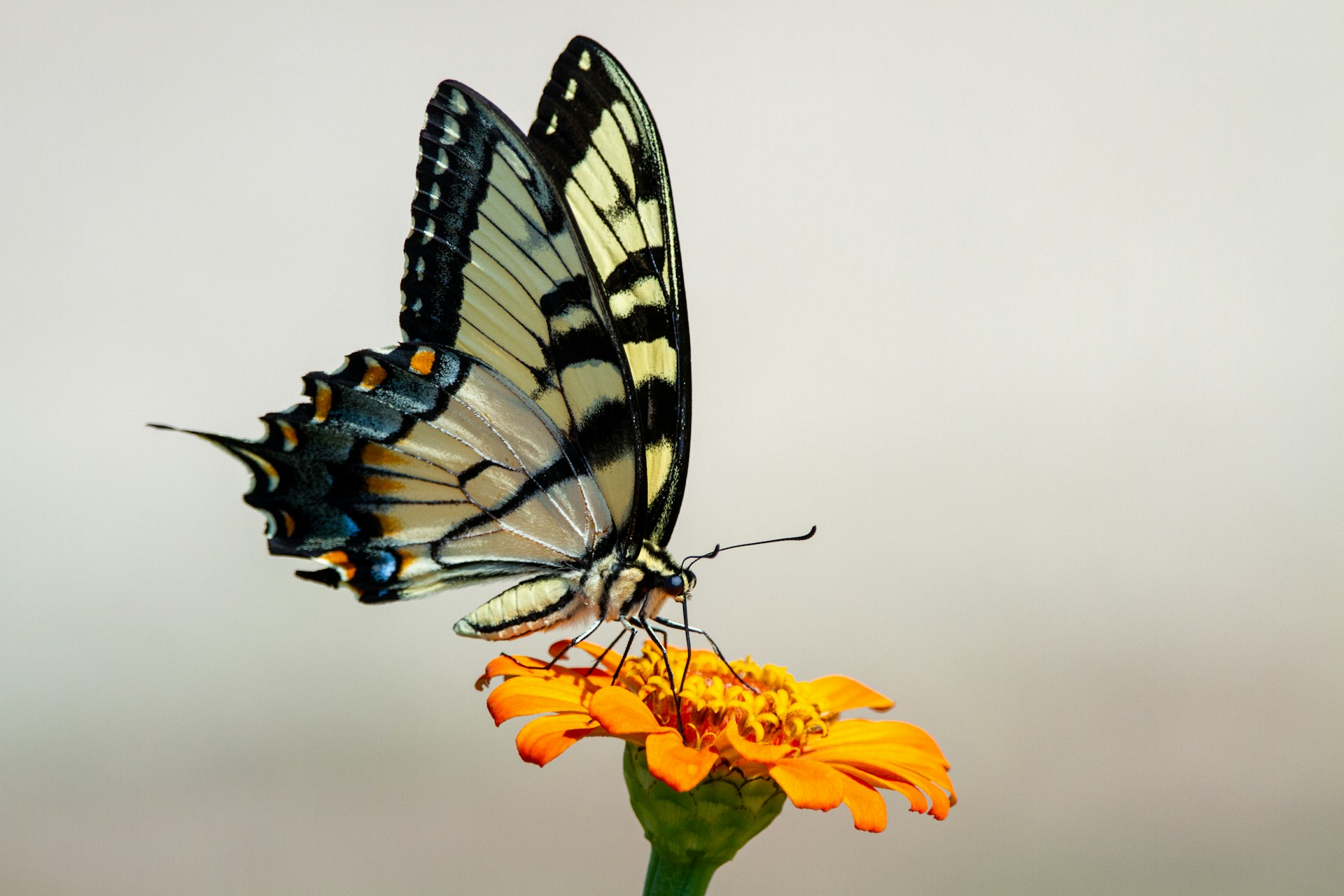
    On a sunny June afternoon, a patch of flowers in Middle Georgia can be busy with wings: big yellow-and-black swallowtails gliding from bloom to bloom, small orange skippers darting low, a monarch passing through. Butterfly watching asks very little. You do not need binoculars or a field guide to start, only a sunny spot, some flowers and a few minutes of stillness.

    Georgia’s state butterfly

    The eastern tiger swallowtail is Georgia’s official state butterfly, and it is one of the most common large butterflies in the Southeast. Males are bright yellow with black tiger stripes. Females can be either yellow or a dark, nearly black form, often with a wash of blue on the hind wings. Their caterpillars feed on the leaves of trees such as tulip poplar and wild cherry, which grow throughout the state.

    Host plants and nectar plants

    A butterfly-friendly garden needs two kinds of plants. Nectar plants feed adult butterflies. Host plants feed caterpillars, and many butterflies lay their eggs only on particular plants. A few classic pairings:

    • Monarchs depend on milkweeds, including the native butterfly weed with its bright orange flowers.
    • Black swallowtails lay eggs on parsley, dill and fennel, so plant a little extra to share.
    • Gulf fritillaries rely on passionflower, including the native maypop.

    For nectar, many butterflies visit coneflowers, black-eyed Susans, zinnias, lantana, salvias, Joe Pye weed and butterfly weed. Plant flowers in clusters rather than one here and one there, so butterflies can find them easily, and choose plants that bloom in turn from spring into fall. Your county office of the University of Georgia Cooperative Extension can suggest native plants suited to your area.

    When caterpillars start chewing your parsley, try to see it as a success rather than a problem. That is the garden doing its job.

    Small touches that help

    Butterflies depend on outside warmth to fly, which is why they are most active on sunny days, often from late morning through afternoon. A few flat stones in a sunny spot give them a place to bask. A shallow dish of damp sand or a muddy patch offers minerals, and on summer days you may see butterflies gathered there in a behavior called puddling. Going easy on pesticides, especially broad-spectrum insecticides, protects caterpillars as well as adults.

    June is also when many communities celebrate National Pollinator Week, a yearly reminder of how much our gardens and farms depend on bees, butterflies, moths and other pollinators.

    Butterfly watching as a slow practice

    Choose a shady seat near your flowers and simply watch. Follow one butterfly as it moves from bloom to bloom. Notice how it lands, how its wings open and close, how long it stays. Try to see its colors in detail: the edging on the wings, the spots, the way the light catches the scales. When it flies away, wait for the next.

    It is a lesson in patience and in letting go. You cannot make a butterfly land where you want it to. You can only sit, pay attention and enjoy what arrives. On a hot afternoon, there are few better ways to spend fifteen minutes in the shade.

  • Summer Stargazing for Beginners: The Summer Triangle, the Milky Way and a Quiet Mind

    Summer Stargazing for Beginners: The Summer Triangle, the Milky Way and a Quiet Mind

    There is something about lying on your back under a summer sky that puts the rest of life in perspective. The stars do not hurry. They ask nothing. And you do not need a telescope, an app or any special knowledge to enjoy them, only a dark spot, a little patience and a willingness to stay up a bit late.

    When and where to look

    Around the solstice, the sky in Middle Georgia does not get fully dark until after ten o’clock, so summer stargazing is a late-evening affair. Moonless nights are best, since a bright moon washes out fainter stars. Summer humidity and haze can also soften the view, so the clearer, drier nights after a front passes through are especially good.

    Light pollution matters most of all. In town, you will see the brightest stars. Away from city lights, the sky fills in dramatically. Georgia has some genuinely dark places, including Stephen C. Foster State Park near the Okefenokee Swamp, which has been recognized as an International Dark Sky Park. If you plan a trip, check the park’s official website for hours and rules about night visits.

    Finding the Summer Triangle

    The easiest summer pattern for beginners is not a constellation but an asterism, a shape made from bright stars in different constellations. The Summer Triangle is formed by three of them:

    • Vega, a brilliant blue-white star in the small constellation Lyra. On June evenings it climbs in the east and is often the first bright star you notice there.
    • Deneb, the tail of Cygnus, the Swan, lower and to the left of Vega.
    • Altair, in Aquila, the Eagle, lower down and to the right, completing a large, lopsided triangle.

    Once you find it, the triangle becomes a familiar friend that rides higher each week as summer goes on.

    The Milky Way and other sights

    On a truly dark night, a soft, cloudy band stretches across the sky, running right through the Summer Triangle. That is the Milky Way, our own galaxy seen edge-on from within. Its brightest, densest region lies low in the south in summer, toward the constellations Sagittarius and Scorpius. Look for Antares, a reddish star in Scorpius, low over the southern horizon.

    While you watch, you may see satellites gliding steadily across the sky and the occasional meteor streaking past. If you enjoy those, the Perseid meteor shower peaks each August and is worth marking on the calendar.

    Making it a restful ritual

    Bring a blanket or a reclining chair, insect repellent and a light layer, since even summer nights can feel damp after a while. Give your eyes at least twenty minutes to adjust to the dark, and avoid looking at your phone, which resets that adjustment. If you need light, a flashlight covered with red cellophane is gentler on night vision.

    Then simply lie back and look. Let your breathing slow. Notice how more stars appear the longer you wait, as if the sky were slowly opening. You do not need to name a single one. Being still beneath them is the whole point, and on a warm June night it is one of the most peaceful things you can do.

  • Lightning Bugs in the Yard: Firefly Watching as a Summer Evening Practice

    Lightning Bugs in the Yard: Firefly Watching as a Summer Evening Practice

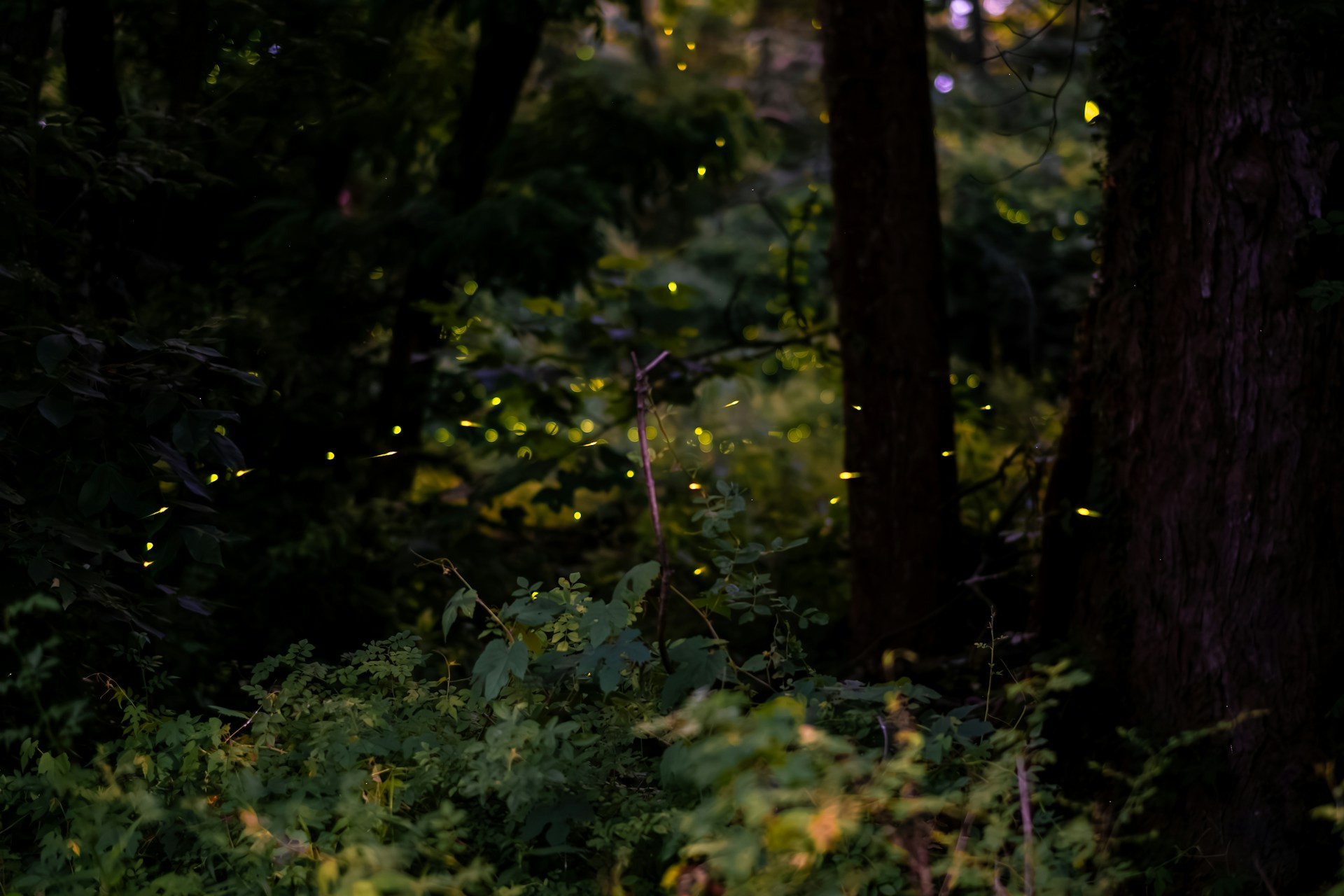
    Sometime in late spring, on an evening when the air is warm and still, the first lightning bugs rise from the grass. By June in Middle Georgia, yards, fields and woodland edges can be full of them, blinking on and off in the dusk. Whether you grew up calling them lightning bugs or fireflies, watching them is one of the simplest and most calming things a summer evening has to offer.

    Beetles that make their own light

    Despite the name, fireflies are not flies. They are beetles, part of a family with many species around the world. Their glow comes from special light organs in the abdomen, where a chemical called luciferin reacts with oxygen with the help of an enzyme called luciferase. The reaction gives off very little heat, which is why firefly light is often called cold light.

    Fireflies glow even before they can fly. Their larvae, sometimes called glowworms, live on the ground in leaf litter and damp soil, where they feed on snails, slugs and worms. Many species spend a year or more as larvae before emerging as adults for just a few weeks of summer.

    A language of flashes

    The blinking is a conversation. In many species, males fly and flash a pattern particular to their kind, and females waiting in the grass or in low plants answer with a flash of their own. Some patterns are quick single blinks, some are long glows and some are a series of rapid flashes. With a little patience, you may notice different patterns in different parts of the yard or at different times of the evening.

    There is drama, too. Females of some firefly species imitate the signals of other species to lure in males, which they then eat. Even the gentlest summer scene has its secrets.

    In the Great Smoky Mountains, one species is famous for flashing in near unison, and viewing is managed by the park each year. Details are on nps.gov if you are curious.

    A firefly evening, step by step

    • Go outside about twenty to thirty minutes after sunset, when activity often picks up.
    • Turn off porch and yard lights so your eyes can adjust and the fireflies can see each other’s signals.
    • Settle into a chair or onto a blanket and let your eyes relax. Adjusting to darkness takes a while, so be patient.
    • Watch one area of the yard. Notice the rhythm of the flashes, their color, which can range from yellow to green, and how high the fireflies fly.
    • If children want to catch a few, use a jar with air holes, keep them for just a short time and let them go the same evening.

    Making your yard friendlier to fireflies

    Many people say there seem to be fewer fireflies than when they were young, and researchers who study them point to concerns such as habitat loss, pesticide use and light pollution. A few small choices can help in your own yard. Keep outdoor lights off or low at night, since artificial light can drown out the signals fireflies use to find each other. Leave some leaf litter and a patch of taller grass or an unmowed garden edge. Use fewer pesticides, especially on the lawn.

    Then, on a warm June night, sit and watch. There is nothing to do and nothing to count unless you want to. It is just you, the dusk and a yard full of tiny lights, saying what fireflies have said to each other every summer for a very long time.