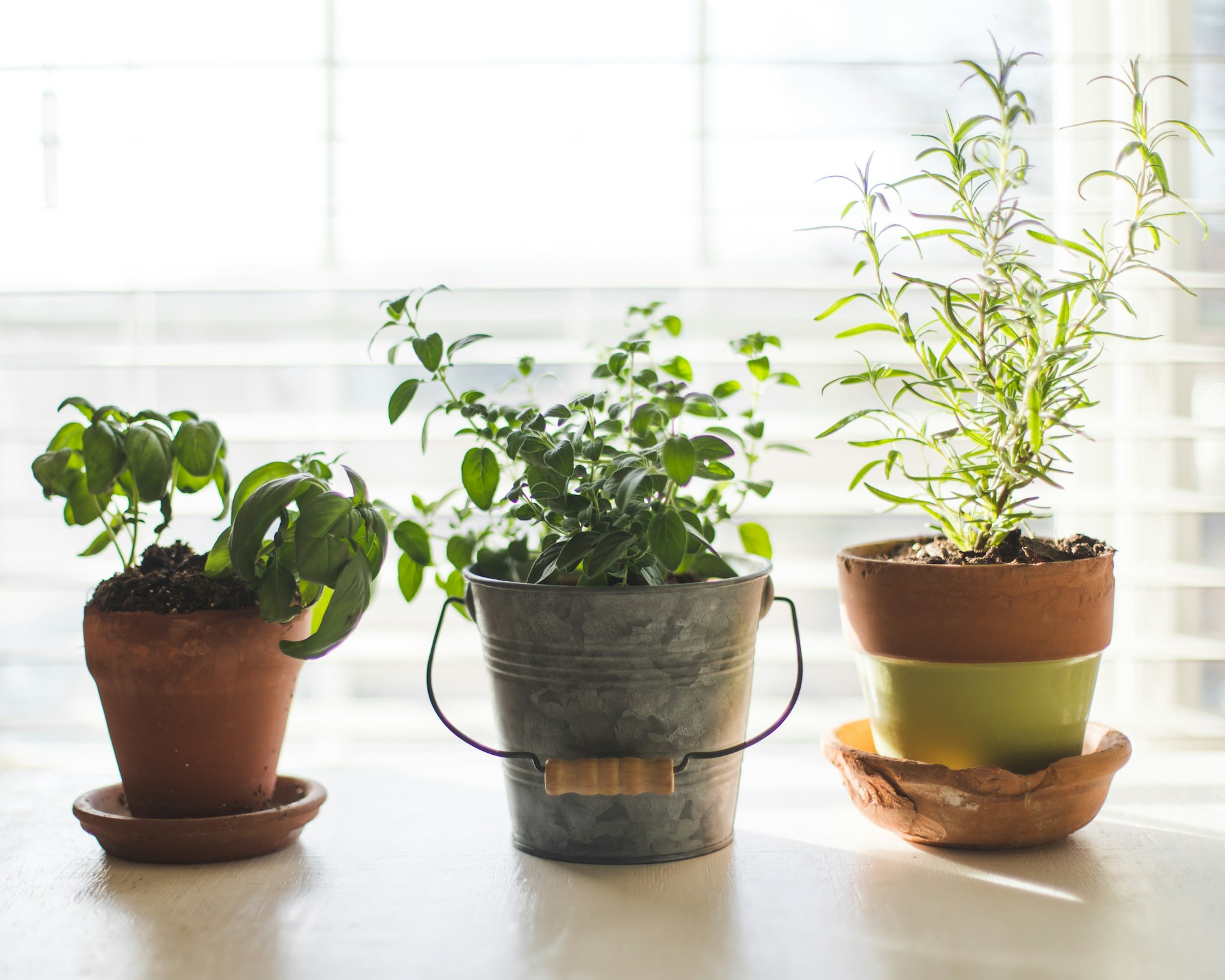
You do not need a yard to grow herbs. A few pots on a sunny windowsill, a railing planter on an apartment balcony or a half-barrel by the back steps is enough. Herbs are forgiving, fragrant and useful, and tending them is one of the most pleasant small rituals a spring can offer. In Middle Georgia, late March and April are a good time to start, once the risk of a hard frost has passed. Check a local extension office or garden center for planting dates in your area.
Why Herbs
Herbs reward attention quickly. Brush a hand across rosemary or mint and the scent rises immediately. Snip a few leaves for dinner and you have used something you grew. The plants ask for a little water and a little sun, and in return they give fragrance, flavor and a reason to step outside for a moment every day. For many people, that daily check-in is the whole point.
Six Easy Herbs to Start With
- Basil loves heat and sun, which makes it a natural for Georgia summers. Pinch the tops to keep it bushy and delay flowering.
- Rosemary is a woody evergreen that thrives in sun and well-drained soil. It dislikes wet feet, so do not overwater.
- Mint is vigorous to the point of being pushy. Give it its own pot so it does not take over, and enjoy it in iced tea.
- Thyme is low-growing and tough. It tolerates dry spells and smells wonderful underfoot.
- Chives come back year after year and produce pretty purple flowers in spring.
- Lemon balm, a cousin of mint, has a bright citrus scent and is very easy to grow in a pot.
Lavender is tempting, but it struggles in humid Southern summers. If you try it, choose a container with excellent drainage and give it the sunniest, airiest spot you have.
Containers, Soil and Light
Most herbs want at least six hours of sun. A south- or west-facing spot is usually best. Use pots with drainage holes and a good-quality potting mix rather than garden soil, which compacts in containers. Terra cotta dries out quickly, which rosemary and thyme appreciate; plastic or glazed pots hold moisture longer, which basil and mint prefer. Group pots so you can water them in one pass.
Daily Care as a Small Ritual
Herbs need very little, but they like consistency. Each morning, take a minute to check the soil with a finger. Water when the top inch feels dry, less often than you think for rosemary and thyme, a little more for basil and mint in July. Pinch off yellowing leaves. Harvest a few sprigs regularly; cutting encourages new growth. Keep this check-in slow. Smell the leaves, look for new shoots and notice bees visiting the chive flowers.
Enjoying the Harvest
Fresh herbs make simple things better: mint and lemon balm in cold water or tea, basil torn over tomatoes, rosemary on roasted vegetables, thyme in soup. Beyond the kitchen, a sprig of rosemary in a bowl of hot water for a facial steam, a bundle of mint hung in the shower or a small vase of herb cuttings on the desk brings fragrance indoors. Dry extra stems by hanging small bundles in a dark, airy place.
A small herb garden is not a project to complete. It is a quiet companion to the season, growing a little each day while you do the same.