
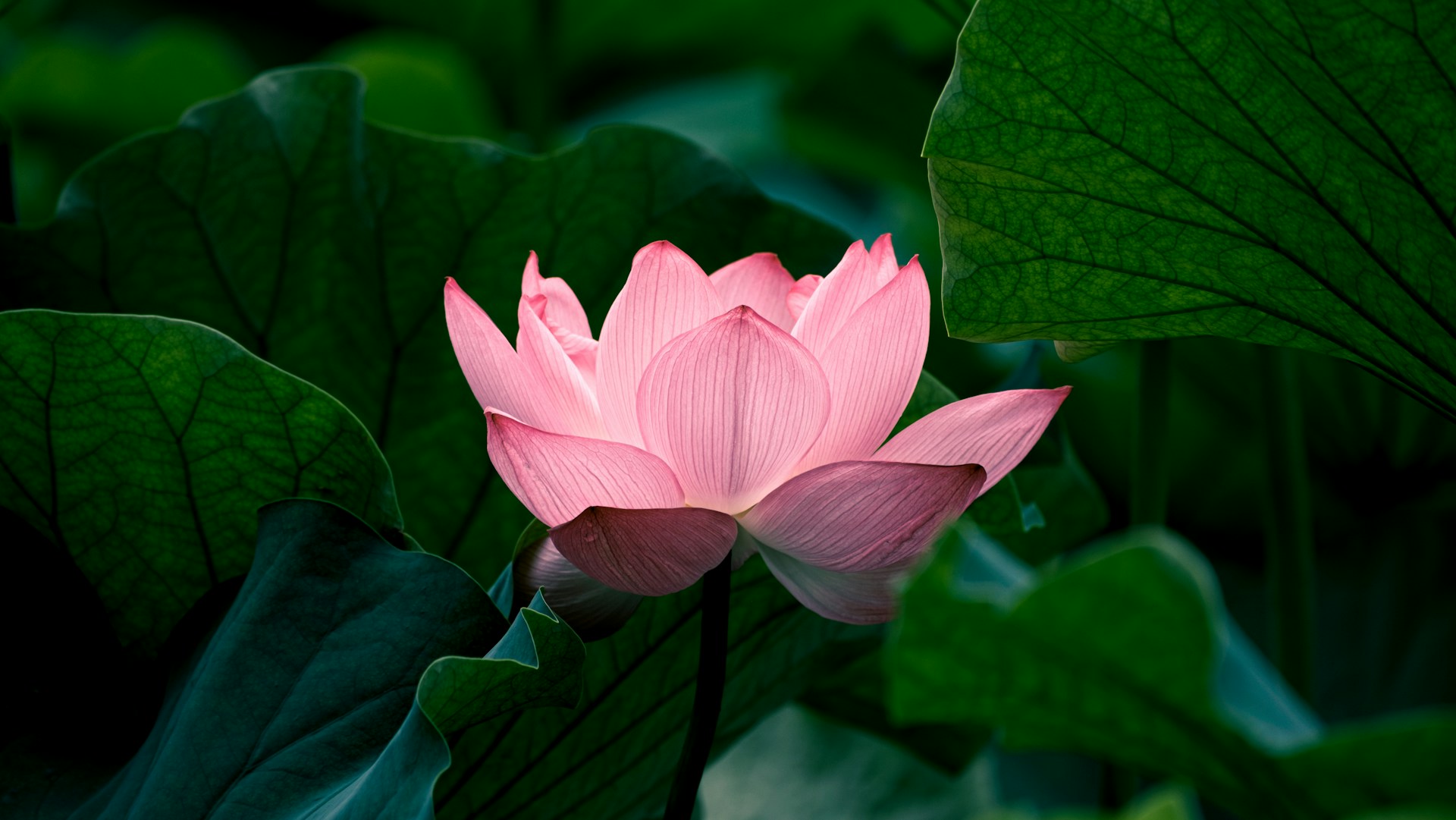
The lotus, the flower in our name, carries one of the oldest stories in the world. It has been painted on temple walls, carved into stone columns and folded into poems for thousands of years, and it remains a favorite symbol of calm and fresh beginnings. As spring returns to Middle Georgia, it seems like the right time to look at where that reputation comes from.
A Flower That Rises From the Mud
The sacred lotus, known to botanists as Nelumbo nucifera, is an aquatic plant that roots itself in the mud at the bottom of ponds and slow rivers. Its stems push up through murky water, and its leaves and flowers open in the air above the surface, clean and unstained. That simple fact of botany is the root of nearly all its symbolism. A beautiful thing grows out of the least promising place, and it does so every year.
The flowers are large and usually pink or white. They open in the morning and close again later in the day, a rhythm that has made the lotus a natural emblem of daily renewal as well as seasonal renewal.
Sacred Across Cultures
In India, the lotus is the national flower and appears throughout Hindu art, often as the seat of deities. In Buddhist tradition, it represents purity of heart and the possibility of growth no matter where a person begins. The familiar cross-legged posture used in meditation is still called the lotus position.
Ancient Egyptians also revered a lotus, though the flower in their art was most likely a water lily rather than the Asian lotus. It opened with the sun and closed at night, and it became linked to the sun and to rebirth. Across East Asia, lotus seeds and roots are everyday foods, and lotus ponds are a cherished feature of summer gardens.
Two Remarkable Facts
- Lotus leaves shed water and dirt so effectively that scientists use the term lotus effect to describe self-cleaning surfaces. Droplets bead up and roll off, carrying dust with them.
- Lotus seeds are famously long-lived. Researchers have germinated seeds recovered from a dry lakebed in China that were many centuries old, which is part of why the plant is so often tied to patience and persistence.
What the Lotus Can Mean This Spring
You do not need a pond to borrow something from the lotus. Its story offers a few gentle ideas for the season of renewal:
- Beginnings can be muddy. A fresh start rarely looks tidy at first.
- Growth is gradual. The stem rises slowly before the flower appears.
- Opening and closing is natural. Rest is part of the rhythm, not a failure of it.
- Something old can still bloom. A long-neglected intention may only need the right season.
You might write one of these ideas on a card and set it where you will see it in the morning, or simply bring it to mind on a walk when you pass a pond or a patch of fresh green growth.
Bringing the Lotus Home
Lotus imagery is easy to weave into a calm corner at home. A single bloom in a photograph, a small ceramic dish shaped like a flower, or a lotus-patterned cushion can serve as a quiet reminder to pause. Some people enjoy a lotus-shaped tea light holder for an evening wind-down.
If you are lucky enough to find lotus growing in a botanical garden or a park pond, take a few minutes to watch it. Notice the water beading on the leaves and the way the flowers follow the light. It is a small, free moment of beauty, and a reminder that renewal is always on its way.