
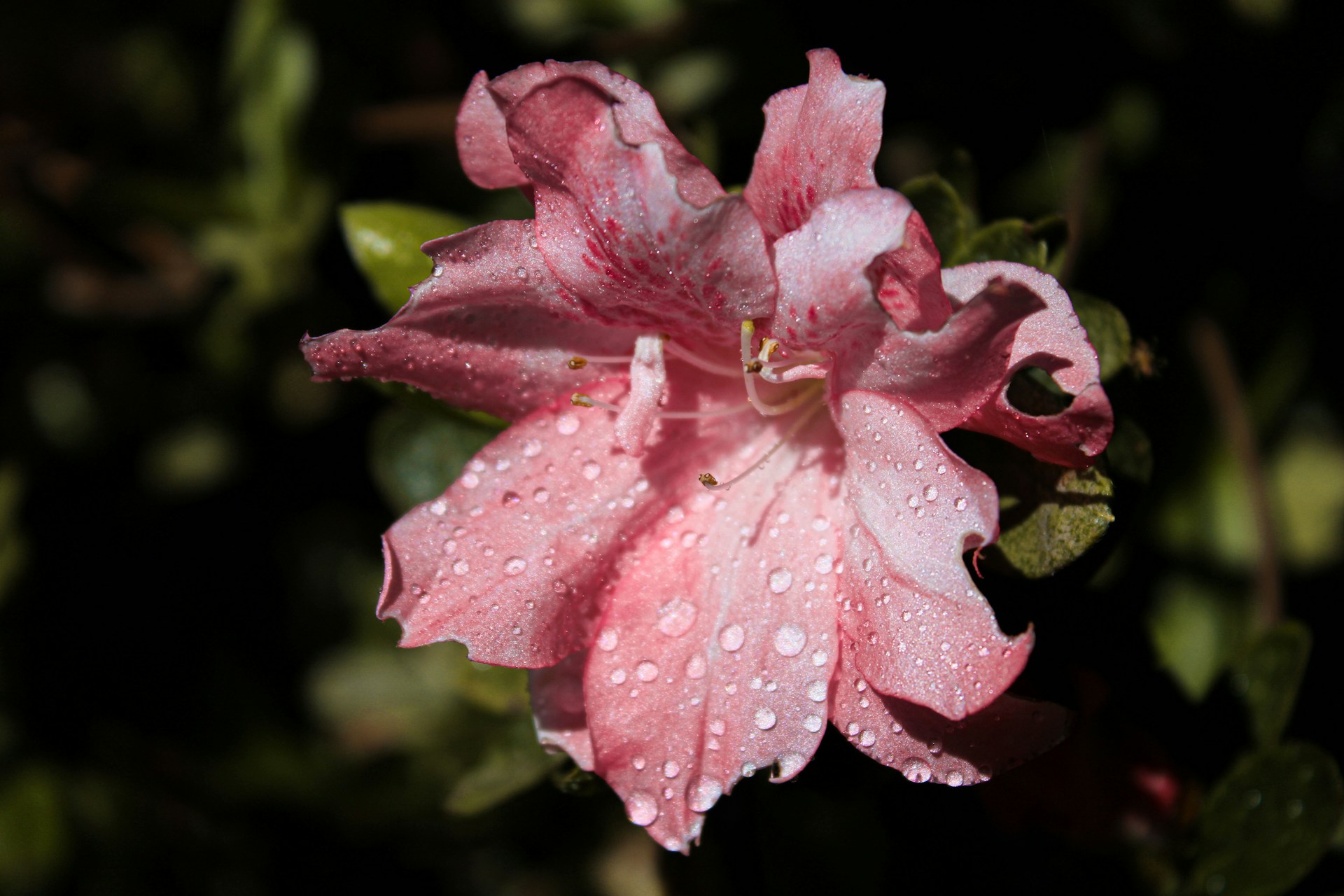
For a few weeks each spring, Middle Georgia puts on one of the great flower shows of the American South. Azaleas blaze in every shade from white to deep magenta, dogwoods open their pale four-petaled blooms in the understory and wisteria drapes purple over fences and pines. The display follows the cherry blossoms and overlaps with the heaviest pollen, and it rewards anyone willing to slow down and look. Here is a short field guide to the three stars of the season and a few ways to enjoy them mindfully.
Azaleas
Azaleas belong to the rhododendron family, and the ones most people picture, the dense evergreen shrubs covered in bloom, are mostly Asian varieties introduced to Southern gardens over the past two centuries. They thrive in the acidic soil and dappled shade under Georgia’s pines and oaks, which is why they are everywhere in older neighborhoods. Peak bloom in Macon usually falls in late March and April, depending on the year.
Georgia also has native azaleas, deciduous shrubs with looser, more fragrant flowers in white, pink, orange and yellow. The native azalea is Georgia’s official state wildflower, and the Piedmont azalea, with its honeysuckle-like scent, can still be found blooming wild along streams and woodland edges in spring.
Dogwoods
The flowering dogwood is a small understory tree native to the eastern United States. What look like its four white petals are actually modified leaves called bracts surrounding a cluster of tiny true flowers in the center. Each bract has a small notch at its tip. Dogwoods bloom just as their leaves emerge, often a week or two after the azaleas begin, and they glow in the shade of taller trees. In fall the same trees turn red and produce bright berries for birds. Dogwood festivals are a spring tradition in several Southern cities, and the tree is beloved enough to appear in countless front yards across Georgia.
Wisteria
Wisteria is the most dramatic and most complicated of the three. The cascading purple blooms that drape over abandoned barns, fence lines and tall pines in April are usually Chinese or Japanese wisteria, vigorous vines introduced as ornamentals that have escaped into the wild across the Southeast. They are beautiful and heavily scented, and they are also considered invasive, capable of strangling trees and spreading through woodlands. Admire them freely, but think twice before planting one.
There is a gentler option. American wisteria, a native vine, has shorter, less fragrant flower clusters and a much more restrained habit. Several cultivars are sold at nurseries for gardeners who want the look without the takeover.
Seeing Them Slowly
The bloom lasts only a few weeks, which is an argument for paying attention now. A few ways to do that:
- Take the same walk once a week through April and notice what has opened and what has faded.
- Stand under a dogwood and look up through the bracts at the sky. The light through them is one of the quiet pleasures of the season.
- Smell a native azalea or a wisteria cluster from a few inches away, then step back and notice how far the scent carries.
- Sit on a bench near a mass of azaleas for ten minutes and watch the bees and butterflies work.
- Sketch or photograph a single bloom rather than the whole hedge.
A note for allergy season: the showy flowers in this article are mostly insect-pollinated and release little airborne pollen; the yellow dust on your car comes from pines and other wind-pollinated trees blooming at the same time. If you have allergies, talk with your doctor about what affects you. For everyone else, the spring bloom is simply an invitation. It asks nothing but your attention, and it is gone by May.