
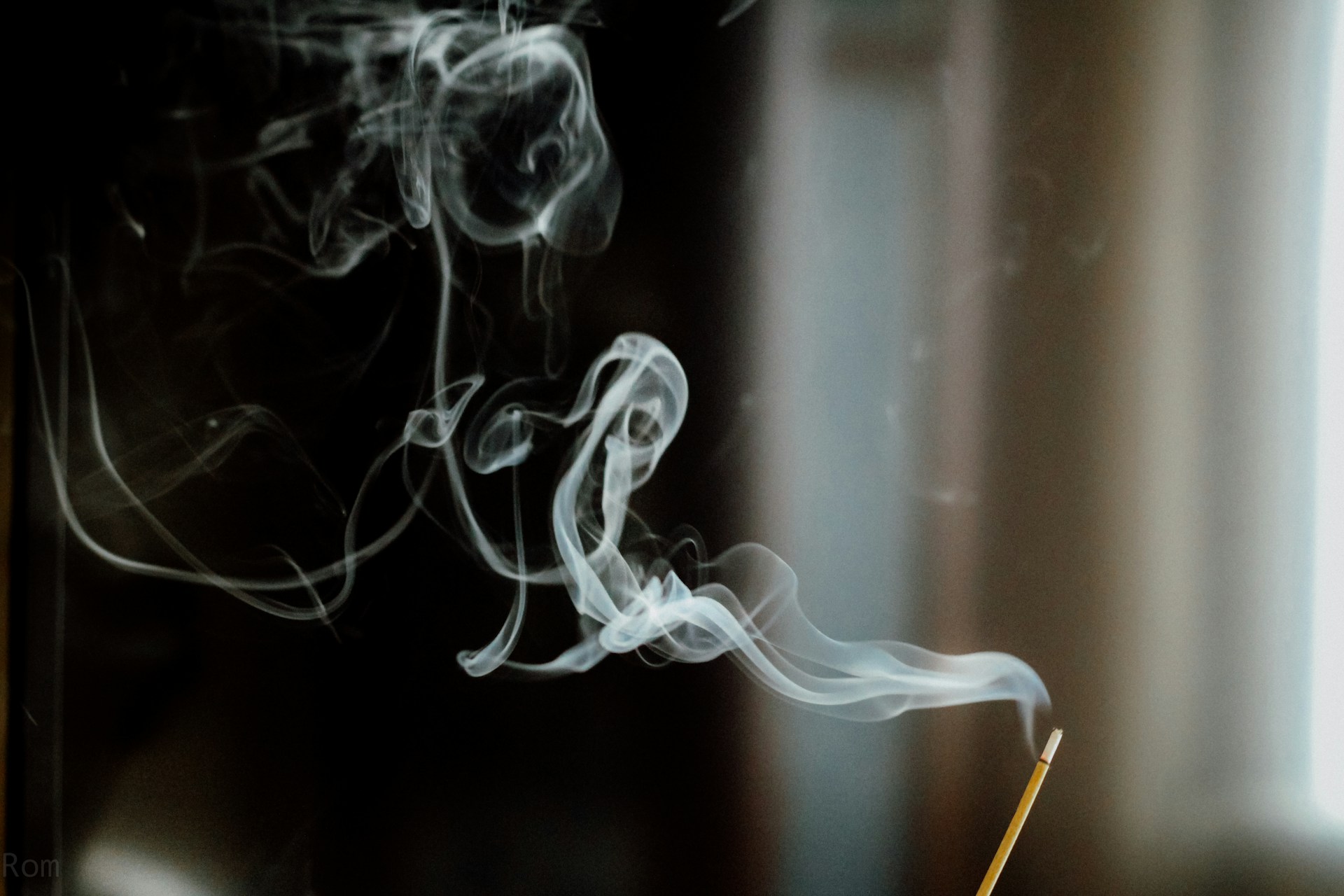
Incense is among the oldest ways humans have used fragrance. Long before essential oils or perfume bottles, people burned resins, woods, barks and dried herbs and let the smoke carry scent into the air and, they believed, toward the heavens. The practice is found on nearly every continent and remains part of worship, meditation and daily life for hundreds of millions of people. Here is a short history and a guide to enjoying it thoughtfully at home.
Ancient Smoke
The word incense comes from the Latin for something burned, and the earliest evidence of its use goes back thousands of years. Ancient Egyptians burned resins such as frankincense and myrrh in temples and made elaborate blends for ceremonies. Frankincense and myrrh were traded across the Arabian Peninsula and East Africa along routes that enriched some of the ancient world’s wealthiest kingdoms, and both appear in Hebrew scripture and later in Christian liturgy.
In India, incense has been part of religious practice for millennia, and the stick incense most people recognize today, with a bamboo core coated in fragrant paste, developed there. In China, incense accompanied Buddhist and Daoist worship and was used to mark time, with incense clocks burning at a known rate. In Japan, the appreciation of incense became a refined art called kodo, the way of fragrance, in which participants listen to incense, savoring subtle differences between rare woods.
Forms of Incense
- Sticks, with or without a bamboo core. The most common and easiest to use.
- Cones, which burn down to a small pile of ash and release scent more intensely.
- Coils, which burn for many hours and are common in East Asian temples.
- Loose resins such as frankincense, myrrh, copal and benzoin, burned on a charcoal disc or an electric heater.
- Dried herb bundles, used in several traditions around the world.
Quality varies enormously. Inexpensive incense is often made with synthetic fragrance on a sawdust base, while traditional Japanese and Indian makers use natural woods, resins and herbs. The difference in scent is noticeable, and higher-quality incense usually produces less smoke.
Enjoying It Safely
Incense is smoke, and smoke in a closed room is worth taking seriously. A few sensible habits:
- Burn in a ventilated room with a window open, and keep sessions short. One stick is plenty for most spaces.
- Use a proper holder with a tray that catches ash, placed on a heat-resistant surface away from anything that can catch.
- Never leave burning incense unattended, and make sure it is fully out before you leave the room.
- Keep it away from children and pets, and consider whether smoke is appropriate in a home with birds or other small animals, which are sensitive to air quality.
- If you have asthma or another breathing concern, talk with your doctor before burning incense, and consider gentler alternatives such as a diffuser.
We make no health claims about incense. It is enjoyed for its scent and for the quiet ritual of lighting it.
Incense as a Ritual
Part of incense’s lasting appeal is that it takes time. A stick burns for twenty or thirty minutes, and the scent builds slowly. Many people light one at the start of a meditation or journaling session, letting the burn mark the length of the practice as the old incense clocks did. Others burn a little in the evening as a signal that the day is winding down. The smoke itself can be an object of attention: watching it curl and drift is a simple, ancient form of mindfulness.
On a mild April evening, with the window open and the sounds of the neighborhood drifting in, a single stick of good sandalwood or a pinch of frankincense on a warm coal connects you to one of the longest unbroken traditions in human life.