
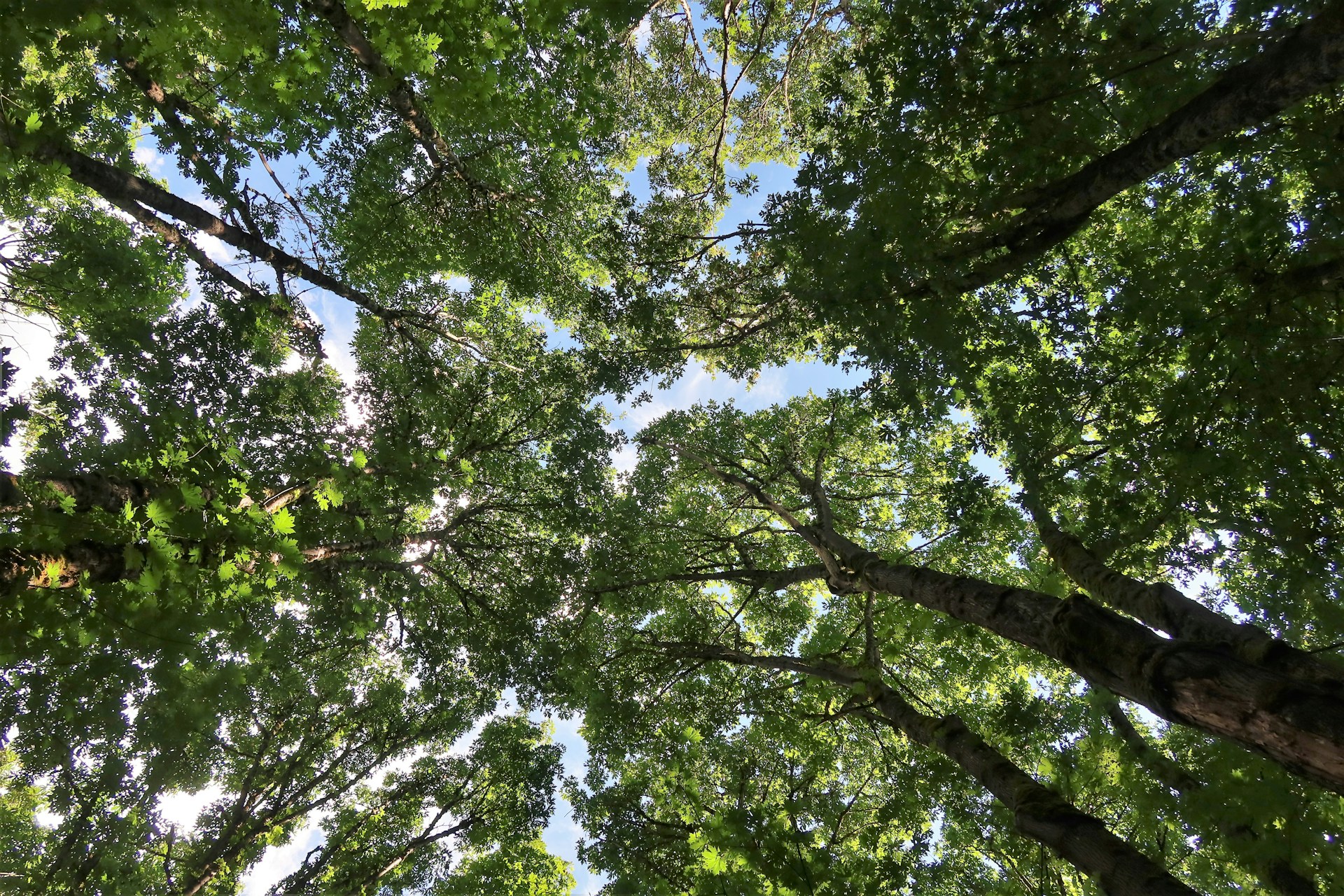
The phrase forest bathing sounds like it involves water, but there is no swimming required. It is a translation of the Japanese term shinrin-yoku, which simply means taking in the atmosphere of the forest. The practice asks you to walk slowly among trees, with no destination and no agenda, using all of your senses. For anyone who loves the woods and trails of Middle Georgia, it is a gentle way to turn a walk into something closer to a retreat.
Where the Idea Comes From
The term was coined in Japan in the early 1980s, when the national forestry agency encouraged people to spend unhurried time in the country’s forests as a form of recreation and respite from city life. It drew on much older traditions of reverence for trees in Shinto and Buddhist culture. Over the following decades, designated forest therapy trails were established in Japan, and the idea spread to Europe and North America, where guides now offer group walks.
Researchers have taken an interest in time spent in nature, and you may see various claims attached to forest bathing. We will not make any here. Forest bathing is a pleasant, calming experience for many people, and that is reason enough to try it. If you have a health concern, talk with your doctor.
How It Differs From a Hike
A hike has a trailhead, a destination and usually a pace. Forest bathing has none of these. You might cover a quarter of a mile in an hour. The point is to notice rather than to arrive. Most practitioners suggest leaving headphones at home, silencing your phone and, if you walk with someone, agreeing to be quiet for stretches.
A Simple Way to Begin
- Choose a wooded place you can reach easily. A city park with mature trees works as well as a state forest.
- At the entrance, stop. Take a few slow breaths and let your shoulders drop.
- Walk slowly, slower than feels natural. Pause often.
- Move through your senses one at a time. Spend a few minutes just listening, then just looking, then noticing smells, then the feel of air and bark and ground.
- Find a spot to sit for ten or fifteen minutes. Watch what changes around you when you are still.
- Before you leave, pause again at the edge of the trees and notice how you feel compared with when you arrived.
Twenty minutes is a fine start. Two hours is lovely if you have them.
Sensory Prompts to Try
If slowing down feels awkward at first, a prompt can help. Look for the smallest living thing you can find. Count how many different bird sounds you can pick out. Touch three kinds of bark and compare them. Find where the light is moving on the forest floor. Smell a handful of pine needles or the air after rain. The prompts give the restless part of your mind a job while the rest of you settles.
Practical Notes for Georgia Woods
Spring forests here are beautiful but busy. Wear closed shoes and long pants, check for ticks when you get home, and give snakes room if you see one. On high-pollen days, you may prefer a walk after rain. Bring water, let someone know where you are going, and stick to marked trails in unfamiliar places. The forest asks for very little in return for its quiet, and a little preparation lets you give it your full attention.